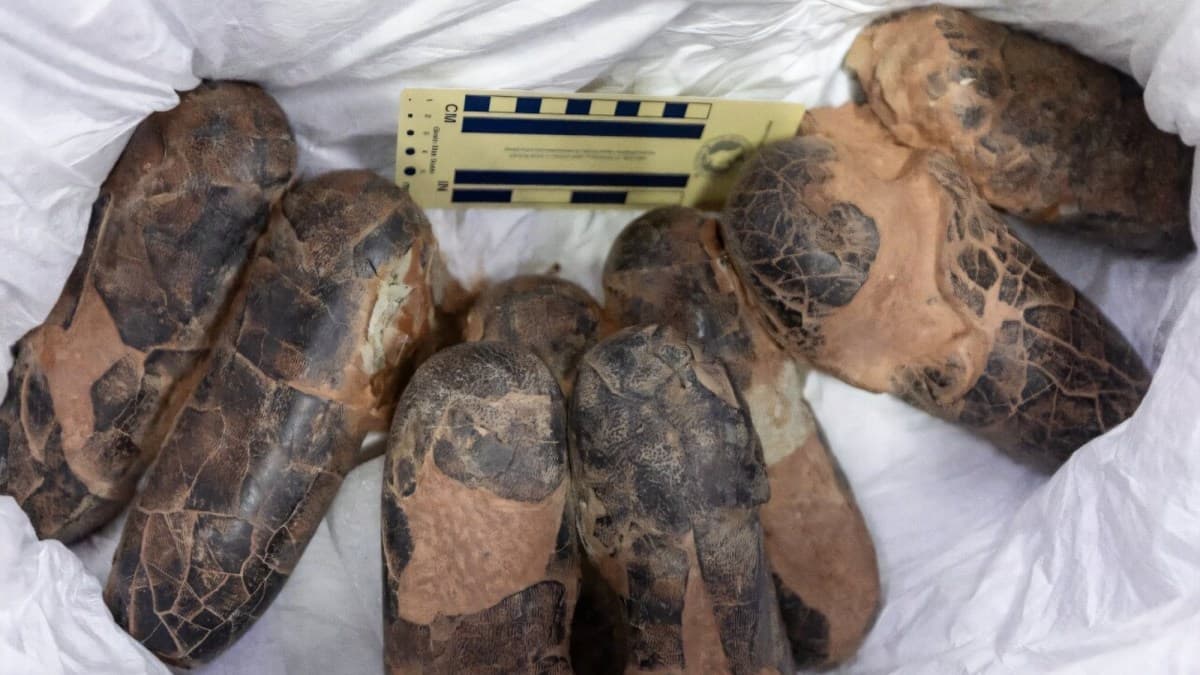
Rare Dinosaur Fossils Finally Returned to Mongolia 20 Years After Theft
Why It Matters
The return restores a priceless scientific resource to its country of origin and curtails the illicit fossil trade, bolstering Mongolia’s cultural heritage and global paleontological research.
Key Takeaways
- •29 fossil sets returned after two‑decade illegal export
- •French customs confiscated specimens from 2013‑2015 before repatriation
- •Tarbosaurus bataar specimen rivals size of Tyrannosaurus rex
- •Museum plans public exhibit to inspire Mongolian youth
Pulse Analysis
The Gobi Desert of Mongolia has long been a treasure trove for paleontologists, yielding some of the world’s most complete dinosaur remains. That richness also makes the region a target for black‑market smugglers who view fossils as high‑value commodities. Over the past two decades, dozens of specimens vanished from Mongolian sites, depriving scientists of data on Late Cretaceous ecosystems and eroding cultural heritage. The recent recovery underscores the scale of illicit trafficking and highlights the need for stronger border controls and international monitoring of fossil trade.
The repatriation effort began when French customs agents uncovered the missing fossils in 2013, leading to a coordinated operation under the UNESCO 1970 Convention on illicit cultural property. Over two years, authorities seized the remains, verified provenance, and negotiated their return with Mongolian officials. A formal hand‑over ceremony in Paris in December 2025 symbolized diplomatic cooperation and set a precedent for future cross‑border restitution cases. Legal frameworks that criminalize the export of unlicensed fossils proved essential, demonstrating how multinational enforcement can dismantle smuggling networks.
For Mongolia, the arrival of 29 fossil sets—including a half‑complete Tarbosaurus bataar, an apex predator comparable to Tyrannosaurus rex—offers a rare scientific windfall. Researchers will now study the specimens to refine models of dinosaur growth, behavior, and paleo‑environmental conditions. The National Museum of Natural History plans to clean, catalogue, and eventually exhibit the fossils, providing educational opportunities for local youth and reinforcing national pride in natural heritage. More broadly, the case sends a clear message to illicit traders: the global community is increasingly willing to track, seize, and return stolen fossils, which could deter future thefts and preserve irreplaceable scientific data.
Rare dinosaur fossils finally returned to Mongolia 20 years after theft
Comments
Want to join the conversation?
Loading comments...