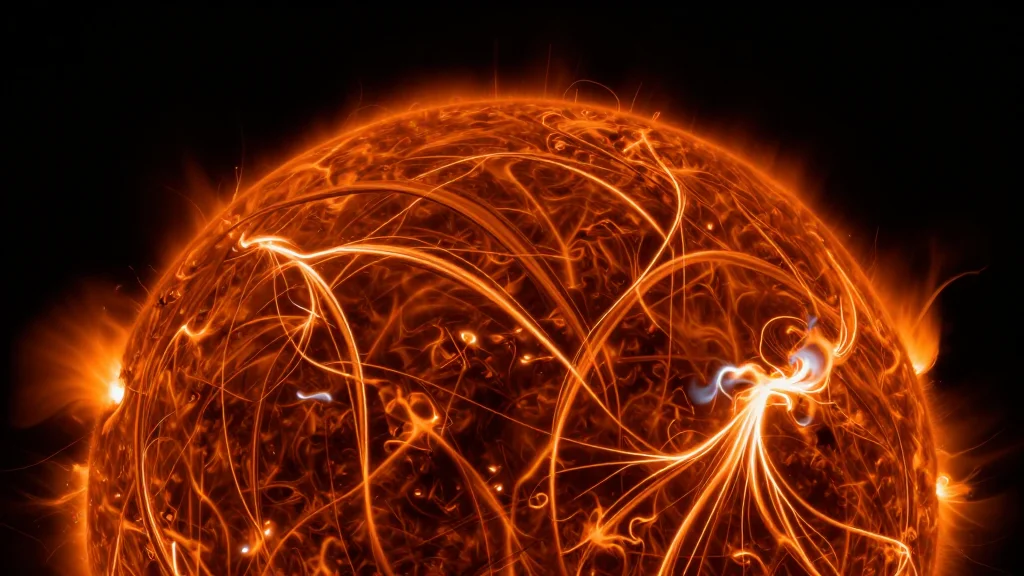
Reading the Sun’s Fireworks: How Flare Ribbons Reveal Hidden Solar Explosions
Why It Matters
Understanding flare ribbons refines predictions of solar storms, directly reducing risk to critical technology and communications systems. The approach offers a more complete picture of solar activity, essential for both scientific research and operational forecasting.
Key Takeaways
- •Flare ribbons map magnetic reconnection zones during solar eruptions
- •Ribbon motion predicts energy release timing for coronal mass ejections
- •High-resolution imaging reveals hidden microflares invisible to traditional detectors
- •Improved flare ribbon analysis enhances satellite safety forecasts
- •NASA's Solar Dynamics Observatory provides continuous ribbon observations
Pulse Analysis
Solar flare ribbons are bright, elongated features that trace the footpoints of magnetic field lines snapping together during an eruption. When a solar flare occurs, these ribbons sweep across the Sun’s surface, marking where magnetic reconnection releases vast amounts of energy. By analyzing ribbon speed, length, and separation, scientists can infer the strength of the underlying magnetic field and the likely trajectory of any accompanying coronal mass ejection (CME). This method uncovers smaller, “hidden” explosions—microflares—that escape detection by conventional X‑ray monitors, filling gaps in our understanding of the Sun’s energy budget.
The practical implications are significant for space‑weather forecasting. Accurate ribbon measurements allow forecasters to predict CME launch times and potential impact zones with greater precision, giving satellite operators and power‑grid managers more lead time to implement protective measures. As the Sun approaches the peak of its 11‑year cycle, the frequency of complex active regions—and thus flare ribbons—will increase, making real‑time ribbon monitoring a vital component of early‑warning systems. Agencies such as NOAA’s Space Weather Prediction Center are already integrating ribbon‑derived metrics into their models to improve storm severity forecasts.
Looking ahead, advances in imaging technology and machine‑learning algorithms promise to automate ribbon detection across the massive data streams from the Solar Dynamics Observatory and upcoming missions like the European Space Agency’s Solar Orbiter. Automated analysis will not only speed up the identification of hidden eruptions but also enable statistical studies linking ribbon characteristics to long‑term solar activity trends. This deeper insight will help refine both scientific theories of magnetic reconnection and the operational tools that safeguard Earth’s technology‑dependent society.
Reading the Sun’s Fireworks: How Flare Ribbons Reveal Hidden Solar Explosions
Comments
Want to join the conversation?
Loading comments...