Rehabilitation of Achilles Tendon Injuries Through Patient-Specific Scaffold Design Using FDM-Based 3D Printing of Thermoplastic Polyurethane (TPU)
Why It Matters
The technology provides a biocompatible, load‑bearing implant that could replace donor grafts, lowering complication rates and accelerating recovery for Achilles injuries.
Key Takeaways
- •TPU scaffolds printed via FDM achieve tendon‑like mechanical strength
- •SEM reveals porous surface promoting cell adhesion
- •Hemolysis under 10% confirms non‑hemolytic behavior
- •MTT assay shows >87% cell viability, exceeding ISO 10993‑5
- •Patient‑specific designs enable customized Achilles tendon regeneration
Pulse Analysis
The Achilles tendon, despite being the body’s strongest tendon, is prone to rupture from overuse or degeneration, accounting for a growing share of orthopedic cases in active populations. Conventional repair options—autografts, allografts, and synthetic grafts—suffer from donor‑site morbidity, immune rejection, and suboptimal load‑bearing capacity, prompting surgeons to seek biologically engineered alternatives. Tissue‑engineered scaffolds promise a bridge between mechanical support and cellular integration, yet translating laboratory concepts into clinically viable implants has remained a bottleneck. Consequently, the healthcare system faces rising costs for post‑injury rehabilitation.
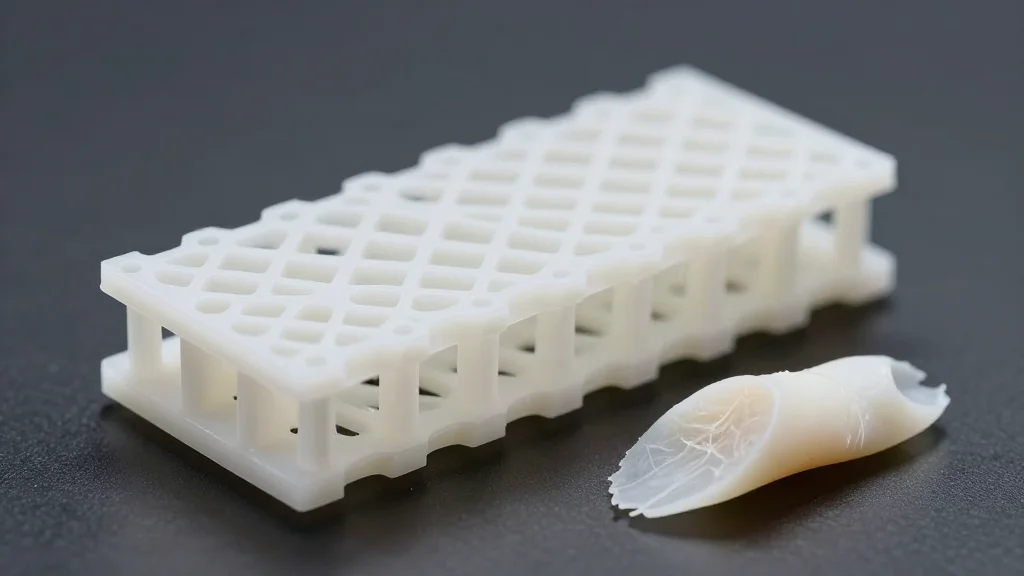
Thermoplastic polyurethane (TPU) emerges as a compelling candidate because it combines elasticity, toughness, and fatigue resistance with proven biocompatibility. Using fused deposition modeling (FDM), researchers generated patient‑specific scaffolds whose spiral and lattice geometries were optimized in Cura, yielding a semi‑crystalline structure confirmed by X‑ray diffraction. Scanning electron microscopy showed a rough, porous surface that encourages cell attachment, while hemolysis tests stayed below 10 % and MTT assays recorded over 87 % cell viability—both surpassing ISO 10993‑5 safety thresholds. Mechanical testing indicated that the printed constructs meet the tensile demands of Achilles tendon tissue. Long‑term fatigue testing also demonstrated durability over repeated loading cycles.
These findings position TPU‑based, FDM‑printed scaffolds as a scalable solution for personalized tendon repair, potentially reducing operating time and eliminating donor‑site complications. As regulatory pathways for 3D‑printed medical devices mature, manufacturers can leverage digital workflow—from AutoCAD design to on‑demand printing—to produce implants tailored to patient anatomy and activity level. The convergence of additive manufacturing, biomaterials science, and orthopedic demand suggests a burgeoning market, with early adopters likely to drive clinical trials that validate long‑term outcomes and pave the way for broader reimbursement. Stakeholders anticipate that such technology could accelerate return‑to‑play timelines for athletes.
Rehabilitation of Achilles Tendon Injuries through Patient-Specific Scaffold Design Using FDM-Based 3D Printing of Thermoplastic Polyurethane (TPU)
Comments
Want to join the conversation?
Loading comments...