Why It Matters
Linking a precisely dated historical supernova to a modern remnant provides a rare calibration point for supernova models and cosmic‑ray acceleration theories, advancing both astrophysics and the study of ancient astronomical records.
Key Takeaways
- •RCW 86 lies ~8,000 light‑years from Earth in Circinus
- •Supernova recorded in 185 C.E. by Chinese astronomers
- •27.5 hours of imaging captured with Hα, O III, RGB filters
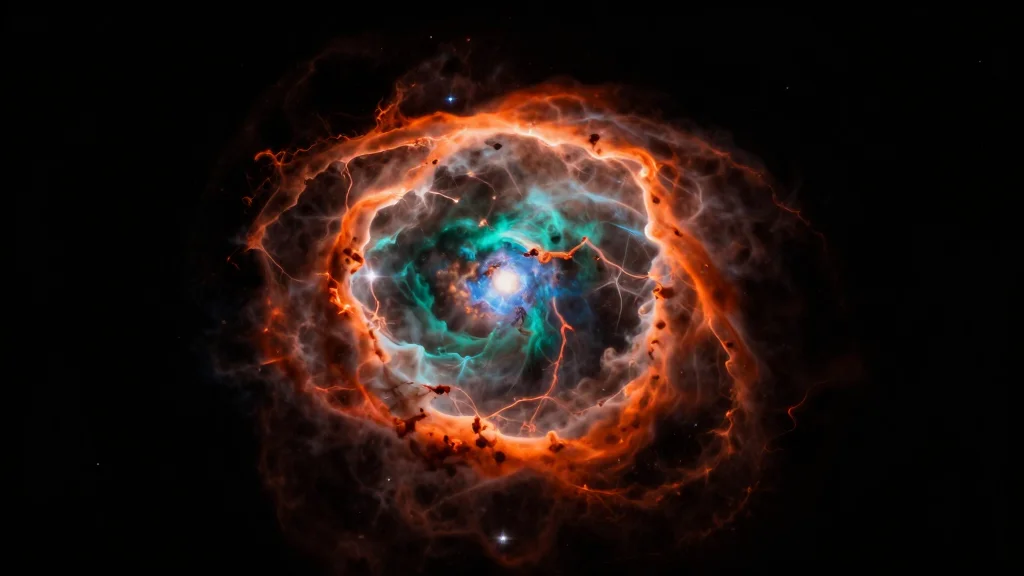
- •Filamentary ring reveals complex shock fronts and element distribution
- •Provides calibration for supernova evolution and cosmic‑ray studies
Pulse Analysis
The discovery that RCW 86 corresponds to the 185 C.E. “guest star” bridges a gap between ancient skywatchers and modern astrophysics. Historical Chinese chronicles noted a bright, transient object that persisted for months, a description now matched to the expanding shell of RCW 86. This rare alignment allows scientists to anchor the age of a supernova remnant with unprecedented precision, refining models of how massive stars explode and disperse material into the galaxy.
Recent observations by amateur astronomer David Cowland employed an 8‑inch f/4 reflector to collect 27.5 hours of data across Hα, O III, and RGB filters. The resulting image showcases a tangled ring of reddish filaments, bright knots, and wispy strands that trace the shock wave as it sweeps through interstellar gas. Spectroscopic analysis of these features reveals elevated levels of oxygen, silicon, and iron, confirming nucleosynthesis products typical of Type Ia supernovae. The high‑resolution view also uncovers variations in shock velocity, offering clues about the surrounding medium’s density and magnetic field structure.
Understanding RCW 86’s evolution has broader implications for cosmic‑ray research. Supernova remnants are prime candidates for accelerating particles to near‑light speeds, and the detailed morphology of RCW 86 helps test theoretical acceleration mechanisms. Moreover, the precise dating of this remnant serves as a benchmark for calibrating the ages of other, less well‑documented supernova remnants. Future multi‑wavelength campaigns, combining X‑ray, radio, and optical data, will further unravel the physics of shock heating and particle acceleration, cementing RCW 86’s role as a cornerstone in high‑energy astrophysics.
Remnant of the ancients
Comments
Want to join the conversation?
Loading comments...