Research Shows Sulfur Cathodes Show High Theoretical Promise, but Practical Battery Performance Remains a Major Barrier
Why It Matters
Sulfur batteries could slash material costs—currently about $121/kWh for Li‑ion—yet only realistic testing will determine if they can meet the durability and energy‑density demands of EVs and grid storage.
Key Takeaways
- •Theoretical energy density of sulfur cathodes reaches ~2,600 Wh/kg
- •Real‑world cells deliver only 400‑600 mAh/g at 5 mg/cm²
- •Cycle life under practical conditions caps at 200‑500 cycles
- •Lean electrolyte (<5 µL/mg) and thick electrodes intensify stability issues
- •Lyten, Gelion and LG Energy Solution are piloting sulfur batteries
Pulse Analysis
Sulfur‑based cathodes have re‑emerged as a tantalizing alternative to conventional lithium‑ion chemistries because sulfur is abundant, inexpensive, and offers a theoretical gravimetric energy density that dwarfs nickel‑cobalt‑lithium blends. In theory, a sulfur cell could store up to 2,600 Wh per kilogram—roughly double the best‑in‑class lithium‑ion packs—while material costs could fall well below the current $121 per kilowatt‑hour benchmark for Li‑ion batteries. This promise has spurred academic labs and startups alike to chase record‑setting capacities in the lab, often using ultra‑thin sulfur layers and excess electrolyte that inflate performance metrics.
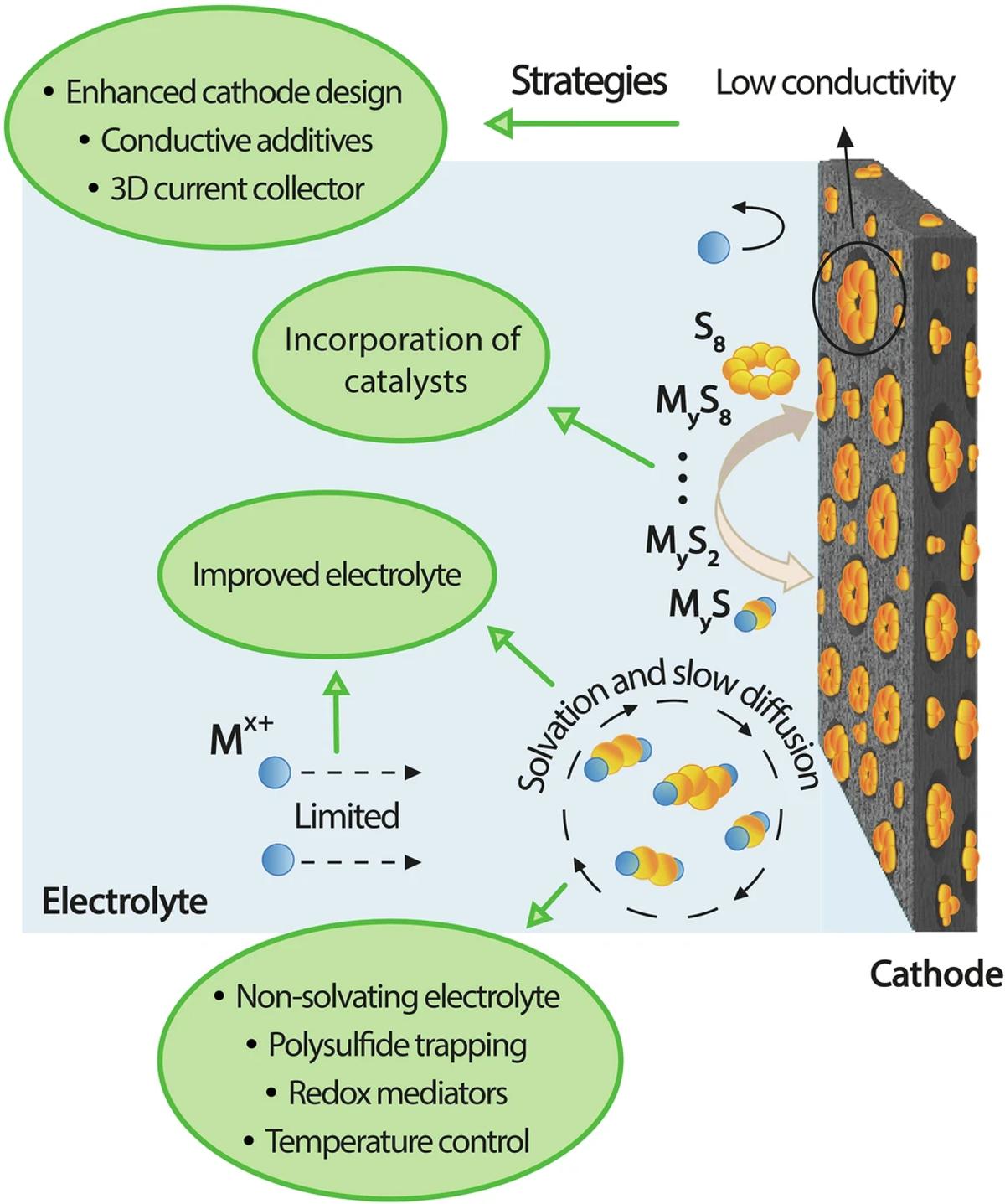
However, the new Nature review underscores a stark gap between laboratory hype and market reality. When researchers adopt commercially relevant parameters—sulfur loadings of 4‑6 mg/cm², electrolyte‑to‑sulfur ratios under 5 µL/mg, and limited lithium excess—the achievable specific capacity drops to 400‑600 mAh/g, and cycle life rarely exceeds 500 cycles. The insulating nature of sulfur and its soluble polysulfide intermediates trigger rapid capacity fade, self‑discharge, and safety concerns such as dendrite growth on lithium metal anodes. These intertwined challenges mean that boosting one metric, like energy density, often worsens another, such as rate capability or thermal stability.
Despite the hurdles, the commercialization landscape is gaining momentum. Companies including Lyten, Gelion, LG Energy Solution, Zeta Energy, and Umicore are piloting sulfur‑based batteries for niche applications ranging from drones to stationary storage, leveraging incremental advances in electrolyte formulation and electrode architecture. The review’s call for standardized, user‑centric benchmarks aims to align research with the performance envelope required by electric vehicles and grid‑scale storage. If the industry can demonstrate reliable, high‑energy cells under realistic conditions, sulfur cathodes could become a cost‑effective pillar of the next generation of energy‑storage solutions.
Research Shows Sulfur Cathodes Show High Theoretical Promise, but Practical Battery Performance Remains a Major Barrier
Comments
Want to join the conversation?
Loading comments...