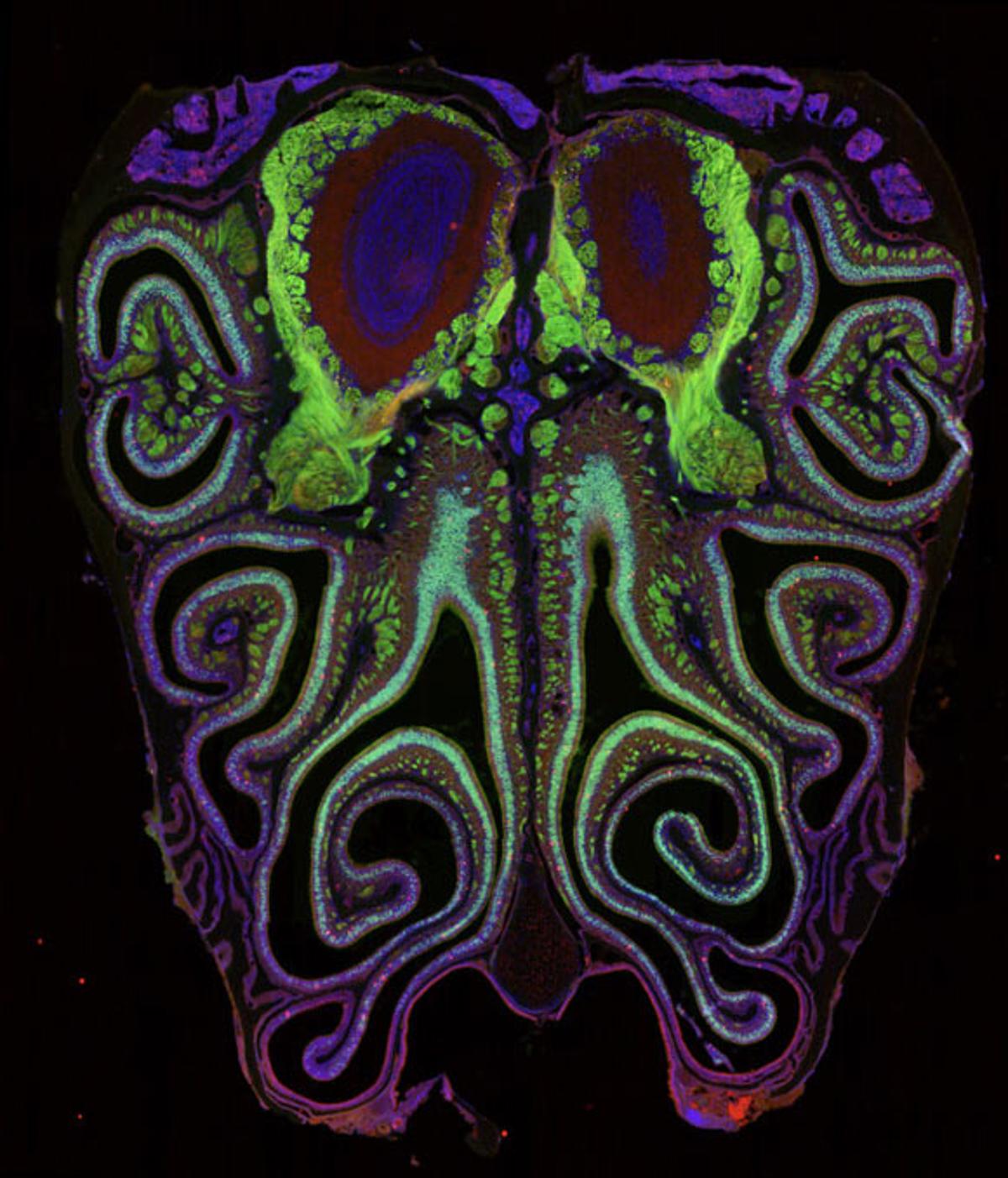
Researchers Create Detailed Map of Smell Receptors in Mouse Nose
Why It Matters
Understanding the nasal smell map clarifies how odor information is encoded and transmitted to the brain, a prerequisite for designing interventions for smell loss, a condition with limited treatment options.
Key Takeaways
- •5.5 million mouse olfactory neurons mapped across 300 mice.
- •Neurons form horizontal stripes by receptor type from nose top to bottom.
- •Stripe pattern mirrors odor maps in the olfactory bulb.
- •Retinoic acid gradient drives spatial receptor choice during development.
- •Findings open path for therapies targeting smell loss.
Pulse Analysis
For decades, olfaction was the outlier among the senses, lacking a clear topographic map that could explain how millions of receptor neurons translate chemical cues into neural signals. The new study changes that narrative by showing that mouse olfactory neurons are not randomly scattered but organized into tightly packed, overlapping horizontal bands. This spatial logic aligns with the well‑characterized odor maps in the olfactory bulb, suggesting a coordinated wiring scheme from the periphery to the brain that parallels visual and auditory systems.
The researchers achieved this breakthrough by combining single‑cell RNA sequencing with spatial transcriptomics, generating the most extensive neural tissue dataset ever—over 5.5 million cells from more than 300 animals. By pinpointing both the receptor identity and exact location of each neuron, they uncovered a gradient of retinoic acid that acts as a molecular ruler, directing cells to express specific receptors according to their position. Manipulating this gradient experimentally shifted the stripe pattern, confirming its causal role in establishing the map during development.
Beyond satisfying a basic scientific curiosity, the findings have practical implications. A detailed map of the nasal epithelium provides a scaffold for diagnosing and treating anosmia, a condition that affects millions and currently lacks effective remedies. Moreover, the methodological blueprint—large‑scale spatial omics applied to sensory tissue—can be adapted to other organs, accelerating the discovery of hidden organizational principles across biology. As the field moves toward precision therapeutics, this map could guide gene‑editing or pharmacologic strategies aimed at restoring or modulating specific odor pathways.
Researchers Create Detailed Map of Smell Receptors in Mouse Nose
Comments
Want to join the conversation?
Loading comments...