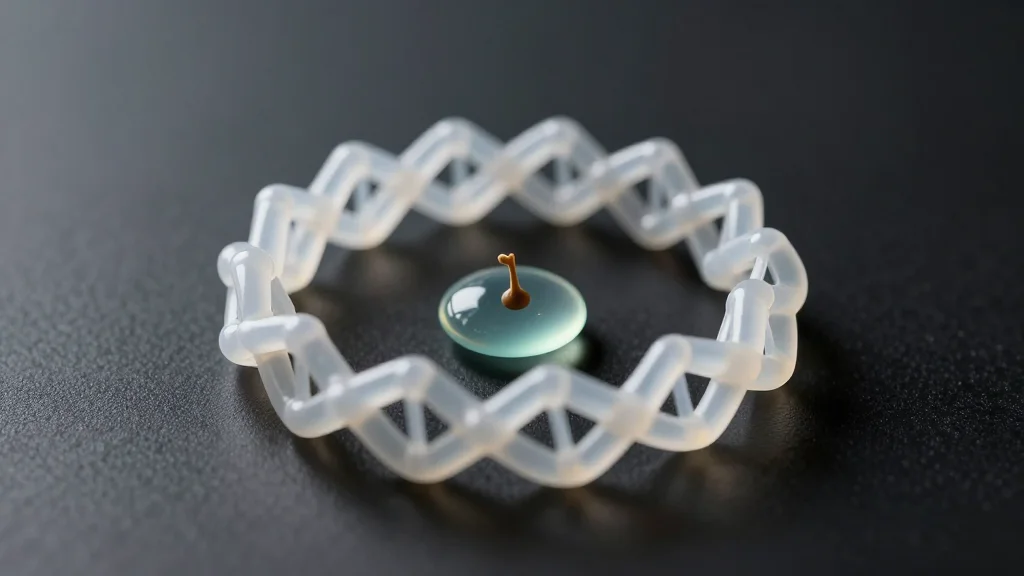
Researchers Create DNA 'Nano-Rings' To Control Viral Cell Proteins
Why It Matters
Precise positioning and orientation of membrane proteins accelerates structural biology and drug discovery, reducing time and cost for developing therapies that target these critical receptors. The technology also opens pathways for building synthetic cells and delivering proteins with unprecedented specificity.
Key Takeaways
- •DNA origami rings capture single membrane proteins with high efficiency
- •DOC‑NDs enable precise orientation control for cryo‑EM imaging
- •Platform may accelerate drug discovery targeting membrane receptors
- •Technique could aid synthetic cell construction and targeted protein delivery
- •UK‑Poland partnership highlights growing European nanotech collaboration
Pulse Analysis
Membrane proteins govern cellular communication and are the target of roughly half of all approved drugs, yet their structural analysis remains a bottleneck because they are unstable outside the lipid bilayer. Traditional methods rely on detergents or amphipols that can distort protein conformation, leading to ambiguous data. By embedding proteins in nanodisks—tiny, native‑like lipid patches—and then corralling those disks within DNA‑origami rings, researchers create a miniature, aqueous cradle that preserves native structure while offering nanometer‑scale positioning. This hybrid approach leverages the programmability of DNA nanotechnology to solve a long‑standing biophysical challenge.
The DOC‑ND platform delivers immediate benefits for high‑resolution imaging techniques such as cryo‑electron microscopy. Precise orientation of a protein within the ring eliminates the random distribution that typically forces scientists to collect massive datasets to achieve statistical significance. With a single protein consistently facing the electron beam, image processing pipelines become more efficient, cutting computational load and accelerating the path from raw micrographs to atomic models. Moreover, the ability to isolate individual proteins facilitates screening of ligand binding in situ, providing clearer insights for structure‑based drug design.
Looking ahead, the modularity of DNA‑origami scaffolds suggests broader applications beyond structural studies. Researchers envision assembling synthetic organelles by arranging multiple nanodisks, each bearing a different enzyme, to mimic metabolic pathways. In therapeutic contexts, the rings could serve as delivery vehicles that dock onto specific cellular membranes, releasing functional proteins only where needed, thereby reducing off‑target effects. The cross‑institutional collaboration underscores Europe’s growing capacity in nanobiotechnology, positioning the continent to compete with major biotech hubs in translating such innovations into commercial platforms.
Researchers create DNA 'nano-rings' to control viral cell proteins
Comments
Want to join the conversation?
Loading comments...