Why It Matters
The data reveal a direct infection risk from dropped implants, prompting OR teams to adopt proven disinfectants rather than rely on time‑based assumptions, thereby protecting patient outcomes and reducing liability.
Key Takeaways
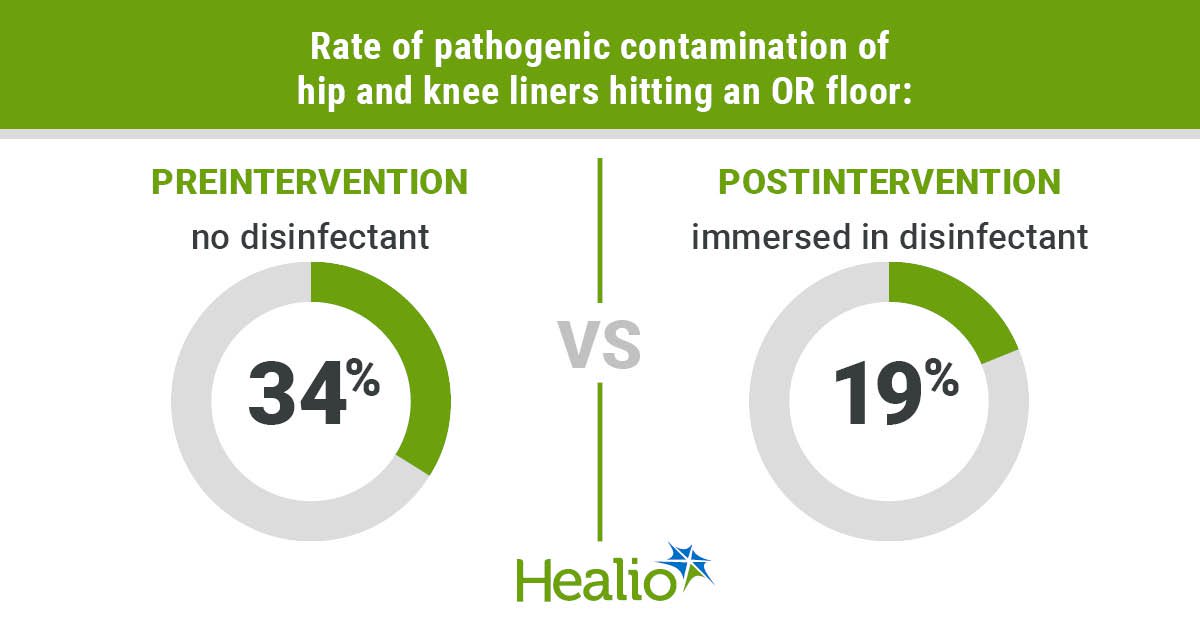
- •34% of dropped knee/hip liners contaminated instantly
- •Chlorhexidine‑alcohol reduced pathogens to 12% S. aureus
- •Ethanol less effective than CHG or povidone‑iodine
- •No safe time window; even brief floor contact risks infection
Pulse Analysis
The Duke University study provides the first controlled evidence that the myth of a brief, harmless floor contact—often called the “5‑second rule”—does not apply in the sterile environment of an operating room. By deliberately dropping 213 orthopedic liners and testing three common disinfectants, researchers quantified a 34% immediate contamination rate with Staphylococcus aureus, Enterococcus and gram‑negative bacteria. Chlorhexidine‑alcohol and povidone‑iodine both cut overall pathogen presence to roughly one‑half, yet even after treatment, a notable fraction of implants remained colonized, underscoring the limits of current cleaning methods.
For surgical teams, the practical takeaway is clear: time is not a mitigating factor when an implant contacts the floor. Protocols that simply replace a dropped device may be infeasible during emergencies, so the study recommends immediate immersion in chlorhexidine‑alcohol or povidone‑iodine as the most effective interim measure. This guidance aligns with broader infection‑control initiatives that prioritize evidence‑based decontamination over anecdotal practices, potentially reducing surgical site infection rates and associated costs.
Looking ahead, the research highlights gaps that warrant further investigation, such as longer disinfection durations, alternative agents, or adjunct technologies like ultraviolet chambers. As hospitals seek to tighten peri‑operative safety nets, integrating these findings into standard operating procedures could become a benchmark for orthopedic implant handling, influencing policy, training, and even device design to minimize contamination risks.
Researchers debunk ‘5-second rule’ in operating room
Comments
Want to join the conversation?
Loading comments...