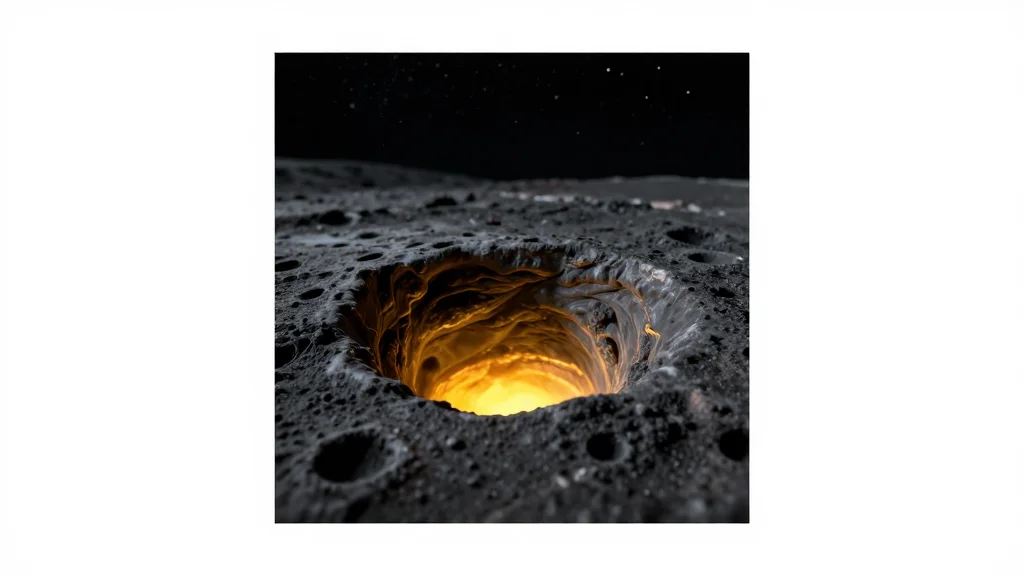
Researchers Find Sulfur-Rich Mercury Magmas Behave Differently Than Earth’s
Why It Matters
Understanding Mercury’s unique magma chemistry reshapes models of planetary differentiation and informs the search for volcanic signatures on rocky exoplanets, impacting both planetary science and astrobiology.
Key Takeaways
- •Mercury’s magmas contain up to 30% sulfur, far higher than Earth’s
- •Sulfur‑rich melts are less viscous, influencing eruption style
- •Lower crystallization temperatures explain Mercury’s smooth volcanic plains
- •Findings aid interpretation of sulfur‑rich exoplanetary magmas
Pulse Analysis
Mercury’s volcanic landscape has long puzzled scientists because its surface differs markedly from Earth’s basaltic plains. Recent experiments by Rice University researchers reveal that the planet’s magmas are saturated with sulfur, a factor that dramatically reduces melt viscosity and shifts crystallization temperatures. These chemical nuances explain why Mercury’s lava flows spread thinly, creating the extensive smooth plains observed by the MESSENGER spacecraft, and why its volcanic vents appear less explosive than terrestrial counterparts.
The implications extend beyond our solar system. Many rocky exoplanets orbit close to their stars, conditions that can drive sulfur enrichment in their interiors. By establishing a baseline for how sulfur‑rich magmas behave, the Rice study equips astronomers with diagnostic tools to identify volcanic activity on distant worlds through spectroscopic signatures. This cross‑disciplinary insight bridges planetary geology with exoplanetary science, enhancing our ability to assess planetary habitability and geological evolution.
Future missions to Mercury, such as the upcoming BepiColombo collaboration, will benefit from these laboratory findings by refining target sites for in‑situ analysis. Moreover, the research prompts a reevaluation of mantle differentiation models for sulfur‑laden bodies, potentially revising theories on core formation and magnetic field generation. As the scientific community integrates these results, the nuanced role of sulfur in planetary magmatism is poised to become a cornerstone of comparative planetology.
Researchers Find Sulfur-Rich Mercury Magmas Behave Differently Than Earth’s
Comments
Want to join the conversation?
Loading comments...