Researchers Hit 112Gbps over Wireless in a Breakthrough that Could Shape 6G
Why It Matters
The record‑breaking speed demonstrates that terahertz links can support the massive bandwidth and low‑latency demands of future 6G deployments, potentially reshaping mobile and data‑center connectivity. It also validates microcomb technology as a scalable solution for stable, high‑frequency wireless transmission.
Key Takeaways
- •112 Gbps achieved at 560 GHz using microcomb‑based terahertz system
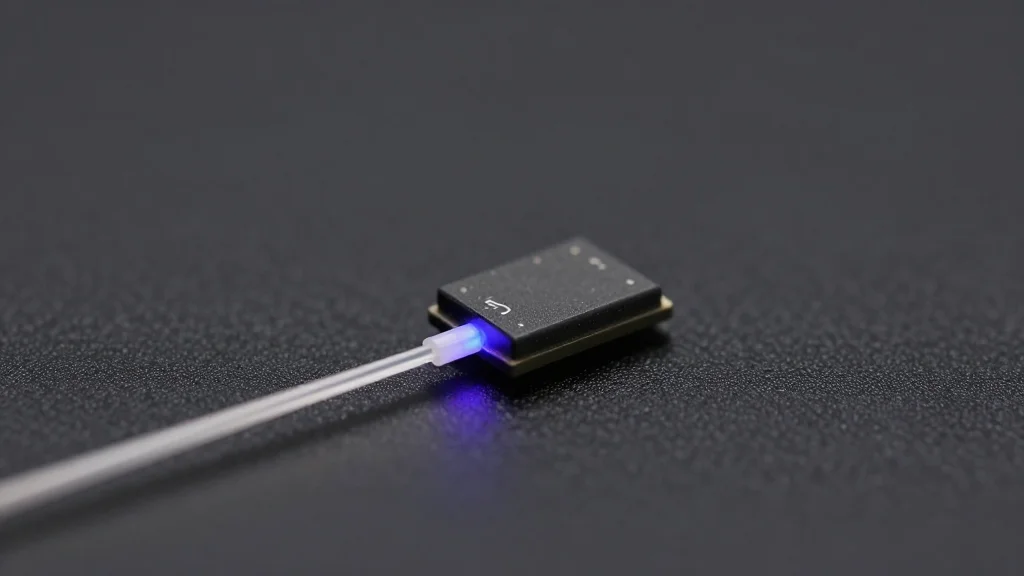
- •Microcomb chip bonded to fiber eliminates alignment distortion, fits on fingernail
- •QPSK and 16QAM modulation yielded 84 Gbps and 112 Gbps rates
- •Thermal regulation improves resonance stability against temperature fluctuations
- •Breakthrough paves way for 6G networks with ultra‑low latency
Pulse Analysis
Terahertz communication has long been touted as the next frontier for wireless data, but phase noise and power loss above 350 GHz have kept real‑world speeds modest. The Japanese consortium sidestepped these hurdles by integrating a silicon‑nitride microresonator frequency comb—often called a microcomb—directly onto a fiber interface. Microcombs act like ultra‑stable optical rulers, slicing laser light into evenly spaced frequencies that maintain low phase noise, a critical factor for reliable terahertz transmission. By permanently bonding the fiber to the chip, the researchers eliminated the need for delicate optical alignment, allowing the entire setup to shrink to a fingertip‑sized module.
The experimental system leveraged high‑order modulation formats, specifically QPSK and 16QAM, to encode data onto two coherent optical carriers. This approach delivered 84 Gbps with QPSK and a record‑setting 112 Gbps with 16QAM, marking the first 100 Gbps‑class wireless link beyond 420 GHz. In addition, built‑in thermal regulation and climate‑proofing ensured the device’s resonance remained stable despite temperature swings, addressing a common reliability concern for field deployments. The compact form factor and robustness suggest the technology could transition from laboratory benches to practical backhaul links and even mobile handsets.
For the telecom industry, the achievement signals that 6G’s promised ultra‑high‑speed, ultra‑low‑latency services are no longer speculative. Network operators seeking to offload massive data streams—such as high‑resolution video, augmented reality, and massive IoT—can look to terahertz microcomb solutions as a viable path forward. Moreover, the breakthrough may catalyze investment in photonic integration and supply‑chain development, accelerating the rollout of next‑generation wireless infrastructure across the United States and globally.
Researchers hit 112Gbps over wireless in a breakthrough that could shape 6G
Comments
Want to join the conversation?
Loading comments...