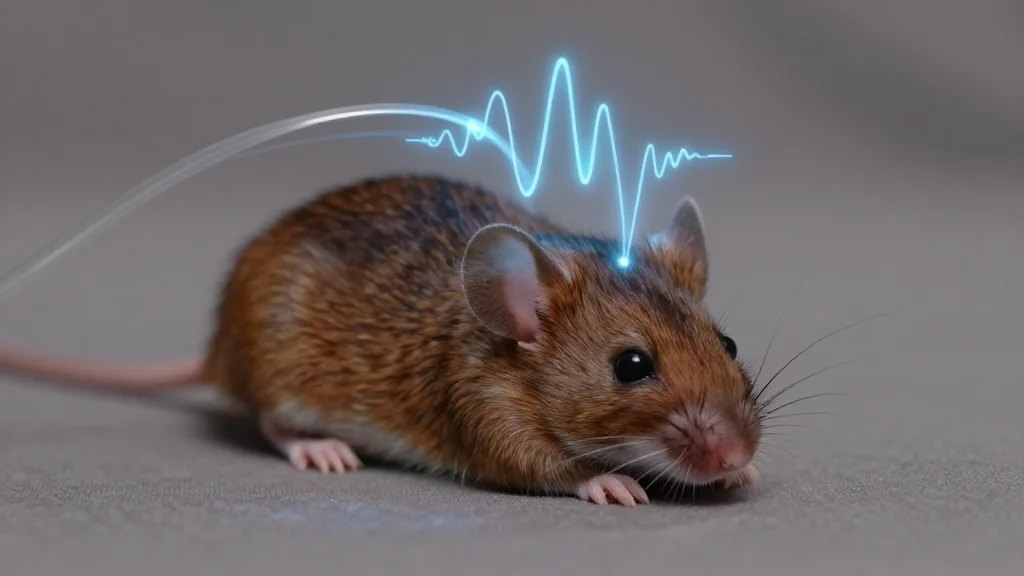
Researchers Induce the Memory-Boosting Benefits of Sleep in Parts of the Awake Brain
Why It Matters
Demonstrating that specific neural rhythms can replace key restorative aspects of sleep offers a novel target for treating sleep disorders and age‑related cognitive decline.
Key Takeaways
- •Optogenetic on/off pulses mimic deep NREM slow waves in awake mice.
- •Rhythmic stimulation, not constant silencing, reduces local sleep pressure.
- •Treated mice retain memory performance equal to fully rested controls.
- •Synaptic protein levels drop on stimulated side, mirroring natural sleep downscaling.
Pulse Analysis
Sleep is essential for maintaining synaptic balance, a concept formalized in the synaptic homeostasis hypothesis. During non‑rapid eye movement (NREM) sleep, the brain generates slow‑wave oscillations—alternating periods of neuronal firing (“on”) and silence (“off”)—that prune excess connections and consolidate memories. The intensity of these slow waves correlates with how long an organism has been awake, serving as a physiological gauge of sleep pressure. Disruptions to this process are linked to cognitive decline, mood disorders, and neurodegenerative disease, making the mechanisms behind slow‑wave activity a prime target for therapeutic research.
In a recent Nature Neuroscience paper, a University of Wisconsin‑Madison team used optogenetics to impose artificial on/off cycles on one cortical hemisphere of awake mice. By delivering light pulses timed to replicate natural deep‑sleep slow waves for thirty minutes, they achieved a localized reduction in sleep pressure, as evidenced by diminished slow‑wave activity during subsequent recovery sleep. Crucially, mice that received rhythmic stimulation performed on a tactile‑memory test as well as mice that slept normally, whereas mice subjected to continuous light‑induced silencing showed no benefit. Molecular analysis confirmed synaptic protein down‑regulation on the stimulated side, mirroring genuine sleep‑induced synaptic weakening.
These findings suggest that the rhythmic structure of slow‑wave activity, not merely reduced neuronal firing, is key to sleep’s restorative function. While optogenetic implantation is not translatable to humans, the study paves the way for less invasive approaches such as transcranial alternating current stimulation or targeted acoustic modulation to recreate on/off dynamics. If successful, such technologies could alleviate severe insomnia, mitigate age‑related memory loss, and enhance learning in high‑performance settings. Nonetheless, full‑brain sleep remains indispensable for global memory integration, and further research must assess long‑term safety and efficacy of localized brain‑wave interventions.
Researchers induce the memory-boosting benefits of sleep in parts of the awake brain
Comments
Want to join the conversation?
Loading comments...