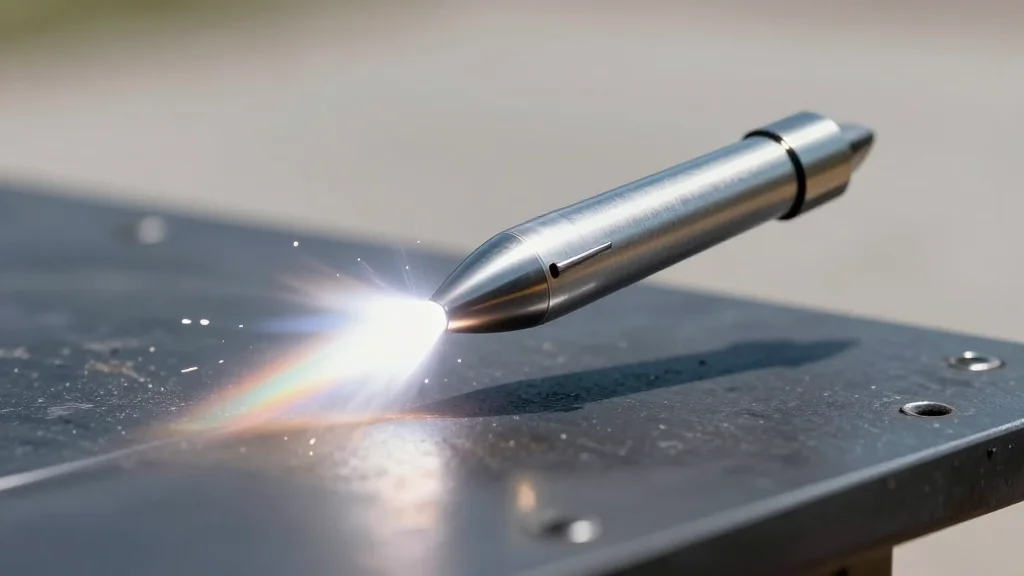
Researchers Study Impact Flashes to Detect Missile and Meteorite Composition
Why It Matters
The ability to identify incoming threats in real time enhances missile‑defense decision cycles and improves early‑warning capabilities for asteroid impact mitigation, potentially saving lives and assets.
Key Takeaways
- •Impact flash spectroscopy identifies metal type within microseconds
- •Tested 50+ impacts at up to 3 km/s velocities
- •Achieved 95% compositional accuracy across steel, aluminum, tungsten
- •Technique works for missiles and natural meteoroids
- •Can be integrated into ground‑based early‑warning sensors
Pulse Analysis
SwRI’s new impact‑flash spectroscopy leverages the fleeting burst of light produced when a high‑velocity object collides with a target. By capturing the flash with a high‑speed spectrometer and correlating it with precise range data, researchers extract a unique spectral fingerprint that reveals the projectile’s elemental makeup. The approach sidesteps traditional, slower sampling methods and delivers compositional data in under ten microseconds, a speed that aligns with modern threat‑detection timelines.
The technology holds immediate promise for missile‑defense architectures. Current radar and infrared systems can track trajectory but often lack material insight, forcing operators to assume worst‑case scenarios. Integrating flash spectroscopy into sensor suites would let commanders differentiate between conventional warheads, kinetic‑energy penetrators, or exotic payloads, refining engagement rules and reducing collateral risk. Likewise, planetary‑defense agencies could deploy the method at observatories to classify incoming meteoroids, informing impact‑mitigation strategies before atmospheric breakup.
Beyond defense, the method could spur commercial applications in aerospace testing and materials science, where rapid, non‑destructive composition analysis is valuable. As the research moves from laboratory to field trials, industry partners are likely to explore miniaturized spectrometer arrays and AI‑driven spectral interpretation to scale the solution globally. The convergence of high‑speed optics, data analytics, and defense needs positions impact‑flash spectroscopy as a transformative tool in the next generation of threat‑assessment platforms.
Researchers Study Impact Flashes to Detect Missile and Meteorite Composition
Comments
Want to join the conversation?
Loading comments...