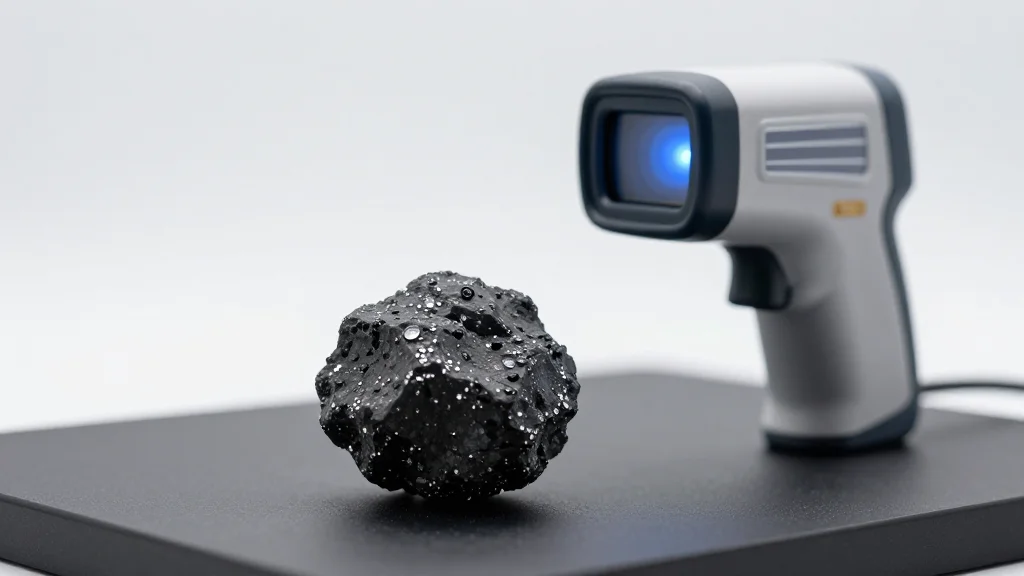
Researchers Uncover New Clues About Carbonaceous Asteroids
Why It Matters
Higher water and organic content makes carbonaceous asteroids attractive for in‑space resource utilization and informs models of Earth's early volatile delivery, impacting both commercial and scientific agendas.
Key Takeaways
- •Spectroscopy reveals higher water ice content in C-type asteroids
- •Study analyzed five near-Earth carbonaceous asteroids using new instruments
- •Findings suggest asteroids could supply resources for lunar bases
- •Results refine models of early solar system organic delivery
- •Data supports commercial interest in asteroid mining ventures
Pulse Analysis
Carbonaceous asteroids, often labeled C‑type, have long intrigued planetary scientists because they preserve the primordial chemistry of the early solar system. Recent work from Stony Brook University leverages next‑generation infrared spectrometers aboard both ground‑based observatories and the OSIRIS‑REx‑like sample‑return platform, delivering unprecedented resolution of surface mineralogy. By pinpointing spectral signatures of hydrated minerals and complex organics, the researchers demonstrate that these space rocks contain water‑ice and carbon‑rich compounds at levels far exceeding earlier estimates, reshaping our understanding of volatile distribution beyond Earth.
The implications extend well beyond academic curiosity. With water and organics identified as abundant resources, carbonaceous asteroids emerge as prime candidates for in‑space refueling depots and life‑support supplies for lunar habitats and deep‑space crews. Commercial entities eyeing asteroid mining can now model extraction economics with more confidence, factoring in the higher-than‑expected yields reported in the study. Moreover, the refined compositional data feed directly into mission planning for NASA’s Artemis program and private lunar ventures, where on‑site resource utilization could dramatically cut launch costs.
Beyond resource potential, the new findings inform planetary‑defense strategies and the narrative of Earth’s habitability. Higher organic and water content supports the hypothesis that early impacts by C‑type bodies delivered essential ingredients for life. Understanding the exact makeup of these asteroids improves impact risk assessments, as composition influences fragmentation behavior upon atmospheric entry. As the space economy matures, such scientific breakthroughs will guide policy, investment, and the next generation of exploration architectures, cementing carbonaceous asteroids as keystones in humanity’s off‑world future.
Researchers Uncover New Clues About Carbonaceous Asteroids
Comments
Want to join the conversation?
Loading comments...