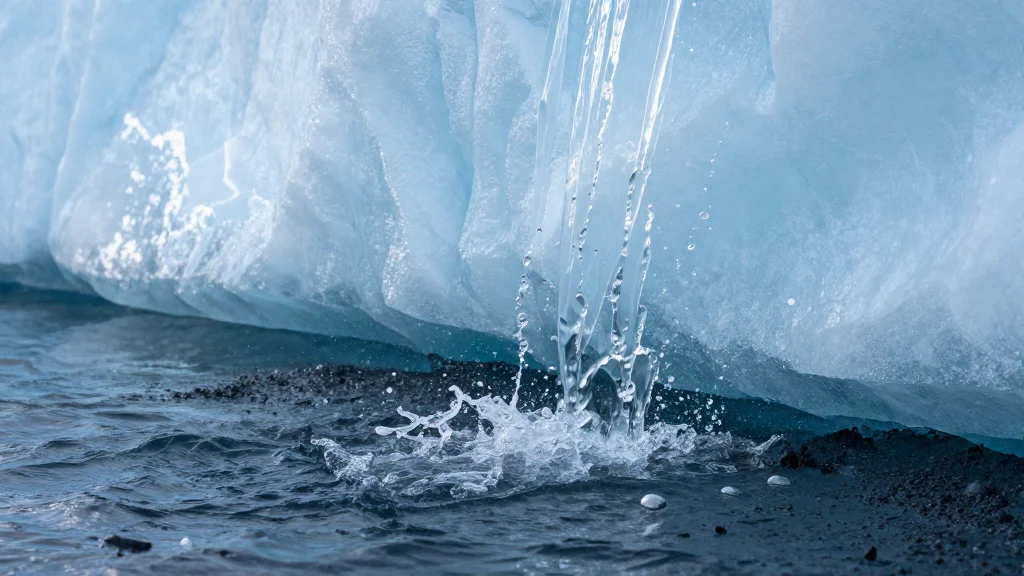
Retreating Greenland Ice Sheet Triggers Rapid Methane Loss From Seafloor Hydrates

Why It Matters
The study reshapes our understanding of Arctic carbon feedbacks by highlighting a rapid, water‑driven pathway for methane release that bypasses the slow thermal diffusion previously assumed. This mechanism could amplify warming in the coming decades, challenging the reliability of current climate projections that underestimate short‑term methane emissions from the polar shelves. Policymakers and climate modelers must now consider meltwater‑induced hydrate dissolution when assessing the urgency of emission reductions and the potential for abrupt climate shifts. Beyond the scientific realm, the findings have geopolitical implications for nations bordering the Arctic. Accelerated methane release could affect regional air quality, fisheries, and the viability of offshore infrastructure, prompting a need for coordinated monitoring and mitigation efforts among Arctic stakeholders.
Key Takeaways
- •Drilling in Melville Bay found the upper 30 m of sediment almost completely devoid of methane.
- •Salinity in shallow cores dropped below 25 ppt, indicating fresh meltwater intrusion.
- •Seismic surveys identified over 50 pockmarks aligned with the former ice‑margin front.
- •Global methane hydrate reservoirs hold ~1,800 billion metric tons; polar stores may reach 570 billion metric tons of carbon.
- •Mechanism suggests rapid hydrate loss can occur without temperature rise, challenging existing climate models.
Pulse Analysis
The Greenland discovery forces a rethink of how we model Arctic carbon feedbacks. For decades, the scientific consensus has treated hydrate destabilization as a slow, thermally driven process, with release timelines measured in centuries. This new evidence of meltwater‑driven dissolution compresses that timeline dramatically, implying that as the Greenland Ice Sheet continues to thin, large volumes of methane could be liberated within a generation. The implication is twofold: first, climate models that currently allocate a modest methane boost to the next 50 years may be underestimating warming potential; second, the feedback loop is self‑reinforcing—greater meltwater flow accelerates hydrate loss, which in turn raises atmospheric methane, enhancing greenhouse warming and further accelerating ice melt.
Historically, the Arctic has been viewed as a relatively stable methane reservoir, with the bulk of concern focused on permafrost thaw. This study adds a third, previously underappreciated vector: ice‑sheet‑driven freshwater flushing. The mechanism is analogous to a plumbing system where a sudden surge of fresh water can dissolve mineral deposits regardless of ambient temperature. In the context of climate policy, the finding underscores the urgency of limiting global warming to well below 2 °C, as even modest temperature increases could trigger meltwater pathways that unleash methane far faster than anticipated.
Looking ahead, the research community will likely prioritize high‑resolution mapping of meltwater channels beneath Arctic shelves and integrate these data into Earth system models. If similar pockmark clusters are identified elsewhere—such as off the Canadian Arctic Archipelago or Siberian coastlines—the cumulative impact could be substantial. For investors and governments, the message is clear: the risk profile of Arctic climate impacts is shifting, and mitigation strategies must account for rapid, fluid‑driven methane emissions alongside traditional heat‑driven scenarios.
Retreating Greenland Ice Sheet Triggers Rapid Methane Loss from Seafloor Hydrates
Comments
Want to join the conversation?
Loading comments...