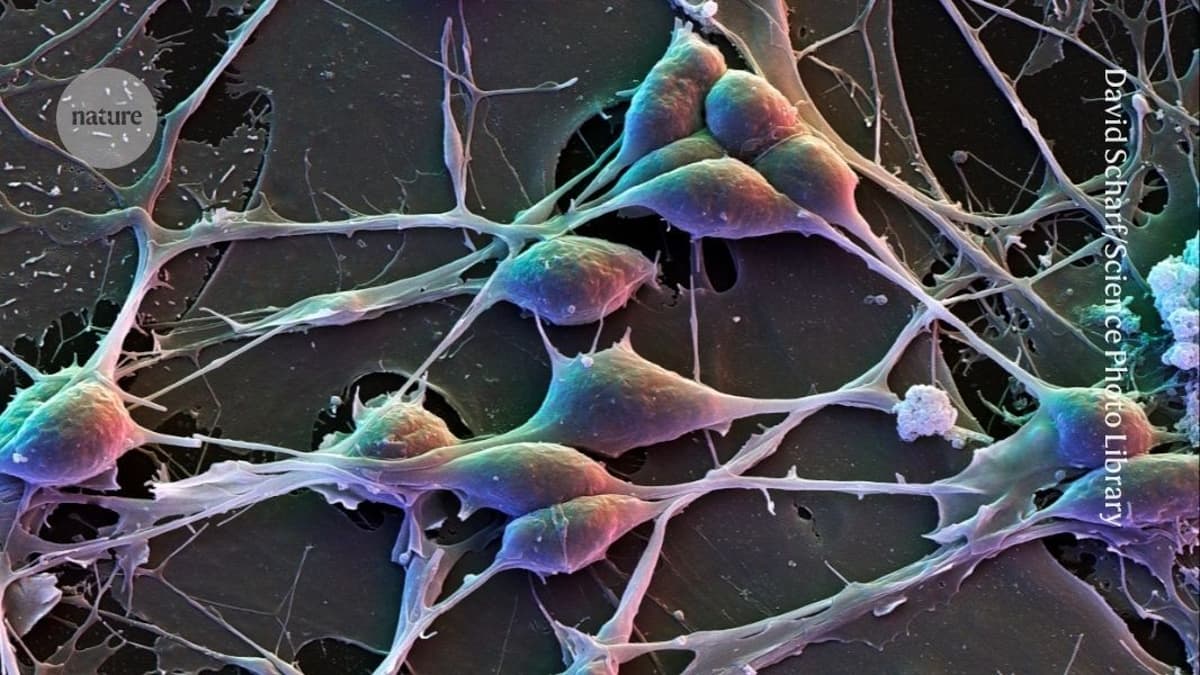
Revealed: How Male and Female Brain Cells Differ in Gene Activity
Why It Matters
Understanding sex‑specific gene activity offers new insight into the biological basis of gender‑biased neurological disease risk, paving the way for more targeted therapies. The research highlights the need to consider sex as a factor in both basic neuroscience and drug development.
Key Takeaways
- •Over 1 million brain cells analyzed across six cortical regions
- •More than 100 genes show consistent sex‑linked expression differences
- •Sex explains <1% of gene‑expression variation, highlighting within‑sex diversity
- •Findings may clarify why schizophrenia and Alzheimer’s risk differ by sex
- •Molecular signatures could guide sex‑specific therapeutic strategies
Pulse Analysis
The unprecedented scale of this single‑cell transcriptomic study—covering roughly 680,000 excitatory neurons, 290,000 inhibitory neurons, and 270,000 glial cells—allows researchers to detect minute differences that smaller datasets would miss. By defining sex through chromosomal composition rather than self‑identification, the team could isolate genetic signatures that persist across diverse cortical areas, revealing a set of over 100 genes whose activity diverges subtly between males and females. This granular view reinforces the notion that while overall brain function appears largely sex‑neutral, molecular nuances exist that could influence disease pathways.
These molecular distinctions help explain long‑observed epidemiological patterns: males are more prone to schizophrenia, ADHD, and Parkinson’s disease, whereas females exhibit higher rates of Alzheimer’s, depression, and anxiety. Although sex contributes less than one percent to total gene‑expression variance, that fraction may be enough to modulate the impact of disease‑associated variants, especially in brain regions critical for cognition and mood regulation. By linking specific gene‑expression signatures to hormonal environments, the research offers a plausible mechanistic bridge between genetics and the sex‑biased prevalence of neurological disorders.
Looking ahead, the identified gene signatures could become biomarkers for tailoring interventions. Pharmaceutical pipelines may incorporate sex‑specific expression profiles to refine target validation and improve trial stratification, potentially reducing adverse effects and boosting efficacy. Moreover, the study sets a methodological benchmark for future investigations into other organ systems where sex differences are suspected but underexplored. As precision medicine evolves, integrating such molecular insights will be essential for delivering truly personalized care across the gender spectrum.
Revealed: how male and female brain cells differ in gene activity
Comments
Want to join the conversation?
Loading comments...