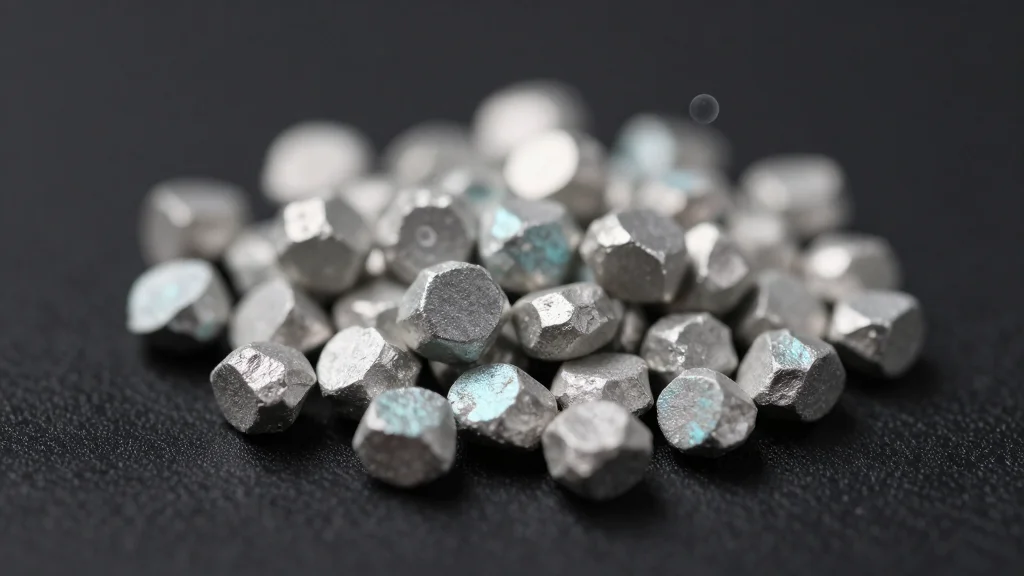
Revisiting Deep Delithiation of LiNi0.8Mn0.1Co0.1O2 (NMC811) Cathode Materials
Why It Matters
The finding gives battery manufacturers a practical materials‑engineering lever to boost cycle life of high‑voltage, high‑energy cells, a critical hurdle for electric‑vehicle range and grid‑storage applications.
Key Takeaways
- •Antisite‑free NMC811 forms reversible O1 phase during deep delithiation.
- •~2% Li/Ni antisite disorder blocks O1 formation, enhancing stability.
- •Deep delithiation at 4.8 V accelerates gas evolution and TM dissolution.
- •Controlled antisite disorder offers a design pathway for durable Ni‑rich cathodes.
Pulse Analysis
The push for higher energy density in lithium‑ion batteries has placed nickel‑rich layered oxides like NMC811 under intense scrutiny. While their high nickel content raises specific capacity, it also makes the crystal lattice vulnerable to structural rearrangements when the material is pushed to extreme states of charge. At voltages above 4.6 V, the conventional O3 layered framework can collapse into an O1 configuration, a transformation that, although partially reversible, introduces lattice strain and accelerates capacity fade.
Recent experiments reveal that the degree of Li/Ni antisite disorder—where a small fraction of nickel atoms occupy lithium sites—plays a decisive role in this phase behavior. Samples with virtually no antisite defects readily develop the O1 phase during prolonged rest at full delithiation, exposing the electrode to heightened parasitic reactions, gas release, and transition‑metal dissolution. By contrast, introducing roughly 2 % antisite disorder blocks the O3‑to‑O1 transition, curbing these side effects and delivering noticeably longer cycle life at a constant 4.8 V charge voltage. The disorder acts like a built‑in lattice stabilizer, distributing strain and limiting the pathways that lead to irreversible degradation.
For manufacturers, the implication is clear: modest, controlled antisite disorder can be a cost‑effective design knob to reconcile high voltage operation with durability. This insight dovetails with broader industry trends toward electrolyte additives and surface coatings, offering a complementary bulk‑material strategy. As electric‑vehicle ranges climb and grid‑scale storage demands longer‑lasting cells, engineering the right amount of antisite disorder could become a standard practice in next‑generation NMC cathode production, spurring further research into scalable synthesis methods and real‑world performance validation.
Revisiting Deep Delithiation of LiNi0.8Mn0.1Co0.1O2 (NMC811) Cathode Materials
Comments
Want to join the conversation?
Loading comments...