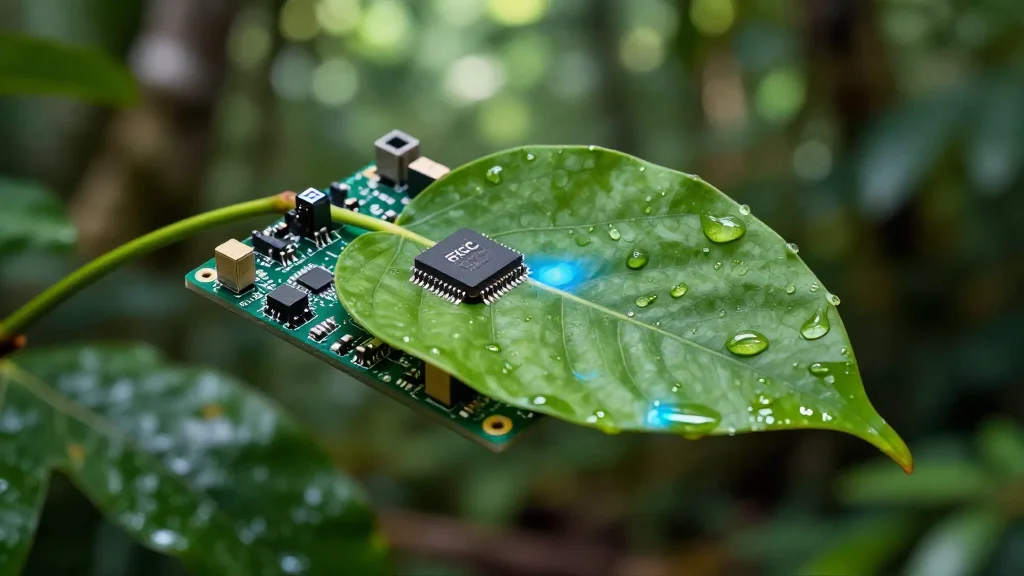
RISC-V Silicon in the Jungle Could Save the Amazon
Why It Matters
Real‑time, low‑impact monitoring provides verifiable data for carbon‑credit verification, illegal‑activity detection, and ESG reporting, accelerating climate action and forest protection.
Key Takeaways
- •PULGA RISC‑V chip consumes 13.8 mW, enabling long‑life forest sensors.
- •Biodegradable sensors harvest energy from tree fluids, avoiding solar limitations.
- •LoRa network links nodes up to 40 km, reducing data transmission costs.
- •Open‑source hardware cuts licensing fees and allows local customization.
- •Project supports carbon‑credit verification and early illegal‑activity detection.
Pulse Analysis
The Amazon basin, the planet’s largest land‑based carbon sink, has long suffered from a data vacuum that hampers effective climate policy. Traditional satellite and ground‑based observations provide only snapshots, leaving gaps in biodiversity and carbon flux monitoring. The “Internet of Trees” initiative addresses this shortfall by embedding thousands of tiny, biodegradable sensors throughout the forest, turning the canopy into a living data platform that continuously streams ecological metrics to analysts worldwide.
At the heart of the system is the PULGA microcontroller, built on the open‑source RISC‑V RV32IMCFX architecture. Consuming just 13.8 mW, the chip runs a Zephyr‑based OS with a custom Swarm layer that processes chemical signatures locally using lightweight neural networks. Energy harvesting chips, nicknamed “Flea,” draw power from tree sap—mirroring parasitic orchids—eliminating reliance on solar panels that fail under dense canopy. Sensors relay compressed alerts via LoRa, covering up to 40 km per node, which dramatically cuts bandwidth and battery drain while maintaining a resilient mesh network.
Beyond the technical feat, the project unlocks commercial and regulatory value. By delivering granular, auditable carbon data, it fuels the burgeoning carbon‑credit market and satisfies ESG mandates for corporations seeking credible offsets. The open‑source nature sidesteps costly licensing, enabling Brazil and other nations to produce hardware locally with PocketFab 3‑D printing units, reducing supply‑chain exposure. As governments and investors prioritize nature‑based solutions, the Internet of Trees could become a template for deploying sustainable, open silicon in other critical ecosystems worldwide.
RISC-V Silicon in the Jungle Could Save the Amazon
Comments
Want to join the conversation?
Loading comments...