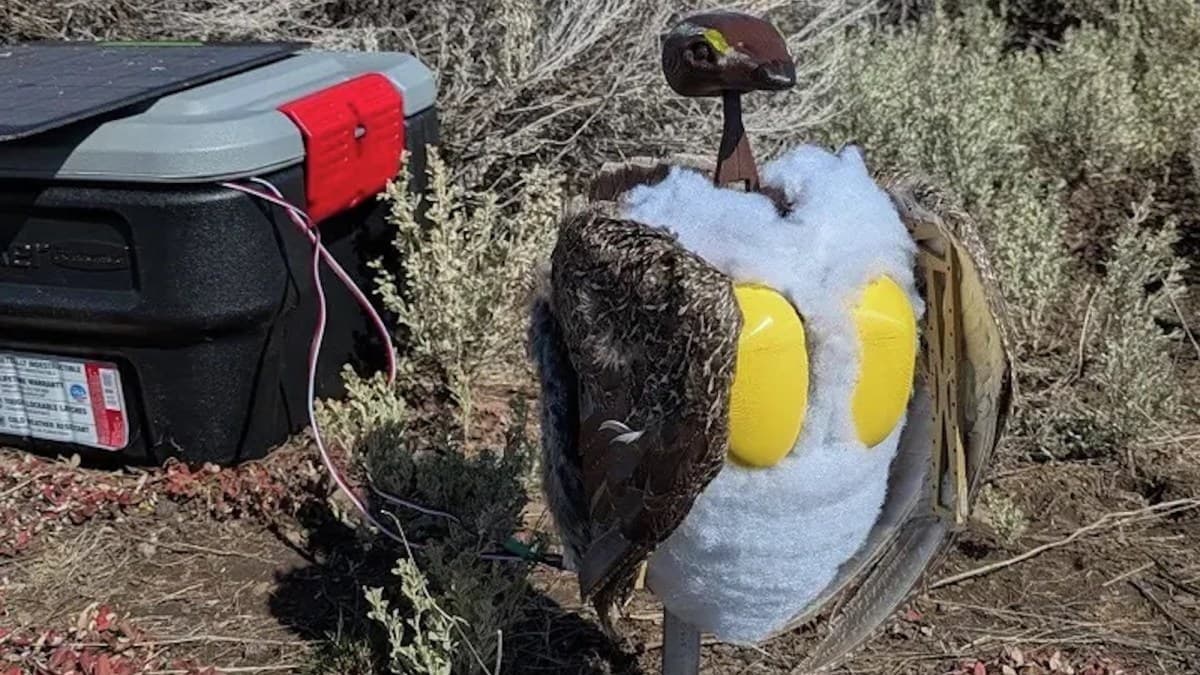
Robot Birds Deployed in Grand Teton National Park for Sexy Time
Why It Matters
Reviving the greater sage‑grouse supports biodiversity and validates emerging wildlife‑tech solutions, offering a scalable model for other threatened species. Successful breeding could reverse local population decline and justify continued habitat restoration investments.
Key Takeaways
- •Sage‑grouse declined 2.3% annually since 1960s
- •Only three male grouse observed at Grand Teton lek last year
- •Robo‑grouse mimic calls, chest‑puffing, and courtship dances
- •High‑school robotics team built decoys from repurposed materials
- •Trail cameras will monitor breeding response to robotic decoys
Pulse Analysis
The greater sage‑grouse, once numbering 16 million across North America, has become a poster child for habitat‑driven decline. Overgrazing, loss of native vegetation, and aircraft noise from the Jackson Hole Airport have pushed local populations to the brink, with recent surveys reporting just three males at the park’s primary lek. Restoring 100 acres of native pasture is a critical first step, but wildlife often hesitates to recolonize even optimal habitats without social cues that signal safety and breeding opportunities.
Enter the robotic decoys, a blend of engineering and ecology that leverages behavioral science. Designed by the RoboBroncs, Jackson Hole High School’s robotics team, the devices combine repurposed blankets and foam with authentic sage‑grouse tail feathers. Two models—static mounts and motorized units—perform the species’ signature chest‑puffing and dance displays while broadcasting recorded mating calls at dawn. By mimicking the visual and acoustic signals that male grouse use to attract females, the robots aim to spark a cascade of natural courtship behavior, drawing birds back to the newly restored leks.
If the trial proves effective, it could reshape conservation strategies for other cryptic, lek‑dependent species. Real‑time monitoring via trail cameras will provide data on visitation rates, mating displays, and eventual chick survival, offering a measurable feedback loop for adaptive management. Moreover, the low‑cost, community‑driven model demonstrates how schools and local stakeholders can partner with agencies to deploy innovative solutions at scale, potentially accelerating recovery efforts nationwide.
Robot birds deployed in Grand Teton National Park for sexy time
Comments
Want to join the conversation?
Loading comments...