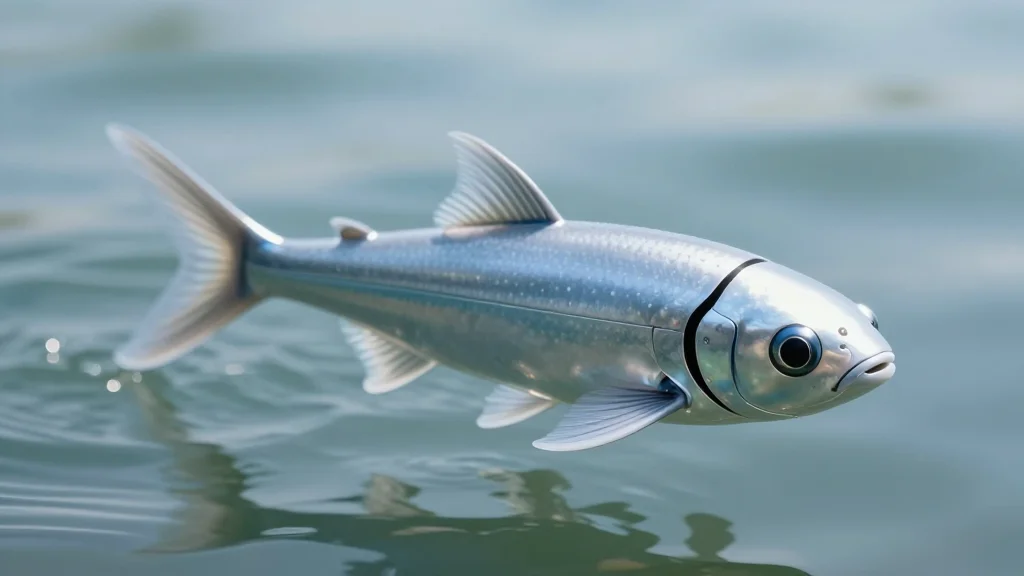
Robotic Fish Prototype Cuts Aquaculture Stress While Inspecting Nets and Water
Why It Matters
The technology offers a low‑impact, precision monitoring solution that can boost fish health, lower mortality rates, and cut labor costs in a rapidly expanding aquaculture sector.
Key Takeaways
- •Undulatory propulsion eliminates propeller noise, lowering fish stress.
- •Modular sensor suite enables real‑time temperature, depth, and water quality data.
- •Operates up to 20 m depth, 500 m horizontal remote range.
- •180° panoramic vision improves net inspection accuracy.
- •Hybrid teleoperation via cable or acoustic modem enhances flexibility.
Pulse Analysis
Aquaculture faces a paradox: the need for constant underwater monitoring to ensure optimal water quality and net integrity, yet traditional inspection methods—divers, ROVs with propellers, bright lights—disrupt fish behavior and increase stress. Elevated cortisol levels can impair growth and raise susceptibility to disease, eroding profitability for fish farms that already contend with tight margins and regulatory scrutiny. The industry therefore seeks tools that can gather high‑resolution data without compromising the delicate marine environment.
UJIFISH tackles this challenge with a biomimetic design that mimics the swimming motion of adult fish. Its undulatory tail generates smooth hydrodynamic flow, dramatically cutting acoustic signatures and hydraulic turbulence compared with conventional thrusters. The platform’s modular architecture supports plug‑and‑play sensors for temperature, depth, salinity, pH and dissolved oxygen, feeding real‑time metrics to farm managers via either a tethered cable or an acoustic modem. With a 180‑degree panoramic camera and a 20‑meter depth envelope, the robot can navigate complex net structures, spot tears or bio‑fouling, and even deploy auxiliary devices at precise locations, all while staying within a 500‑meter horizontal control radius.
The broader implications are significant. By reducing fish stress and minimizing human exposure to hazardous underwater work, UJIFISH can improve animal welfare, lower mortality, and enhance overall yield—key drivers of profitability in a market projected to exceed $200 billion by 2030. Moreover, its data‑rich insights enable predictive maintenance of net pens, optimizing feed usage and reducing environmental impact. Future iterations aiming for greater autonomy, longer endurance and active buoyancy control could further cement robotic fish as a cornerstone of sustainable, precision aquaculture.
Robotic fish prototype cuts aquaculture stress while inspecting nets and water
Comments
Want to join the conversation?
Loading comments...