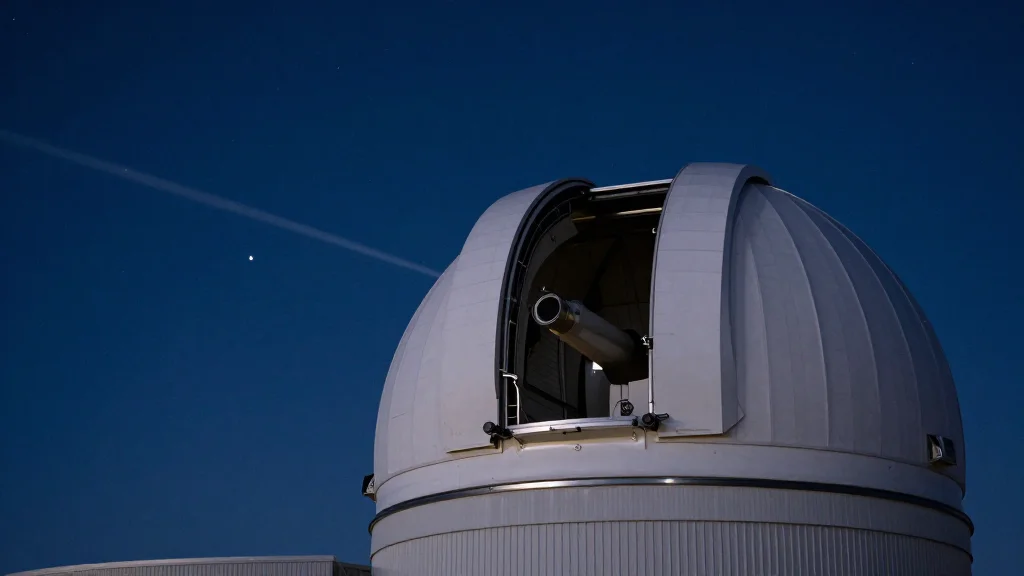
Rubin Observatory Unveils 11,000 New Asteroids, Boosting Solar‑System Census

Why It Matters
The influx of newly cataloged asteroids sharpens humanity’s ability to detect and mitigate potential impact threats, a core component of planetary defense strategy. By dramatically expanding the known population, Rubin also provides the raw material for studies of solar‑system formation, migration patterns, and the delivery of volatile compounds to early Earth, informing models that link asteroid dynamics to the emergence of life. In the broader scientific ecosystem, Rubin’s data will democratize access to high‑quality observations, enabling smaller institutions and citizen scientists to contribute to asteroid characterization, orbital refinement, and even the search for rare objects such as interstellar visitors. The observatory’s success underscores the value of large‑scale, open‑access surveys in accelerating discovery across multiple disciplines.
Key Takeaways
- •Rubin Observatory identified >11,000 new asteroids in its first data release
- •Tens of thousands of additional moving objects were measured
- •Known asteroid count is ~1.4‑1.5 million; Rubin could add millions more over 10 years
- •Rapid alert system delivers detections within minutes, aiding planetary‑defense networks
- •Full Legacy Survey of Space and Time begins later this year, expanding nightly sky coverage
Pulse Analysis
Rubin’s early haul signals a paradigm shift in how the astronomical community approaches small‑body discovery. Historically, asteroid surveys have been incremental, relying on modest apertures and narrow fields of view that required years to build a statistically meaningful sample. Rubin flips that model by coupling a massive light‑gathering surface with a camera that can image the entire visible sky every few nights. The result is a data deluge that forces a re‑evaluation of resource allocation: follow‑up spectroscopy, which traditionally lagged behind discovery, will need to scale up dramatically to keep pace with the flood of targets.
From a competitive standpoint, Rubin’s open‑access policy levels the playing field. While NASA’s dedicated NEO Surveyor will excel at detecting faint, potentially hazardous objects in infrared, Rubin’s optical depth and cadence complement it by capturing a broader swath of the main belt and outer solar system. The synergy between these platforms could compress the timeline for identifying impact‑risk objects from decades to a few years, fundamentally altering risk assessment frameworks used by agencies like NASA’s Planetary Defense Coordination Office.
Looking ahead, the scientific payoff extends beyond defense. With millions of new asteroids, researchers can refine models of planetary migration, test theories of early solar‑system instability, and perhaps identify previously unknown reservoirs of water‑rich bodies. Commercial interests in asteroid mining will also gain a richer target list, potentially accelerating the timeline for resource extraction in space. In short, Rubin’s early success is not just a headline; it is the opening act of a decade‑long transformation in how we map, monitor, and ultimately understand the small bodies that share our cosmic neighborhood.
Rubin Observatory Unveils 11,000 New Asteroids, Boosting Solar‑System Census
Comments
Want to join the conversation?
Loading comments...