Rubin Tracks Skyscraper-Size Asteroids, Failed Supernovas, and Interstellar Visitors
Why It Matters
Rubin’s unprecedented data volume will transform planetary defense, dark‑energy research, and our understanding of cosmic origins, while forcing the astronomy community to innovate new data‑handling pipelines.
Key Takeaways
- •Rubin will discover ~1 million new asteroids in its first year
- •Super‑fast rotator 2025 MN 45 spins every 1.88 minutes
- •Rubin expects 250,000 Type Ia supernovas annually to probe dark energy
- •Alert system generated 800,000 transient alerts in a single night test
- •Estimates predict Rubin could find 5–500 interstellar objects
Pulse Analysis
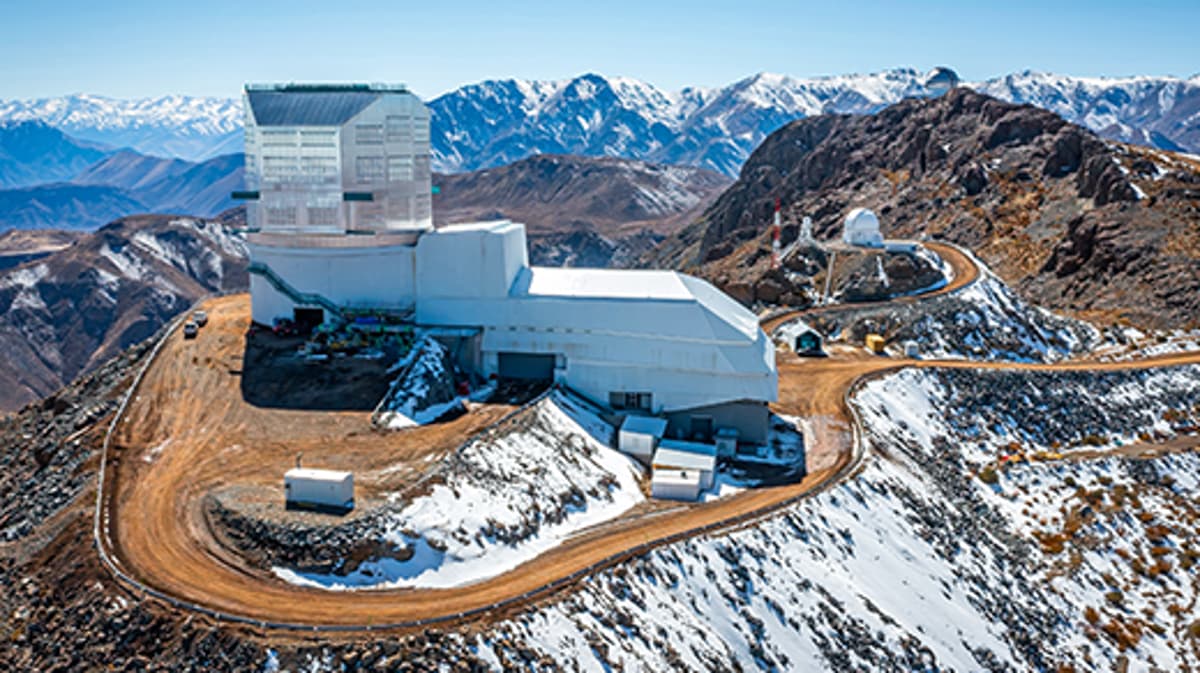
The Vera C. Rubin Observatory, perched on Chile’s Cerro Pachón, marks a turning point for big‑data astronomy. Its 8.4‑meter primary mirror and world‑largest digital camera will repeatedly image the entire Southern sky, creating a time‑lapse movie that dwarfs any previous survey. This capability translates into a nightly data stream of roughly 20 TB and millions of alerts, challenging traditional analysis methods but also offering unprecedented opportunities for machine‑learning pipelines, cloud‑based archives, and collaborative data brokers that will become the backbone of modern astrophysics.
Beyond the data deluge, Rubin’s scientific payoff is profound. The early discovery of a super‑fast rotating asteroid, 2025 MN 45, suggests that some mid‑size bodies retain monolithic cores, reshaping models of solar‑system formation and impact risk assessment. Meanwhile, the observatory’s ability to flag 800,000 transient events in a single night foreshadows a future where 250,000 Type Ia supernovas per year will refine measurements of dark energy and help resolve the Hubble tension. The detection of a faint, failed supernova in Andromeda further illustrates Rubin’s sensitivity to phenomena that were previously invisible.
Rubin’s impact will ripple across the broader scientific ecosystem. By delivering photometric redshifts for billions of galaxies, it will anchor studies of large‑scale structure, fast radio bursts, and interstellar objects—potentially uncovering hundreds of visitors from other star systems. However, the sheer volume of alerts forces astronomers to confront a new bottleneck: information overload. Developing real‑time filtering, automated classification, and public‑engagement tools will be essential to turn Rubin’s firehose of data into actionable insight, ensuring that the observatory not only expands our cosmic knowledge but also reshapes how the scientific community operates.
Rubin Tracks Skyscraper-Size Asteroids, Failed Supernovas, and Interstellar Visitors
Comments
Want to join the conversation?
Loading comments...