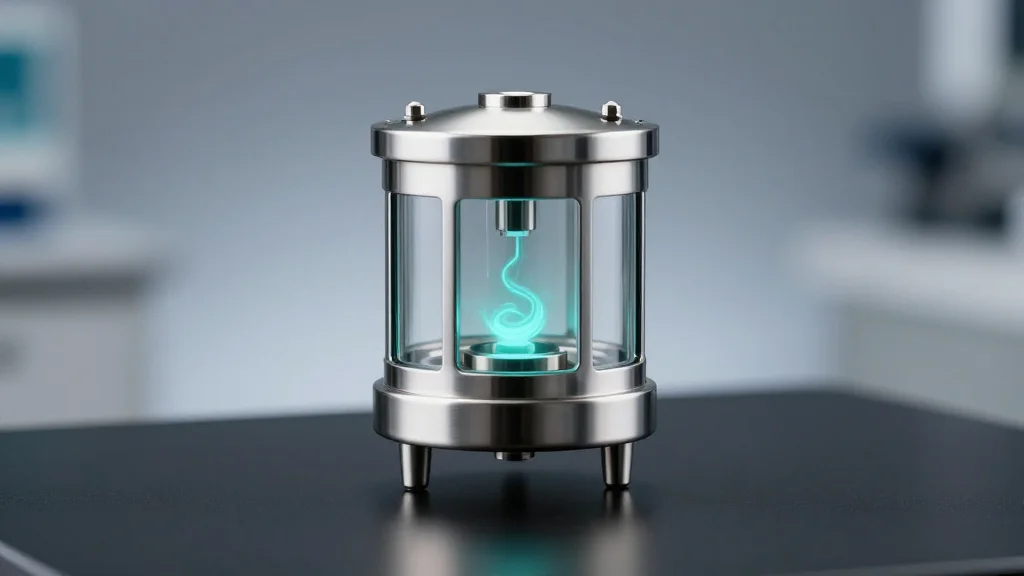
Sandia National Laboratories and Quantinuum Validate 98-Qubit Helios Trapped-Ion Framework
Companies Mentioned
Why It Matters
Helios’ fidelity and dynamic control push trapped‑ion technology into a regime where quantum advantage is practical, accelerating commercial quantum‑computing adoption.
Key Takeaways
- •Helios achieves 99.9975% single‑qubit fidelity.
- •Two‑qubit gates reach 99.921% fidelity on 98 qubits.
- •Real‑time virtual‑qubit mapping enables conditional quantum logic.
- •Volumetric benchmarks place Helios beyond classical supercomputer simulation.
- •QCCD architecture provides all‑to‑all connectivity via rotatable ion ring.
Pulse Analysis
Trapped‑ion platforms have long been praised for their intrinsic coherence, but scaling to dozens of qubits while preserving gate fidelity has been a hurdle. Helios demonstrates that a 98‑qubit array can sustain error rates low enough to execute circuits that outpace classical simulation, positioning it alongside superconducting rivals such as IBM and Google. By achieving single‑qubit infidelities of 2.5 × 10⁻⁵ and two‑qubit infidelities of 7.9 × 10⁻⁴, the system meets the error thresholds required for near‑term error‑corrected protocols, offering a compelling proof point for the trapped‑ion approach.
The core innovation lies in Helios’ QCCD architecture, which leverages a four‑way "X" junction and a rotatable ion storage ring to route qubits without expanding chip complexity. This physical routing, combined with a dedicated cache zone, allows parallel ion shuttling and laser cooling, effectively raising the operational clock speed. Moreover, the integrated Helios runtime translates algorithmic virtual qubits into real‑time transport commands, supporting conditional branches, loops, and early termination—features traditionally reserved for classical processors. This dynamic compilation reduces the need for static circuit pre‑planning and opens the door to more sophisticated quantum software stacks.
From a market perspective, Helios validates the commercial viability of large‑scale trapped‑ion systems. The exascale‑year simulation cost highlighted in the Nature paper underscores a clear quantum advantage, which can attract enterprise workloads in chemistry, materials science, and optimization. The partnership between a federal laboratory and Quantinuum also signals a growing ecosystem where government research accelerates private‑sector productization, potentially shortening the timeline for quantum‑enabled services to reach mainstream cloud platforms.
Sandia National Laboratories and Quantinuum Validate 98-Qubit Helios Trapped-Ion Framework
Comments
Want to join the conversation?
Loading comments...