Sandwiching Ligands Finally Make Iron(I) Stable in Air
Why It Matters
Air‑stable iron(I) offers a cheap, abundant alternative to precious‑metal catalysts, enabling greener and more scalable industrial chemistry.
Key Takeaways
- •Durene ligands sandwich iron(I), granting air stability
- •Eliminates need for hazardous strong reducing agents
- •Enables palladium‑free Kumada couplings in high‑throughput settings
- •Potential to source iron from scrap metal lowers raw‑material costs
Pulse Analysis
The discovery of an air‑stable iron(I) complex marks a turning point for catalysis, a field long dominated by scarce and expensive metals such as palladium, rhodium, and nickel. These precious metals drive the synthesis of pharmaceuticals, agrochemicals, and polymers, but their price volatility and geopolitical supply risks push companies toward more sustainable alternatives. Iron, the most abundant transition metal on Earth, offers comparable reactivity when forced into the +1 oxidation state, yet its extreme sensitivity to oxygen has kept it on the laboratory bench rather than the production line. By stabilizing iron(I) with a simple aromatic sandwich—two durene molecules—the Karlsruhe team bridges the gap between laboratory curiosity and industrial workhorse.
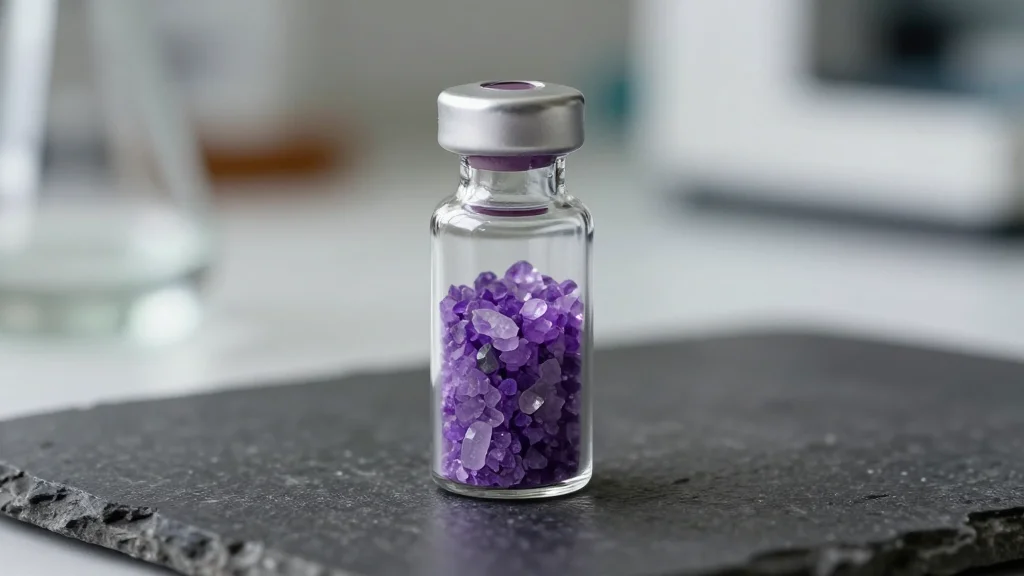
The key to the new reagent’s robustness lies in the steric and electronic shielding provided by the durene ligands. Their flat, methyl‑substituted benzene faces cradle the iron center, reducing its tendency to donate the extra electron to atmospheric oxygen. This design sidesteps the need for strong reducing agents that often create side reactions and complicate scale‑up. Moreover, the compound’s purple crystals can be handled in ambient conditions, dramatically lowering safety barriers and equipment costs for manufacturers. The researchers demonstrated its utility in a one‑pot Kumada coupling, a cross‑coupling reaction traditionally performed with palladium or nickel catalysts, showing comparable yields without the high material expense.
Looking ahead, the implications extend beyond a single reaction type. An air‑stable iron(I) source could be integrated into a broad suite of cross‑couplings, hydrogenations, and C‑H activation processes, reshaping the economics of fine‑chemical production. The team’s parallel effort to extract iron directly from scrap metal promises a closed‑loop supply chain, further reducing carbon footprints and raw‑material expenditures. As regulatory pressure mounts for greener manufacturing, such innovations position iron to become the new catalyst of choice for cost‑sensitive, environmentally conscious industries.
Sandwiching ligands finally make iron(I) stable in air
Comments
Want to join the conversation?
Loading comments...