Satellite Data Reveal Rising Methane Levels
Why It Matters
Methane’s accelerating growth threatens climate‑change mitigation targets and highlights that energy‑sector cuts alone are insufficient.
Key Takeaways
- •Satellite blend corrected biases, enabling year‑by‑year methane tracking
- •Emissions surge in 2021 added 25% of total methane increase
- •Decline in hydroxyl radicals contributed 16% of rise
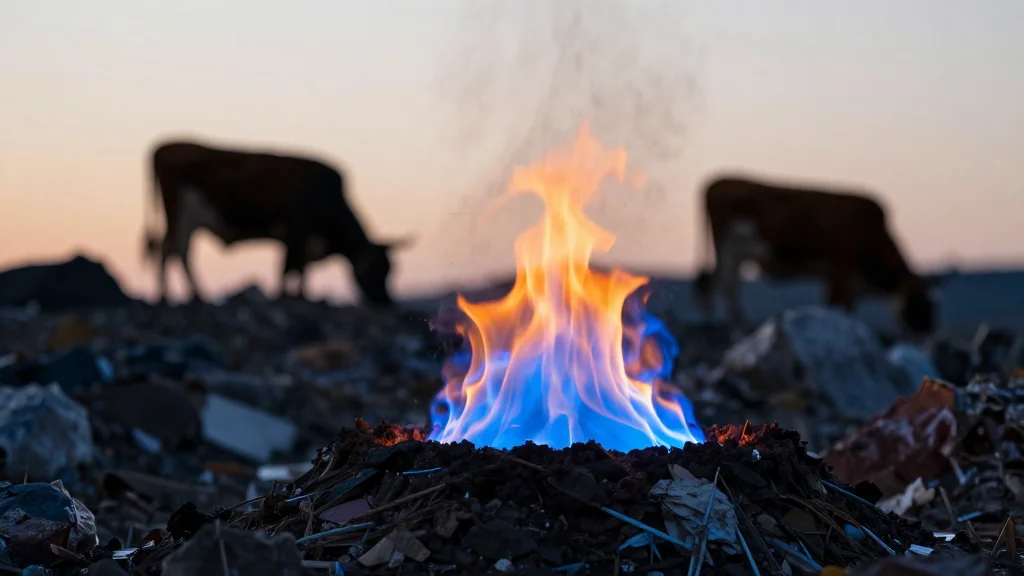
- •Livestock and waste now dominate anthropogenic methane sources
- •Global Methane Pledge progress offset by rising non‑energy emissions
Pulse Analysis
The Harvard team’s innovative use of the European Sentinel‑5P TROPOMI instrument together with Japan’s GOSAT satellite marks a leap forward in atmospheric monitoring. By applying machine‑learning calibration, researchers eliminated systematic biases that have long plagued satellite methane readings, delivering a consistent, daily global dataset for 2019‑2024. This methodological breakthrough not only improves the precision of emission inventories but also sets a new standard for cross‑satellite data fusion in climate science.
Analysis of the cleaned dataset reveals a nuanced picture of methane drivers. While a 25% share of the 59% overall increase can be traced to a 2021 spike in livestock, landfill, and wastewater emissions, the remaining 16% stems from a measurable decline in hydroxyl radicals—natural atmospheric cleaners that oxidize methane. The study underscores that methane growth is not solely a function of emission volume; atmospheric chemistry plays a pivotal, albeit secondary, role. This dual‑factor insight explains why the growth rate slowed after 2022, as hydroxyl concentrations began to recover, even though emission levels remained roughly constant.
Policy implications are stark. The Global Methane Pledge’s pledge to cut anthropogenic emissions by 30% by 2030 is being undermined by rising non‑energy sources, particularly animal agriculture and waste management. To meet climate targets, governments must broaden mitigation strategies beyond oil and gas, incorporating stricter livestock regulations, waste‑to‑energy technologies, and incentives for methane‑capture systems. Moreover, the lingering scientific debate over hydroxyl‑radical impacts signals a need for next‑generation measurement platforms, such as dedicated in‑situ atmospheric probes, to resolve uncertainties and guide more effective climate action.
Satellite data reveal rising methane levels
Comments
Want to join the conversation?
Loading comments...