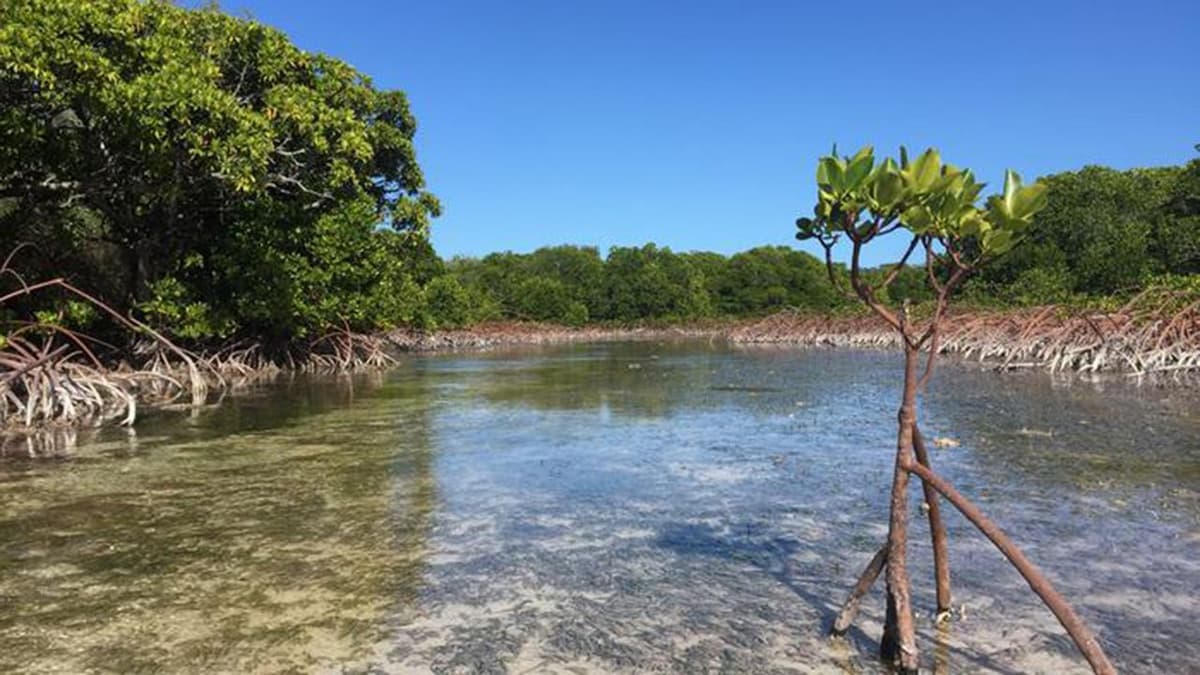
Satellite Images Reveals Mangroves Rebounding Worldwide — but Here's Why They Could Still 'Drown'
Why It Matters
The rebound highlights mangroves’ potential as a nature‑based solution for coastal protection and climate mitigation, but ongoing sea‑level rise could reverse these gains, underscoring the urgency of conservation and restoration policies.
Key Takeaways
- •Net global mangrove loss shrank to 1% since 1980s
- •Gains after 2010 driven by restoration and natural expansion
- •Satellite and AI mapping enabled 40‑year change detection
- •U.S. Gulf Coast mangroves expanding into higher latitudes
- •Rising seas could turn mangroves from carbon sinks to sources
Pulse Analysis
Satellite monitoring has become a game‑changer for tracking coastal ecosystems, and the latest mangrove analysis underscores that power. By stitching together four decades of Landsat and high‑resolution PlanetScope data, researchers built annual change maps that reveal a subtle but meaningful shift from loss to gain. This long‑term perspective not only corrects earlier, overly pessimistic estimates but also quantifies the contribution of mangroves to coastal resilience, storm buffering, and carbon sequestration—key metrics for investors and policymakers focused on climate‑smart infrastructure.
The post‑2010 rebound stems from a mix of deliberate restoration and natural processes. In Southeast Asia, abandoned shrimp farms have been reclaimed by mangrove seedlings, while river deltas worldwide benefit from sediment‑rich mudflats that provide fresh substrate. Machine‑learning algorithms refined classification accuracy, allowing scientists to differentiate true forest gain from temporary water‑level fluctuations. Notably, the U.S. Gulf Coast shows poleward expansion as warming waters enable mangroves to colonise habitats previously dominated by salt‑marsh vegetation, expanding the geographic range of these carbon‑rich forests.
Despite the encouraging trend, future threats loom large. Climate models predict sea‑level rise that could inundate mangrove root zones beyond tolerable limits, potentially flipping these ecosystems from carbon sinks to net emitters. This risk amplifies the need for proactive conservation, such as protecting upstream sediment flows and limiting coastal development that restricts natural landward migration. For businesses and governments, integrating mangrove protection into climate‑risk assessments offers a dual benefit: safeguarding coastal assets while preserving a natural carbon‑capture mechanism that is both cost‑effective and adaptable.
Satellite images reveals mangroves rebounding worldwide — but here's why they could still 'drown'
Comments
Want to join the conversation?
Loading comments...