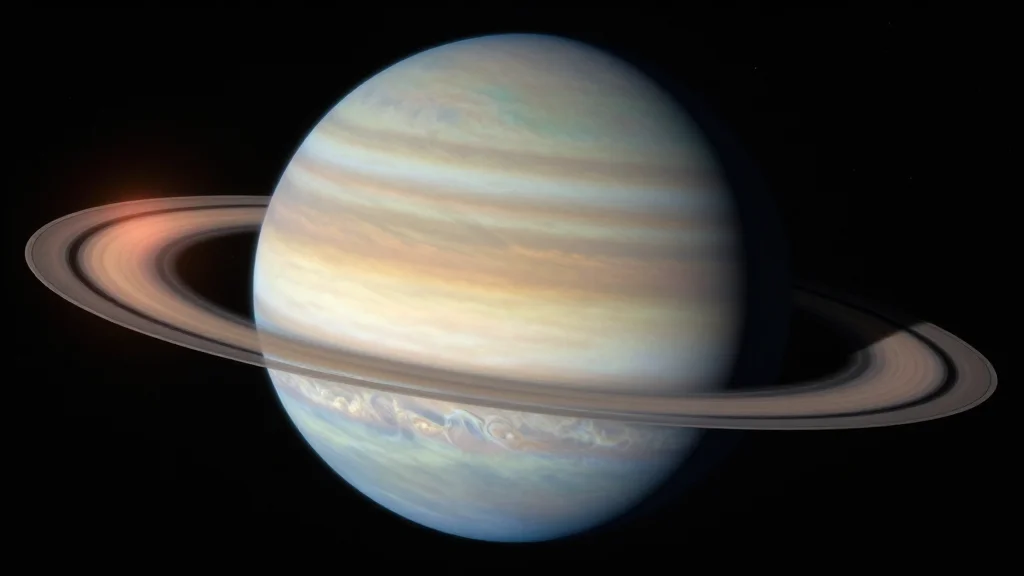
Saturn-Sized Exoplanet with Earth-Like Temperature Reveals Methane-Rich Atmosphere
Why It Matters
The discovery validates models of carbon chemistry in temperate giants and offers a comparative framework for understanding Earth‑like atmospheric processes, influencing both exoplanet science and climate research.
Key Takeaways
- •TOI‑199b is a Saturn-sized planet with ~80°C temperature
- •JWST transmission spectroscopy detected strong methane absorption in its atmosphere
- •Possible ammonia and carbon dioxide signatures hint at complex chemistry
- •First detailed atmospheric study of a temperate gas giant expands exoplanet models
- •Findings may improve understanding of Earth’s atmospheric evolution
Pulse Analysis
The hunt for worlds beyond our solar system has moved from cataloguing hot Jupiters to probing more temperate giants that bridge the gap between icy gas giants and scorching close‑in planets. Only a handful of such Saturn‑sized bodies orbiting within their stars’ habitable zones have been identified, and until now none had been examined in atmospheric detail. NASA’s James Webb Space Telescope, with its unprecedented infrared sensitivity, enables transmission spectroscopy that isolates the faint fingerprints of gases as a planet transits its star, opening a new window on planetary chemistry.
TOI‑199b, located about 330 light‑years away, completes an orbit every 100 days and maintains a surface temperature near 80 °C—warm enough to keep volatile compounds in the gas phase but far cooler than the thousands of degrees seen on hot Jupiters. JWST’s spectrographs recorded a pronounced methane absorption band, confirming theoretical predictions that temperate gas giants should retain this simple hydrocarbon. Subtle hints of ammonia and carbon dioxide suggest a richer chemical inventory, offering a rare glimpse at processes that may parallel early Earth’s atmospheric evolution, albeit on a much larger scale.
The methane detection validates existing formation models that link carbon chemistry to a planet’s distance from its star, and it provides a benchmark for refining simulations of atmospheric dynamics across a spectrum of planetary masses. As researchers plan follow‑up observations, the data will help determine whether TOI‑199b is an outlier or representative of a broader class of temperate giants. Ultimately, insights from such worlds could inform climate‑science debates on Earth by illustrating how greenhouse gases behave under different pressure and temperature regimes, justifying continued investment in JWST and next‑generation telescopes.
Saturn-sized exoplanet with Earth-like temperature reveals methane-rich atmosphere
Comments
Want to join the conversation?
Loading comments...