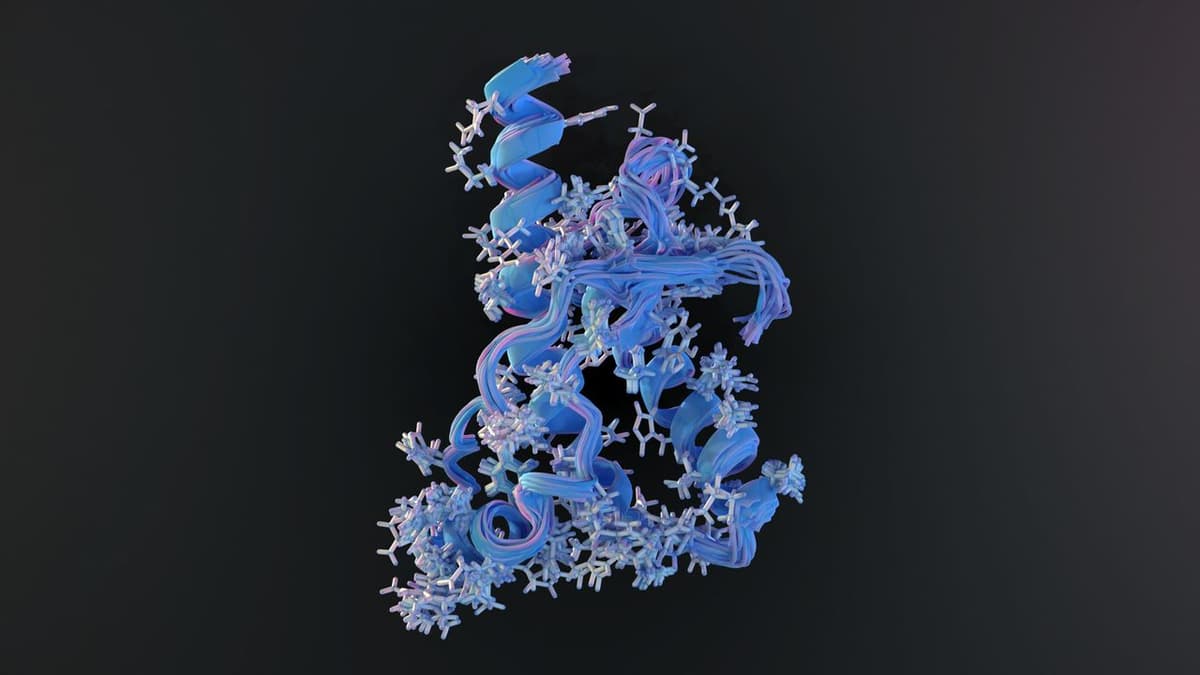
Science History: Doctor Hypothesizes that 'Transmissible Proteins' Can Cause Disease, Contradicting a 'Central Dogma' Of Molecular Biology — April 9, 1982
Why It Matters
The prion concept reshaped understanding of infectious agents, proving proteins alone can propagate pathology and prompting a revision of core biological principles; this insight drives modern neurodegenerative research and informs public‑health safeguards against protein‑based epidemics.
Key Takeaways
- •Prusiner identified protein-only infectious agents, coining "prion" in 1982.
- •Prion hypothesis challenged the central dogma by proposing protein self-replication.
- •Subsequent research confirmed prion structures and linked them to BSE and vCJD.
- •Nobel Prize awarded to Prusiner in 1997 for pioneering prion work.
Pulse Analysis
The 1982 breakthrough by Stanley Prusiner arrived at a time when the scientific community was still wrestling with mysterious neurodegenerative disorders such as scrapie, kuru, and Creutzfeldt‑Jakob disease. By isolating a proteinaceous agent that could induce disease without any detectable DNA or RNA, Prusiner introduced a paradigm shift that questioned the long‑standing central dogma—that genetic information flows only from nucleic acids to proteins. His rigorous experiments, including protein degradation studies and ultraviolet‑irradiation tests, provided the first concrete evidence that a misfolded protein could act as an infectious entity.
In the years that followed, researchers mapped the three‑dimensional structure of prions, uncovering how distinct conformations could template the conversion of normal cellular proteins into pathogenic forms. This mechanistic insight explained the remarkable resistance of prions to conventional sterilization and illuminated why diseases like bovine spongiform encephalopathy (BSE) could cross species barriers, ultimately leading to variant Creutzfeldt‑Jakob disease in humans. The prion model also opened new investigative pathways into other protein‑misfolding disorders, including Alzheimer’s and Parkinson’s, suggesting that similar self‑propagating mechanisms might underlie a broader spectrum of neurodegeneration.
Today, the legacy of Prusiner’s work informs both regulatory policy and biotech innovation. Food‑safety standards now mandate rigorous testing for prion contamination, while pharmaceutical firms explore anti‑prion compounds and immunotherapies targeting misfolded protein aggregates. Moreover, the concept of protein‑only inheritance continues to inspire novel diagnostic tools, such as real‑time quaking‑induced conversion assays, that can detect prions at minute concentrations. As the scientific community delves deeper into protein dynamics, the prion discovery remains a cornerstone, reminding us that biology can defy textbook expectations and that vigilance against unconventional pathogens is essential.
Science history: Doctor hypothesizes that 'transmissible proteins' can cause disease, contradicting a 'central dogma' of molecular biology — April 9, 1982
Comments
Want to join the conversation?
Loading comments...