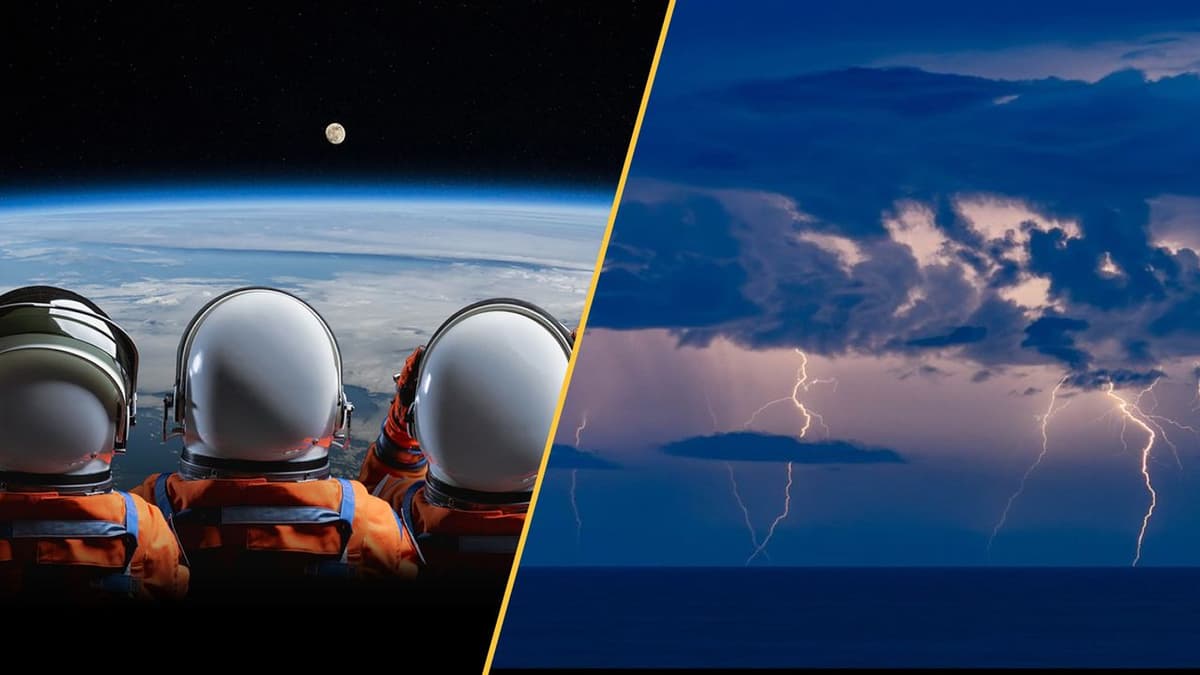
Science News This Week: El Niño Arrives, the Artemis III Crew Are Revealed, a 'Cold Blob' Expands Across the Atlantic, and a Forgotten Note From Richard Feynman Gets Deciphered
Companies Mentioned

Why It Matters
A super El Niño threatens global supply chains and crop yields, while a slowing Atlantic current could reshape regional climates and marine economies. The Artemis III crew announcement signals the next phase of commercial lunar infrastructure, influencing the burgeoning space‑flight market.
Key Takeaways
- •NOAA declares official start of a potentially record‑strong El Niño.
- •Atlantic “cold blob” expansion may slow key ocean currents.
- •NASA reveals Artemis III crew; lunar lander timeline faces setbacks.
- •5‑million‑year‑old whale graveyard discovered in Indian Ocean.
- •Feynman’s “restaurant problem” notes finally decoded after five decades.
Pulse Analysis
The official declaration of El Niño by NOAA marks the beginning of what climate models predict could be the strongest event on record. A "super" El Niño typically amplifies heat waves, fuels wildfires in the western United States and Australia, and disrupts monsoon patterns across Asia and Africa. For businesses, the ripple effects manifest as volatile commodity prices, strained agricultural outputs, and heightened insurance claims, prompting firms to reassess risk models and supply‑chain resilience.
In the Atlantic, scientists observed an expanding "cold blob" south of Greenland, a phenomenon that may signal a slowdown of the Atlantic Meridional Overturning Circulation. A weaker current can alter temperature gradients, impacting fisheries, shipping routes, and regional weather patterns in Europe and North America. The Trump administration's decision to remove deep‑sea monitoring instruments adds uncertainty, underscoring the need for private‑sector investment in ocean‑observing infrastructure to safeguard maritime commerce and climate forecasting.
NASA's unveiling of the Artemis III crew—Commander Randy Bresnik, Pilot Luca Parmitano, and specialists Andre Douglas and Frank Rubio—shifts focus to the commercial lunar lander ecosystem. With SpaceX and Blue Origin grappling with recent launch failures, the timeline for testing lunar landers in low Earth orbit remains fluid. Nevertheless, the mission promises to validate technologies that will underpin the 2028 lunar landing, opening opportunities for satellite manufacturers, propulsion firms, and lunar‑resource ventures eager to capitalize on the next wave of space exploration commerce.
Science news this week: El Niño arrives, the Artemis III crew are revealed, a 'cold blob' expands across the Atlantic, and a forgotten note from Richard Feynman gets deciphered
Comments
Want to join the conversation?
Loading comments...