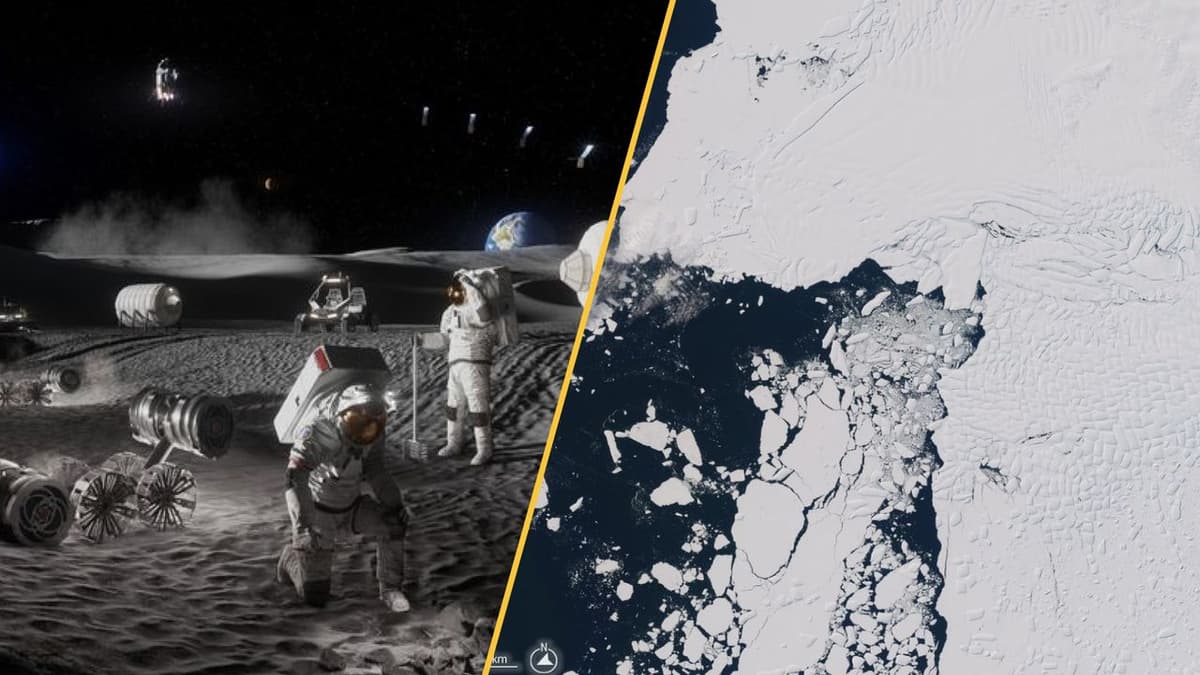
Science News This Week: Exploding Rocket Overshadows NASA's Next Steps to the Moon, 'Doomsday Glacier' Faces Big Loss, Quantum Computer AI Hybrid Shows Impressive Results, and War Deepens Iran's Water Crisis
Companies Mentioned

Why It Matters
The developments reshape the commercial space timeline, signal a breakthrough in AI hardware integration, and heighten urgency for climate‑adaptation and water‑security strategies worldwide.
Key Takeaways
- •Blue Origin's New Glenn exploded during static test, delaying lunar payload schedule
- •NASA targets 2028 crewed moon landing, but experts doubt timeline
- •Hybrid quantum AI on IBM hardware cuts perplexity, solves tougher queries
- •Thwaites Glacier's ice shelf may collapse this year, raising sea level 2.1 ft
- •Iran's water crisis worsens from war, threatening millions of residents
Pulse Analysis
The race to establish a permanent presence on the Moon is accelerating, with NASA’s roadmap relying heavily on private launch providers to ferry cargo before astronauts set foot again in 2028. The recent New Glenn explosion underscores the technical and financial risks inherent in commercial launch services, prompting investors and policymakers to reassess timelines and insurance models. As the industry watches, any delay could ripple through satellite deployment schedules, lunar resource extraction plans, and the broader space‑economy valuation.
In parallel, a hybrid quantum‑computer‑AI architecture demonstrated by IBM researchers marks a subtle yet meaningful shift in artificial‑intelligence strategy. By embedding a quantum processing unit within a large language model, the team achieved lower perplexity scores and resolved queries that stumped the baseline model. This proof‑of‑concept suggests that future AI products may leverage quantum advantage to boost efficiency without the exponential scaling of parameters, opening new avenues for high‑performance computing firms and cloud providers.
On the climate front, the imminent disintegration of Thwaites Glacier’s ice shelf threatens to add roughly 2.1 feet of sea‑level rise, accelerating adaptation planning for coastal megacities such as New York and Miami. Simultaneously, the ongoing U.S.–Israeli conflict has intensified Iran’s already fragile water infrastructure, curtailing surface and groundwater supplies for millions. These intertwined environmental pressures highlight the growing market for resilient infrastructure, water‑management technologies, and climate‑risk financing, sectors poised for heightened investment as governments confront escalating systemic threats.
Science news this week: Exploding rocket overshadows NASA's next steps to the moon, 'Doomsday Glacier' faces big loss, quantum computer AI hybrid shows impressive results, and war deepens Iran's water crisis
Comments
Want to join the conversation?
Loading comments...