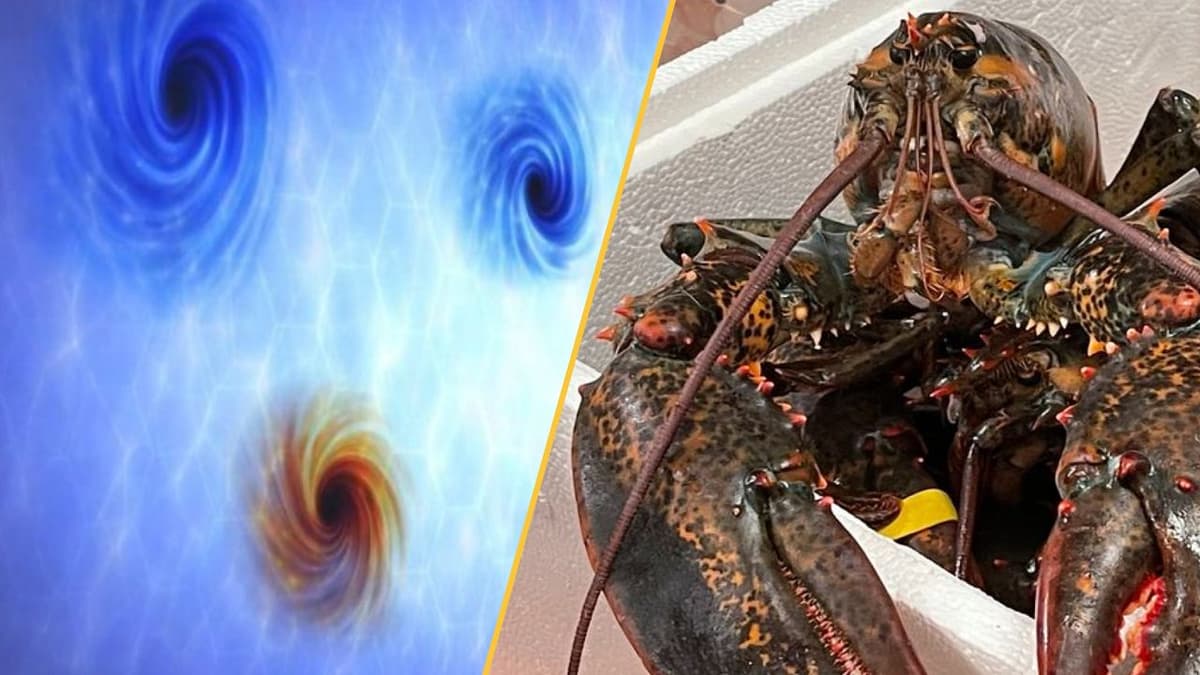
Science News This Week: Physicists Witness Faster-than-Light Darkness Pinpricks, Humans Are Still Evolving, and some Polar Bears Are Getting Fatter than Ever
Why It Matters
These discoveries reshape fundamental scientific understanding, influence public health perspectives, and drive policy discussions on animal welfare and climate‑change adaptation.
Key Takeaways
- •Scientists captured faster-than-light singularities in light‑sound wave interactions
- •First observation of quantum entanglement between two moving atoms reported
- •DNA study shows recent rise in red hair, light skin, disease resistance
- •Lobster pain‑reflex evidence fuels calls to ban boiling live lobsters
- •Some polar bears are gaining unprecedented body fat despite melting ice
Pulse Analysis
The detection of faster‑than‑light singularities in coupled light‑sound waves marks a rare experimental window into phenomena that were previously only theoretical. By leveraging an advanced microscope technique, researchers observed wave packets that outrun light, suggesting new mechanisms for energy transfer that could be harnessed in high‑speed communications, ultrafast imaging, and even novel drug‑delivery systems. This breakthrough also challenges conventional limits set by relativity, prompting physicists to revisit foundational equations and explore practical applications across multiple scientific domains.
Equally compelling is the confirmation of quantum entanglement between two atoms in motion, a milestone that bridges the gap between static laboratory conditions and dynamic real‑world environments. Entanglement is the cornerstone of emerging quantum technologies such as secure cryptography and ultra‑precise sensors. Demonstrating it with moving particles not only validates theoretical models but also paves the way for scalable quantum networks that could operate in satellite links or mobile platforms, accelerating the race toward a functional quantum internet.
Beyond the hard sciences, the week’s findings underscore how biology and climate intersect with societal concerns. A comprehensive DNA analysis of West Eurasians shows that natural selection continues to shape traits like skin pigmentation, hair color and disease resistance, reinforcing the idea that human evolution is an ongoing process. Meanwhile, new evidence of pain perception in lobsters intensifies ethical debates, potentially influencing legislation on seafood preparation. Finally, observations of unusually heavy polar bears highlight the species’ adaptive responses to Arctic ice loss, offering a nuanced view of climate resilience that could inform conservation strategies. Together, these stories illustrate the interconnected nature of modern scientific inquiry and its far‑reaching implications for technology, health, policy and the environment.
Science news this week: Physicists witness faster-than-light darkness pinpricks, humans are still evolving, and some polar bears are getting fatter than ever
Comments
Want to join the conversation?
Loading comments...