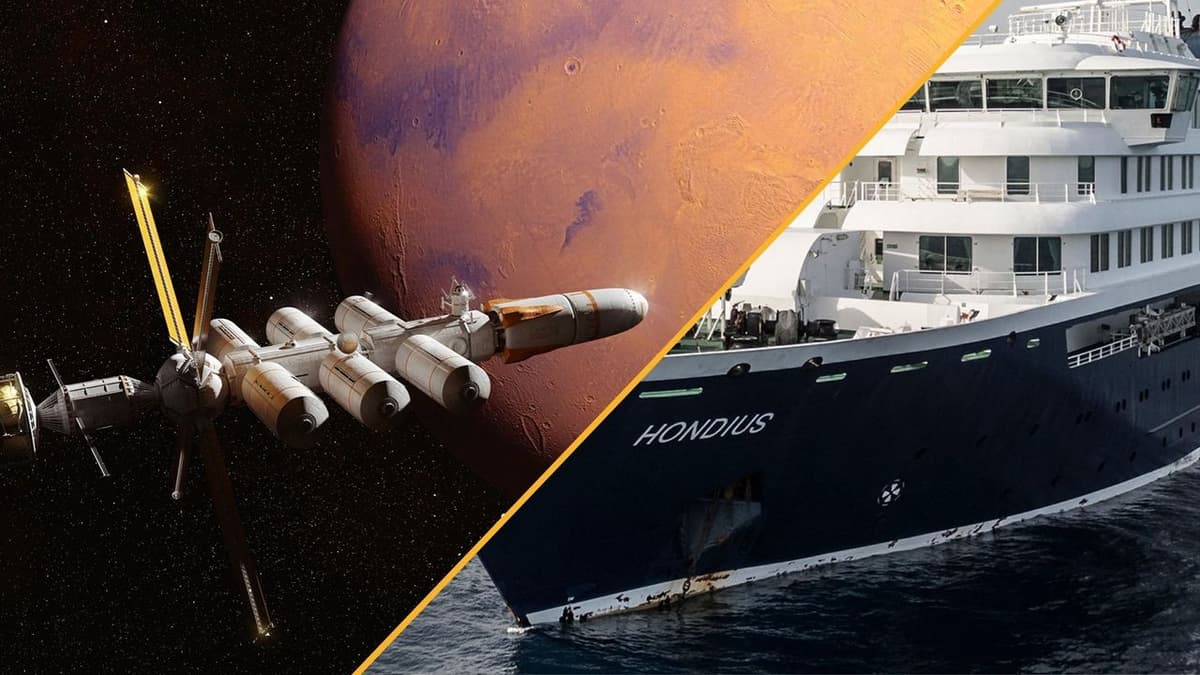
Science News This Week: The Latest on the Cruise Ship Hantavirus Infections, a Shortcut to Mars, and a Fast-Charging Quantum Battery
Why It Matters
The hantavirus outbreak underscores the need for rapid disease surveillance on global travel vessels, while the Mars trajectory findings could reshape mission planning and the quantum battery breakthrough promises a paradigm shift in how devices store and deliver power.
Key Takeaways
- •Andes virus on MV Hondius triggers multi‑state US health monitoring.
- •Researchers propose 153‑day Mars trajectory, requiring 64,800 mph speeds.
- •More feasible Mars path cuts mission time to ~7.5 months.
- •Quantum battery charges in a quadrillionth of a second, scales with size.
- •Prototype could retain charge a million times longer than charging period.
Pulse Analysis
The sudden detection of Andes virus on the MV Hondius has reignited concerns about infectious disease spread in the cruise industry, a sector that traditionally relies on dense, transient populations. Unlike most hantaviruses, the Andes strain can transmit between humans, prompting the Centers for Disease Control and Prevention to launch an intensive contact‑tracing effort across five U.S. states. The incident illustrates how quickly a localized health event can become a trans‑Atlantic public‑health challenge, pushing regulators to refine onboard screening protocols and quarantine measures for future voyages.
A recent orbital dynamics study has identified a high‑speed corridor that could deliver astronauts to Mars and back in just 153 days, effectively cutting the classic mission timeline in half. While the required 64,800 mph entry speed exceeds current heat‑shield capabilities, the research also outlines a more attainable trajectory that still reduces total travel to about 7.5 months. If space agencies such as NASA or commercial players like SpaceX can adapt propulsion and landing technologies to these pathways, the cost and risk profile of crewed Mars missions could shift dramatically, accelerating timelines for scientific discovery and potential colonization.
Meanwhile, a quantum‑engineered battery prototype has shown that energy can be deposited across a molecular lattice in a quadrillionth of a second, with charging speed improving as the device scales. This counter‑intuitive behavior suggests that larger batteries could charge faster while storing exponentially more energy, potentially delivering a million‑fold increase in discharge duration relative to charge time. Though still in the laboratory phase, such technology could revolutionize everything from consumer electronics to electric‑grid storage, provided engineers can overcome challenges related to material stability, manufacturing scalability, and integration with existing power infrastructures.
Science news this week: The latest on the cruise ship hantavirus infections, a shortcut to Mars, and a fast-charging quantum battery
Comments
Want to join the conversation?
Loading comments...