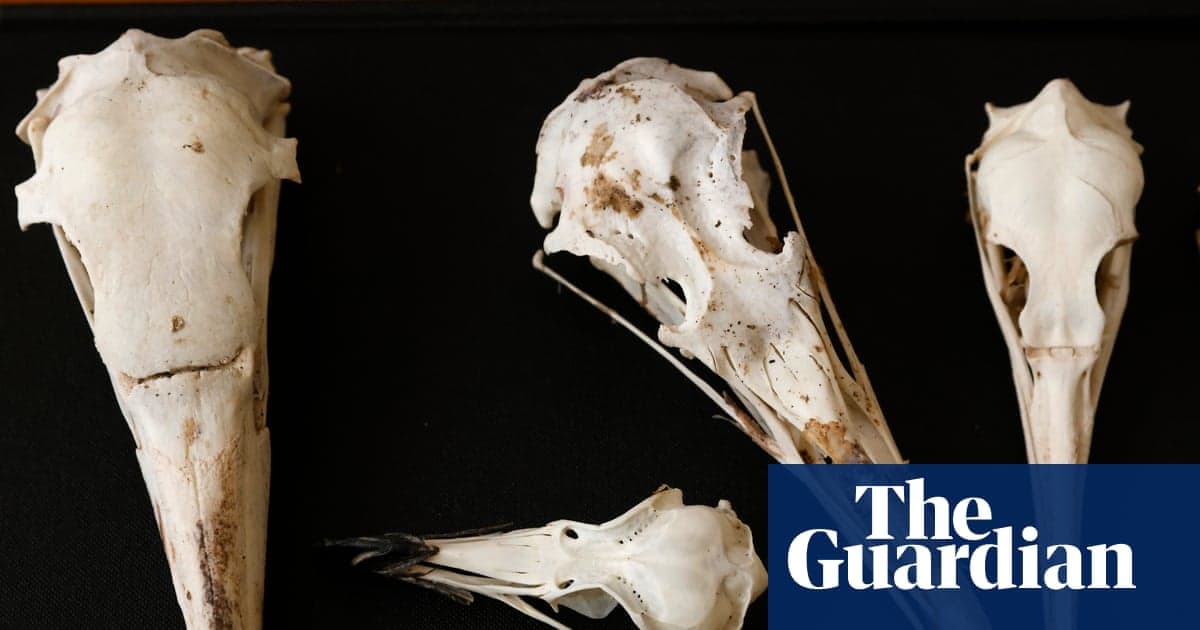
Scientists Believe Birds’ Skulls Hold Clues to Inner Lives of Long-Extinct Dinosaurs
Why It Matters
Understanding dinosaur cognition reshapes our view of prehistoric ecosystems and informs evolutionary biology, while demonstrating that birds are living windows into the behavior of extinct species.
Key Takeaways
- •Bird skulls may reveal cognitive traits of extinct theropods.
- •Researchers aim to link brain features with behavior using 95% confidence threshold.
- •Modern birds' tool use and empathy inform dinosaur brain evolution studies.
- •Genetic experiments show chickens can develop dinosaur-like teeth under manipulation.
- •Birds survived K‑Pg extinction due to rapid growth, flight and diet flexibility.
Pulse Analysis
The new research spearheaded by Steve Brusatte leverages the anatomical continuity between birds and their theropod ancestors to probe the mental lives of long‑gone dinosaurs. By mapping braincase morphology in modern birds—species known for tool use, foresight and rudimentary empathy—scientists hope to identify neuroanatomical markers that, when found in fossilized skulls, can predict similar capabilities in extinct taxa with a statistical confidence of around 95 percent. This methodology offers a rare glimpse into behavior that cannot be observed directly, moving paleontology beyond skeletal reconstruction toward functional inference.
Beyond comparative anatomy, the project draws on cutting‑edge genetic work that demonstrates how altering a chicken embryo’s DNA can trigger the development of dinosaur‑like teeth, a trait lost millions of years ago. Such experiments reinforce the deep genetic kinship between birds and non‑avian dinosaurs, suggesting that many physiological and neurological traits have been conserved. The ability to experimentally resurrect ancestral features provides a powerful validation tool for hypotheses generated from skull analyses, bridging the gap between paleontological speculation and empirical biology.
The implications extend to broader evolutionary narratives and public perception. Recognizing birds as living dinosaurs reshapes how ecosystems of the Mesozoic era are modeled, influencing everything from predator‑prey dynamics to climate adaptation strategies. Moreover, the research underscores the resilience of avian lineages, which survived the Cretaceous‑Paleogene extinction through rapid growth, versatile diets and flight. As modern birds face threats like habitat loss and disease, appreciating their ancient lineage may galvanize conservation efforts, reminding policymakers that protecting today’s birds safeguards a lineage that has endured for over 150 million years.
Scientists believe birds’ skulls hold clues to inner lives of long-extinct dinosaurs
Comments
Want to join the conversation?
Loading comments...