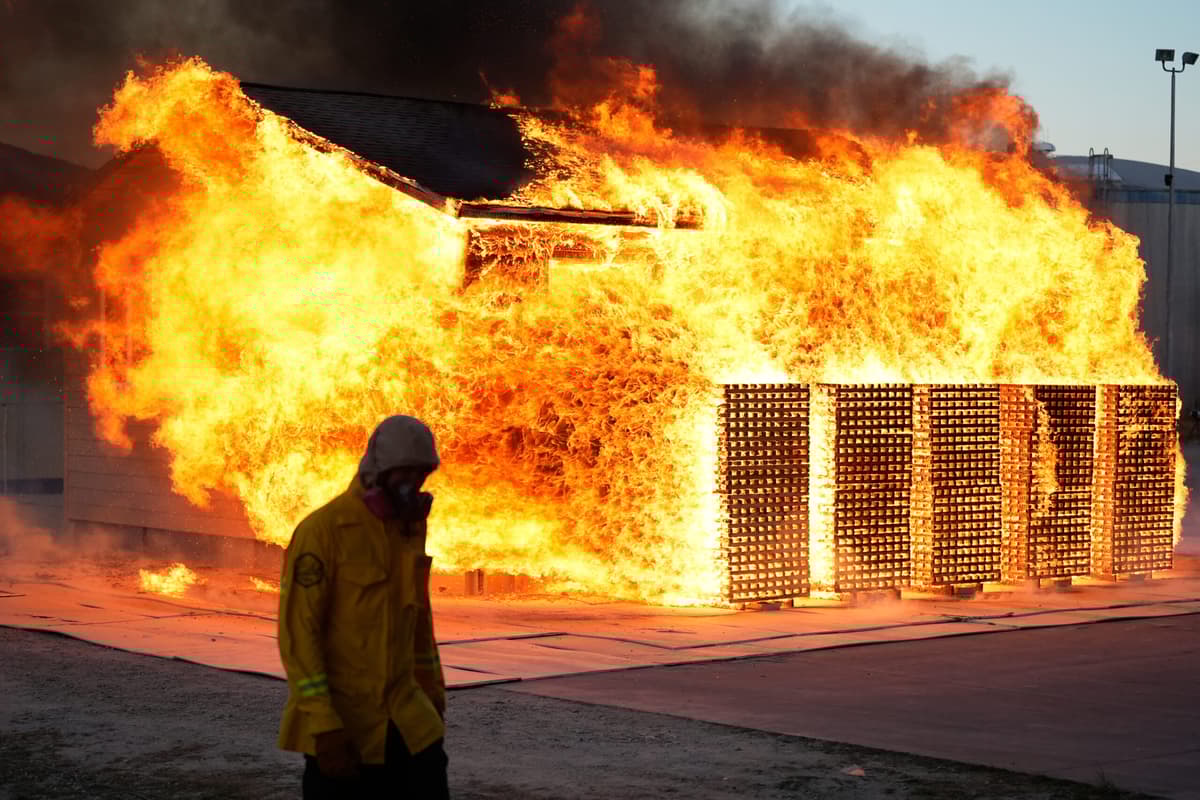
Scientists Burn Homes to Figure Out How to Best Protect Them in Wildfires
Why It Matters
Understanding fire dynamics through controlled burns informs stricter building standards and defensible‑space practices, directly reducing property loss and insurance exposure as climate‑driven wildfires intensify.
Key Takeaways
- •IBHS burned 13 homes to study fire spread and resistance.
- •Tests spurred California code requiring ember‑resistant walls and vent mesh.
- •Five‑foot defensible space cuts ember intrusion dramatically.
- •Wildfire damages average $17.7 billion annually in the U.S.
- •New products like Safe Soss offer DIY ember protection.
Pulse Analysis
As climate change lengthens fire seasons and droughts hit record lows, the United States faces a surge in destructive wildfires that now burn an area comparable to Massachusetts each year. To confront this threat, the Insurance Institute for Business & Home Safety (IBHS) has turned its 100‑acre South Carolina campus into a living laboratory, igniting full‑scale homes under controlled wind conditions. By instrumenting each structure with high‑speed cameras and temperature sensors, researchers capture real‑time data on flame penetration, ember generation, and material failure, creating a scientific foundation for fire‑resilient design.
The findings are already reshaping policy. California’s updated fire code now mandates ignition‑resistant exterior walls, tempered or double‑pane glazing, and mesh screens over all vents—features proven to delay ember entry in IBHS tests. Equally critical is the creation of a five‑foot (1.5‑meter) defensible‑space zone, free of flammable items such as pine straw, wooden fences, or hot‑tub insulation. Experiments showed that this buffer dramatically reduces the likelihood of ember showers igniting secondary fires, though researchers caution that extreme wind events can still overwhelm even the toughest codes.
Beyond regulation, the data fuels a burgeoning market for homeowner‑focused fire‑prevention products. Entrepreneurs like Nicholai Allen are commercializing kits—Safe Soss—that combine ember‑blocking vent filters, heat‑resistant tape, and hose‑applicable retardants, now stocked by major hardware chains. Insurers are also taking note, using IBHS metrics to refine risk models and incentivize retrofits. As wildfire threats grow, the partnership between scientific testing, code evolution, and consumer solutions will be pivotal in safeguarding communities and curbing the $17.7 billion annual economic toll.
Scientists Burn Homes to Figure out How to Best Protect Them in Wildfires
Comments
Want to join the conversation?
Loading comments...