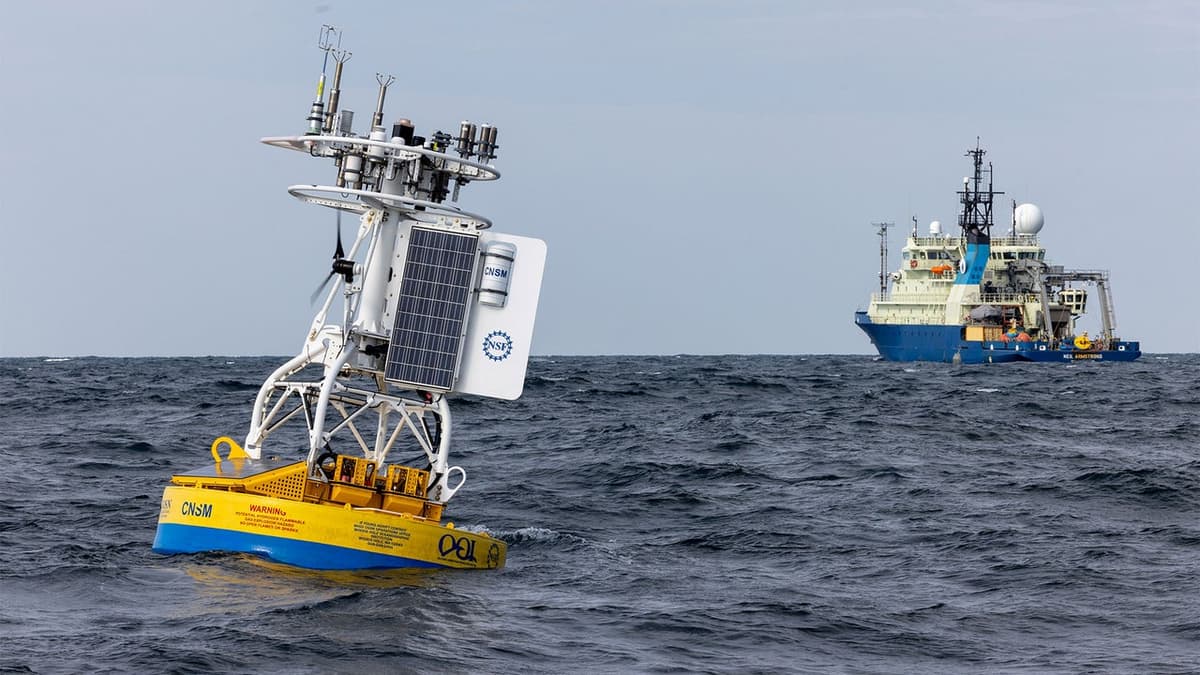
Scientists Call It a ‘Tragic Loss.’ Why the U.S. Is Shutting Down a Major Ocean Monitoring Network
Why It Matters
The loss curtails critical climate‑change metrics such as ocean heat content, weakening global forecasting and research that depend on continuous, high‑resolution ocean observations.
Key Takeaways
- •OOI will lose roughly 80% of its in‑water infrastructure by 2027
- •Data collected to date remains publicly accessible through the OOI Data Center
- •Cuts jeopardize ocean heat‑content tracking, a key climate indicator
- •Reduced monitoring threatens accuracy of severe‑weather and climate forecasts
Pulse Analysis
The Ocean Observatories Initiative (OOI) has long been a cornerstone of marine science, offering researchers, educators, and the public uninterrupted access to real‑time ocean measurements. Funded by the National Science Foundation, the $368 million program operates 900 sophisticated sensors across multiple arrays, feeding data on temperature, chemistry, and biology into an open‑access portal. Recent federal budget reductions under the Trump administration have forced NSF to enact a "descoping" plan, effectively dismantling most of OOI’s in‑water infrastructure over the next 15 months.
Beyond the loss of hardware, the ramifications ripple through climate science and disaster preparedness. Ocean heat content, measured continuously by OOI, is the most reliable proxy for global warming, informing models that predict sea‑level rise, storm intensity, and ecosystem shifts. Experts warn that without these observations, forecast accuracy will degrade, potentially leaving coastal communities and policymakers with less reliable information to mitigate climate risks. The initiative also supports the Global Ocean Observing System, meaning the cuts could create gaps in a worldwide network critical for coordinated climate monitoring.
The broader policy context underscores a tension between fiscal conservatism and scientific investment. While the NSF’s historic contributions—ranging from MRI breakthroughs to climate research—highlight the economic returns of federal science funding, recent cuts of roughly $3 billion across NSF and NIH illustrate a shift in priorities. Preserving OOI’s legacy data mitigates some damage, but the scientific community now faces a fragmented monitoring landscape. Advocates argue that restoring even a modest portion of the network would safeguard essential climate metrics and maintain the United States’ leadership in ocean research.
Scientists call it a ‘tragic loss.’ Why the U.S. is shutting down a major ocean monitoring network
Comments
Want to join the conversation?
Loading comments...