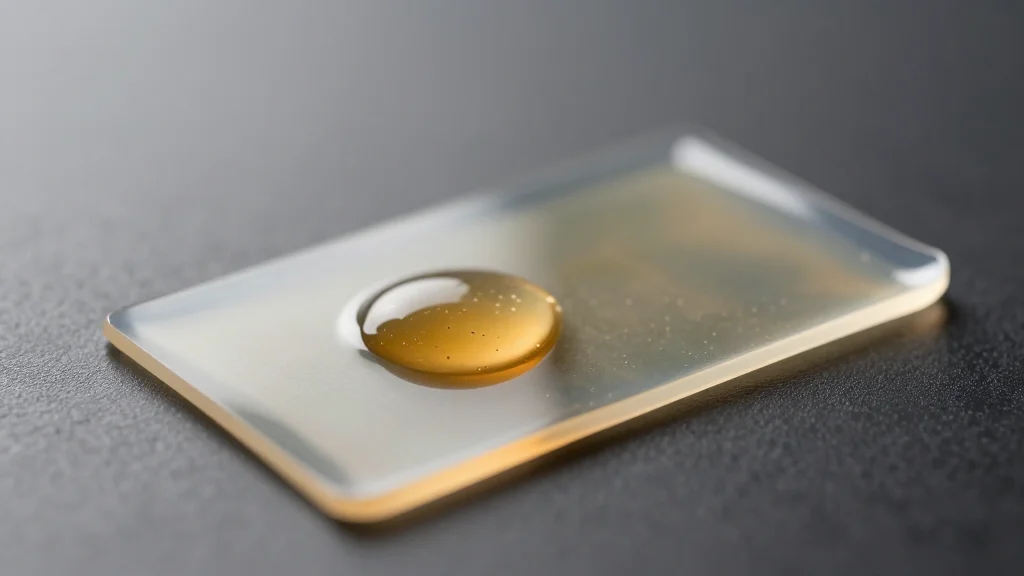
Scientists Create "Living Plastic" That Can Self-Destruct on Command
Why It Matters
The technology offers a controllable, on‑demand degradation pathway for polymer products, potentially reducing persistent plastic waste and simplifying end‑of‑life recycling for electronics and medical devices.
Key Takeaways
- •Living plastic embeds dormant Bacillus subtilis spores for on‑demand degradation
- •Two engineered bacteria sequentially break polymer chains into small molecules
- •Polycaprolactone film retains strength while remaining fully degradable in six days
- •Prototype wearable electrode self‑destructs after two weeks, leaving recoverable copper
- •Current trigger requires warm nutrient broth, limiting real‑world waste applications
Pulse Analysis
The emergence of "living plastics" marks a paradigm shift in material science, blending synthetic polymers with engineered microorganisms. By integrating dormant bacterial spores directly into the polymer matrix, researchers have created a material that behaves like conventional plastic during use but can be programmed to self‑destruct when needed. This concept builds on earlier single‑enzyme biodegradable plastics, but the dual‑enzyme cascade—Candida antarctica lipase followed by Burkholderia cepacia lipase—dramatically accelerates breakdown, turning long polymer chains into harmless small molecules without generating microplastic fragments.
Polycaprolactone (PCL) was chosen for the proof‑of‑concept because of its established role in 3D‑printing filaments and dissolvable sutures. Embedding the spores did not compromise tensile strength, meaning the living plastic can meet existing performance standards while adding a built‑in kill switch. The activation step—submerging the material in a nutrient broth at 50 °C—induces spore germination, enzyme production, and complete degradation within six days. This controlled environment eliminates the uncertainty that plagues conventional biodegradable plastics, which often fragment and persist in ecosystems. Moreover, the researchers demonstrated a wearable electrode that degrades after two weeks, leaving only copper circuitry, hinting at future applications in disposable electronics where component recovery is valuable.
Despite its promise, the technology faces practical hurdles. The requirement for a warm, nutrient‑rich trigger limits scalability for large‑scale waste streams such as ocean plastics or municipal packaging. Additionally, the current prototype uses PCL, a polymer that already degrades relatively easily, whereas the bulk of global plastic waste comprises polyethylene, polypropylene, and PET, which are far more recalcitrant. Future work will need to adapt the microbial system to harsher polymers and develop activation methods compatible with real‑world conditions, such as chemical triggers or ambient temperature enzymes. If these challenges are overcome, living plastics could become a cornerstone of a circular economy, offering manufacturers a reliable, on‑demand solution to plastic pollution and electronic waste.
Scientists create "living plastic" that can self-destruct on command
Comments
Want to join the conversation?
Loading comments...