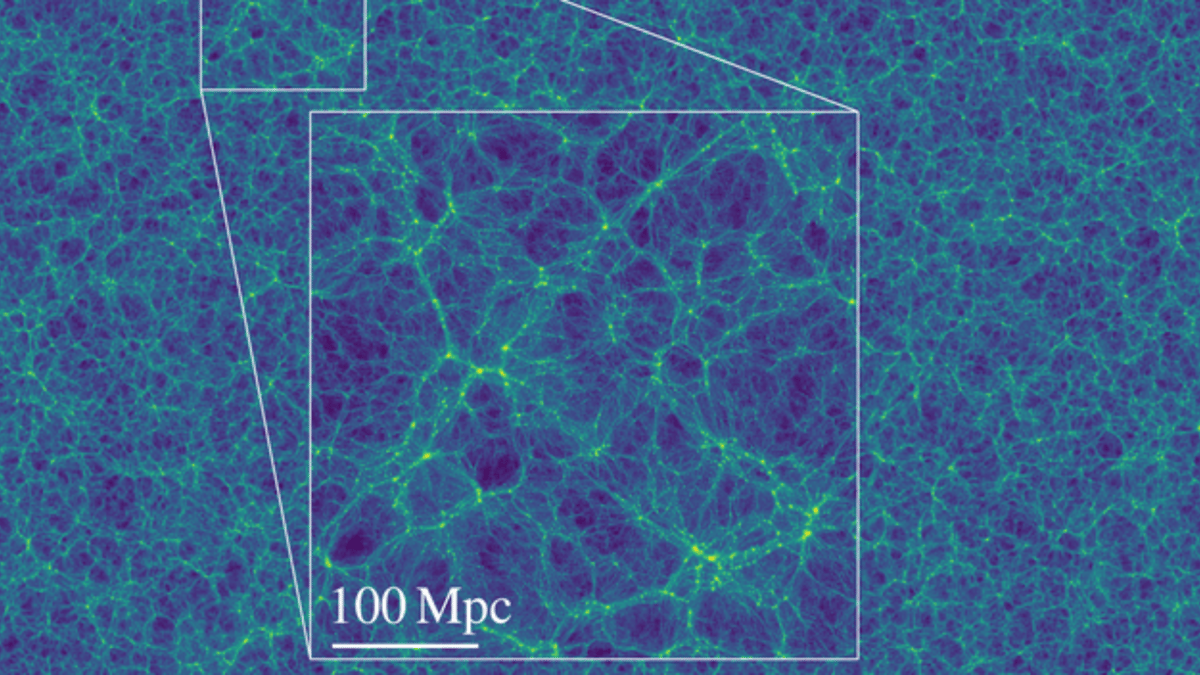
Scientists Created One of the Largest Simulations of Our Universe Ever — About the Size of 500,000 HD Movies
Why It Matters
The open‑access FLAMINGO dataset provides the computational backbone needed to interpret upcoming high‑precision astronomical observations, accelerating discovery across cosmology and galaxy evolution. Its scale enables studies of rare objects and complex physics that smaller simulations cannot capture.
Key Takeaways
- •FLAMINGO dataset totals over 2.5 petabytes, half a million HD movies
- •Simulations model dark matter, ordinary matter, and dark energy together
- •Public release enables global researchers to test cosmological theories
- •Large volume captures rare galaxy clusters and luminous quasars
- •Supports interpretation of data from next‑generation telescopes
Pulse Analysis
The FLAMINGO project marks a watershed moment in computational astrophysics, delivering one of the largest publicly available simulation suites ever assembled. At over 2.5 petabytes, the dataset dwarfs previous efforts and mirrors the data deluge expected from forthcoming sky surveys. By integrating hydrodynamics, dark matter dynamics, and dark energy effects within a single, self‑consistent model, FLAMINGO offers a virtual laboratory where scientists can replay cosmic history with unprecedented fidelity.
Beyond sheer size, the scientific payoff lies in the simulation’s multi‑scale capability. Researchers can examine the turbulent physics of star‑forming gas inside individual galaxies while simultaneously mapping the distribution of massive galaxy clusters across billions of light‑years. This dual focus opens new avenues for probing the nature of dark matter, testing competing dark energy models, and hunting rare phenomena such as luminous quasars that appear only in vast volumes. The ability to generate statistically robust samples of these outliers is essential for refining theoretical predictions and interpreting observational anomalies.
Crucially, FLAMINGO’s open‑access policy aligns with the collaborative ethos of modern astronomy. As observatories like the Vera C. Rubin Observatory, Euclid and the James Webb Space Telescope deliver terabytes of high‑resolution data, scientists will need sophisticated theoretical back‑drops to decode the findings. The shared dataset lowers barriers to entry, allowing institutions worldwide to run custom analyses without massive computational overhead. In the long term, this democratization of data promises faster iteration cycles, cross‑disciplinary innovation, and a deeper, more unified understanding of the cosmos.
Scientists created one of the largest simulations of our universe ever — about the size of 500,000 HD movies
Comments
Want to join the conversation?
Loading comments...