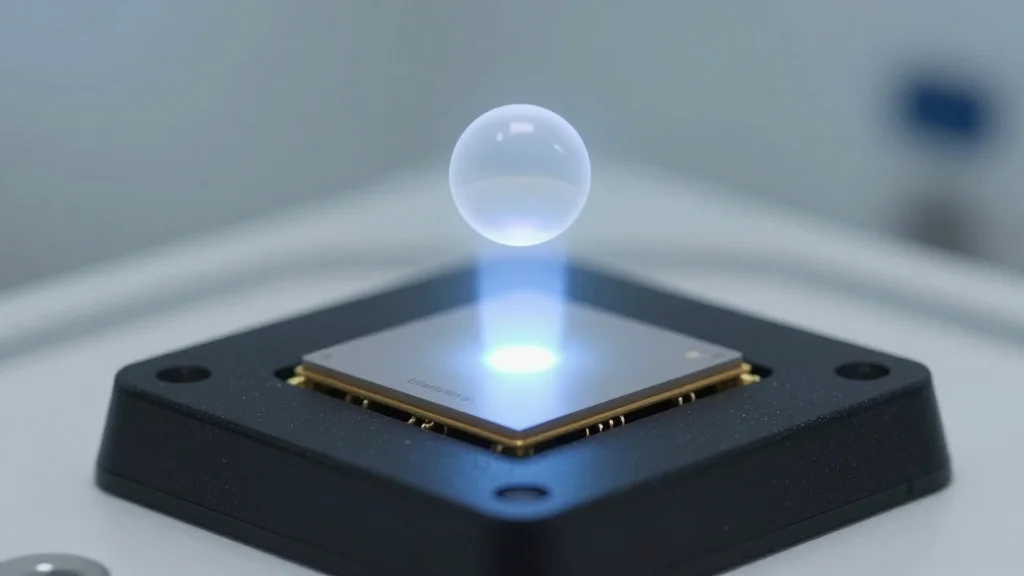
Scientists Directly Observe Muonic Molecules, Validating Fusion Theory

Why It Matters
The direct detection of muonic molecular resonance states bridges a decades‑long divide between theory and experiment in muon‑catalyzed fusion. By establishing a reliable diagnostic tool, the work accelerates efforts to assess µCF’s viability as a low‑temperature, low‑cost fusion pathway, potentially reshaping the energy‑technology roadmap. Beyond energy, the experiment demonstrates the power of superconducting TES detectors for probing exotic quantum systems. The technique could be applied to other frontier physics investigations, from dark‑matter searches to precision spectroscopy of exotic atoms, amplifying its impact across multiple scientific domains.
Key Takeaways
- •First direct observation of muonic molecules in resonance states
- •Used NIST‑developed superconducting TES microcalorimeter for unprecedented x‑ray resolution
- •Measurements match theoretical predictions for ddµ* vibrational states
- •Provides concrete data to improve muon‑catalyzed fusion efficiency
- •Sets stage for broader application of TES spectroscopy in particle physics
Pulse Analysis
The breakthrough marks a turning point for muon‑catalyzed fusion research, shifting the field from speculative modeling to data‑driven engineering. Historically, µCF has been praised for its elegant physics but dismissed for its low net energy gain, largely because the formation and decay of muonic molecules were inferred rather than observed. This new capability eliminates a major source of uncertainty, allowing researchers to quantify how often resonance states contribute to successful fusion events.
From a market perspective, the result could revive interest from both government labs and private fusion ventures that have largely focused on tokamak and laser‑driven approaches. The ability to verify and optimize resonance pathways may lower the cost ceiling for muon production, a historically expensive step that has limited scalability. If subsequent experiments demonstrate a viable muon recycling scheme, investors could see a new class of compact fusion reactors targeting niche applications such as remote power or space propulsion.
Looking forward, the collaboration’s next phase—probing muonic tritium‑deuterium systems—will test whether the resonance advantage scales with heavier isotopes, which promise higher fusion yields. Success there would not only bolster the scientific case for µCF but also provide a concrete roadmap for engineering prototypes. The broader scientific community will watch closely, as the TES methodology may become a standard tool for exploring other short‑lived quantum phenomena, reinforcing the cross‑disciplinary value of the discovery.
Scientists Directly Observe Muonic Molecules, Validating Fusion Theory
Comments
Want to join the conversation?
Loading comments...