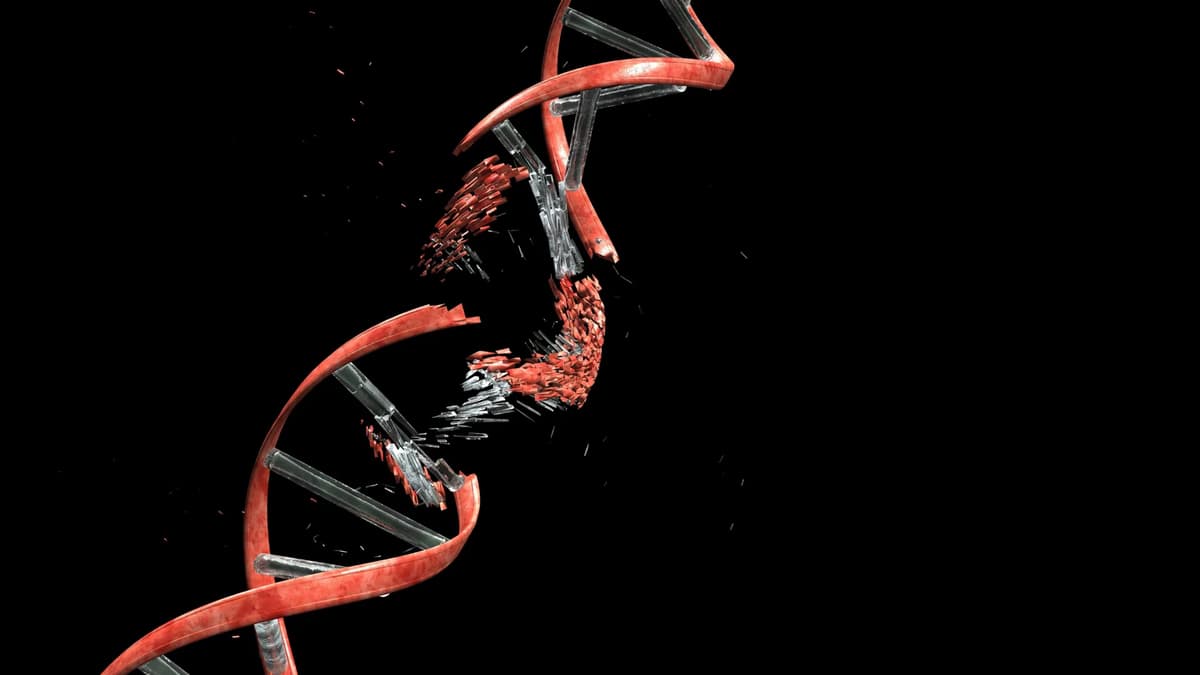
Scientists Discover Neurons Must Break Their DNA to Build the Brain
Why It Matters
Understanding that DNA breakage is a normal, repair‑dependent step in cortical development reshapes models of neurogenesis and highlights new pathways for neurodevelopmental disorder research.
Key Takeaways
- •Neuronal migration creates double‑strand DNA breaks via topoisomerase IIβ.
- •Breaks are repaired within 24 hours by non‑homologous end joining.
- •Repair‑deficient mice develop adult balance problems, hinting at disease links.
- •Damage concentrates away from essential genes, preserving neuron function.
- •Early DNA lesions may drive neuronal diversity and later brain disorders.
Pulse Analysis
The developing cerebral cortex is a crowded landscape where newborn neurons must navigate narrow interstitial gaps to reach their final positions. A new study in Nature shows that this mechanical journey triggers widespread double‑strand DNA breaks, a phenomenon previously thought to be pathological rather than physiological. The researchers demonstrated that topoisomerase IIβ, an enzyme that transiently cleaves DNA to relieve torsional stress, becomes trapped during the squeezing process, leaving temporary cuts in the genome. By reproducing these constraints in microfluidic channels, the team visualized the damage in real time, establishing a direct link between physical migration and genomic stress.
Crucially, the breaks are not fatal; neurons employ the non‑homologous end joining pathway to seal the lesions within roughly 24 hours. The study found that the damage is preferentially located in genomic regions that are not actively transcribed, sparing essential genes and preserving cellular function. In contrast, cancer cells forced through the same channels exhibit random, lethal damage. Mice engineered to lack Ligase 4, a key NHEJ component, appear normal at birth but develop progressive balance deficits as adults, suggesting that incomplete repair can manifest as subtle neurological phenotypes.
These findings reshape our understanding of neuronal genome dynamics, implying that controlled DNA breakage and repair may contribute to the mosaicism observed among individual neurons. If early‑life lesions leave lasting epigenetic or mutational marks, they could influence susceptibility to neurodevelopmental and neurodegenerative disorders later in life. The work opens new avenues for investigating how mechanical forces intersect with genome stability, and whether modulating topoisomerase activity or enhancing repair pathways might mitigate disease risk. As the field moves toward single‑cell genomics, this mechanistic insight offers a fresh lens on brain diversity and pathology.
Scientists discover neurons must break their DNA to build the brain
Comments
Want to join the conversation?
Loading comments...