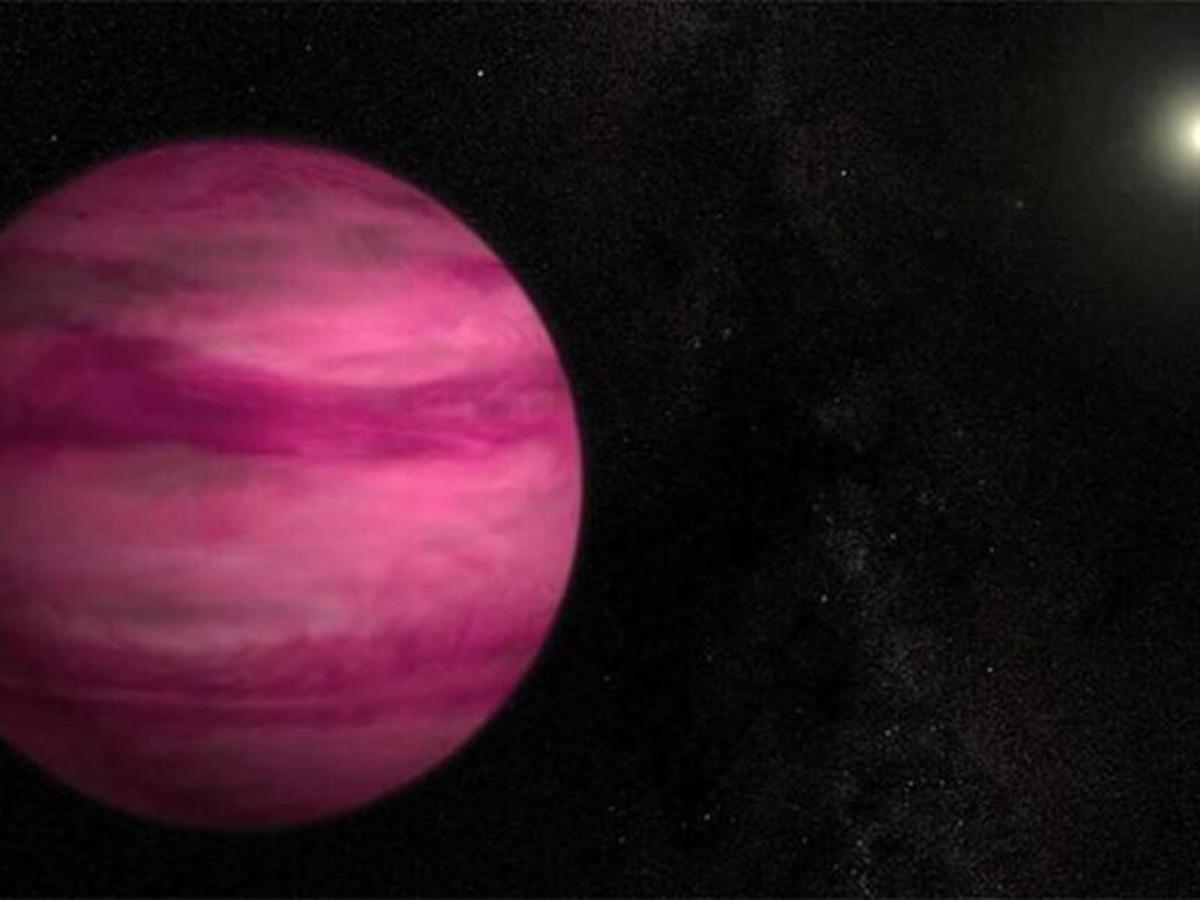
Scientists Discover Salt Clouds Swirling Around ‘Pink Planet’
Why It Matters
The discovery proves that JWST can characterize ultra‑cold, faint exoplanets, opening a new class of worlds for atmospheric study and testing long‑standing cloud‑formation theories.
Key Takeaways
- •JWST captured GJ504b’s spectrum in two hours, revealing salt clouds.
- •Salt clouds explain muted molecular signatures in the planet’s cold atmosphere.
- •GJ504b’s temperature (~550 °F) makes it the coldest directly imaged exoplanet studied.
- •Discovery validates 15‑year‑old theories of salt cloud formation on cold worlds.
Pulse Analysis
The James Webb Space Telescope has finally breached the observational barrier that has long confined astronomers to the brightest, hottest exoplanets. By isolating the faint glow of GJ504b—a 57‑light‑year‑distant companion straddling the line between giant planet and brown dwarf—JWST delivered a high‑contrast spectrum in just two hours, a task that required whole nights on Earth’s largest ground‑based telescopes without success. This breakthrough underscores JWST’s unique ability to suppress stellar glare and capture the subtle signatures of distant, cold worlds, reshaping the target list for future direct‑imaging campaigns.
The spectral analysis revealed an unexpected atmospheric component: clouds made of salt. In temperatures around 550 °F, volatile compounds like sodium chloride can condense, forming high‑altitude hazes that mute deeper molecular features such as water vapor and methane. This aligns with theoretical models proposed over a decade ago, which suggested that salt clouds could dominate the atmospheres of cool, massive exoplanets. Moreover, the presence of these clouds hints at a metal‑rich composition, raising questions about whether GJ504b formed like a planet through core accretion or more like a low‑mass star via gravitational collapse.
Beyond the singular case of GJ504b, the detection of salt clouds signals a paradigm shift for comparative planetology. It provides a tangible analogue for studying cloud chemistry in our own Solar System’s giants, where ammonia‑ice and water‑ice clouds remain challenging to resolve. As JWST and upcoming observatories refine their techniques, scientists anticipate a surge in discoveries of similarly cold companions, expanding our understanding of atmospheric dynamics, formation histories, and the diversity of planetary systems across the galaxy.
Scientists discover salt clouds swirling around ‘pink planet’
Comments
Want to join the conversation?
Loading comments...