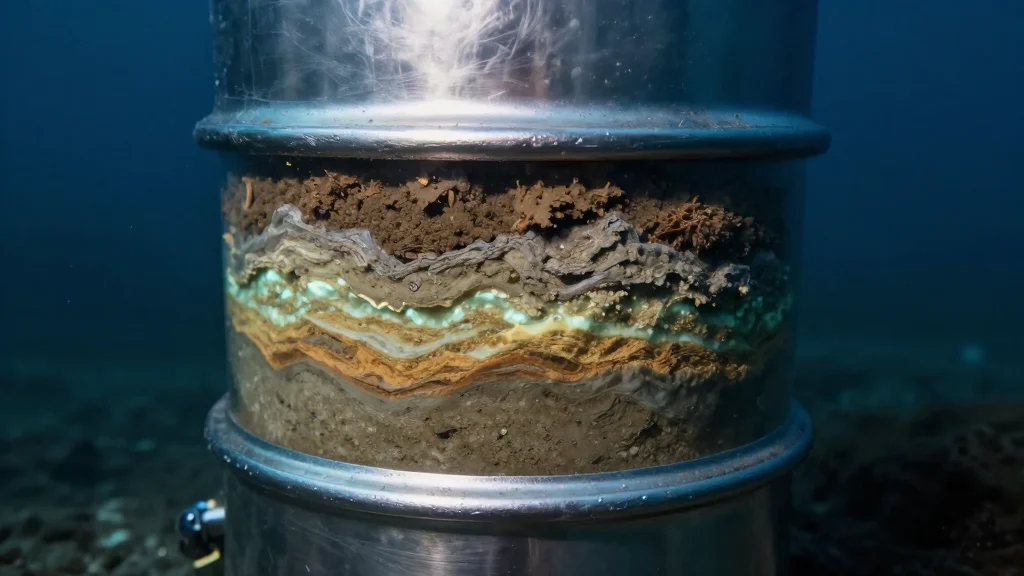
Scientists Drilling Into Sediment Beneath the South Pacific Gyre Pulled up Microbes From Seabed Layers as Old as 101.5 Million Years. Starved in One of the Poorest Habitats on Earth, Many of the Cells Were Still Viable: When Given Nutrients Under Oxygen-Bearing Laboratory Conditions, They Repaired Their Metabolism, Took up Carbon and Nitrogen, and Began to Multiply. They Are Among the Oldest Microbial Communities Ever Revived From Dormancy.
Why It Matters
The discovery pushes the known survival limits of microbial life, informing both deep‑sea ecology and the search for life on energy‑starved worlds such as Mars or icy moons.
Key Takeaways
- •Microbes revived from 101.5‑million‑year‑old sediment.
- •Aerobic cells grew 10,000‑fold in 68 days.
- •Up to 99.1% of heterotrophs were revivable.
- •Study used single‑cell NanoSIMS isotope labeling.
- •Findings expand limits of life for astrobiology.
Pulse Analysis
The South Pacific Gyre, a vast oceanic desert beneath roughly 5,700 metres of water, offers one of the planet’s most nutrient‑poor marine environments. Sediment there accumulates at a glacial pace, allowing oxygen to permeate deep layers—a rarity in most ocean basins where organic decay quickly depletes oxygen. This unique oxic setting made the gyre an ideal natural laboratory for probing how life endures when energy is scarce, prompting the 2010 Integrated Ocean Drilling Program Expedition 329 to retrieve a 75‑metre core spanning the Cretaceous to the present.
In the laboratory, Morono’s team incubated the ancient sediment with isotopically labeled carbon and nitrogen under micro‑aerobic conditions mirroring the in‑situ environment. Using NanoSIMS, they tracked uptake at the single‑cell level, revealing that the majority of cells actively assimilated the nutrients. Within 68 days, microbial populations expanded by four orders of magnitude, with nitrogen incorporation three times faster than carbon. Crucially, aerobic microbes revived robustly, whereas anaerobes remained largely inert, underscoring the importance of long‑term oxygen exposure for survival.
Beyond deep‑sea microbiology, the findings reshape our understanding of life's resilience. Demonstrating that aerobic microbes can lie dormant yet viable for over 100 million years expands the habitability envelope for extraterrestrial environments that are cold, isolated, and energy‑limited. The rigorous contamination controls and single‑cell isotope evidence lend credibility to these claims, setting a new benchmark for ancient‑life studies. Future research will probe the biochemical mechanisms that preserve cellular integrity across geological epochs, informing both biogeochemical models of the deep biosphere and the design of life‑detection missions to Mars and icy moons.
Scientists drilling into sediment beneath the South Pacific Gyre pulled up microbes from seabed layers as old as 101.5 million years. Starved in one of the poorest habitats on Earth, many of the cells were still viable: when given nutrients under oxygen-bearing laboratory conditions, they repaired their metabolism, took up carbon and nitrogen, and began to multiply. They are among the oldest microbial communities ever revived from dormancy.
Comments
Want to join the conversation?
Loading comments...