Scientists Found Stardust Trapped in Antarctic Ice. What Could It Tell Us About Our Solar System?
Why It Matters
The discovery links a specific supernova event to the composition of the interstellar cloud that currently envelopes the solar system, offering direct evidence of how stellar explosions can influence planetary environments on relatively short timescales. This insight helps refine models of solar system exposure to cosmic material, which can affect atmospheric chemistry and climate over millennia.
Key Takeaways
- •660 lb of Antarctic ice analyzed for iron‑60 isotopes
- •Iron‑60 indicates supernova debris entered the Local Interstellar Cloud
- •Less iron‑60 in 40‑80 kyr samples suggests reduced dust influx
- •Findings link interstellar cloud composition to recent stellar explosion
- •Researchers will probe older ice to extend the timeline
Pulse Analysis
The detection of iron‑60 in ancient Antarctic ice provides a rare, tangible record of a nearby supernova that occurred within the last 100,000 years. While interstellar dust constantly drifts through the galaxy, the Local Interstellar Cloud—a tenuous region of gas and particles the solar system is currently traversing—occasionally captures material from stellar explosions. Iron‑60, with a half‑life of 2.6 million years, serves as a distinctive fingerprint of such events, allowing scientists to trace the timing and proximity of the blast that seeded the cloud.
Researchers at the Helmholtz‑Zentrum Dresden‑Rossendorf examined over 300 kg of ice, melting and chemically processing it before employing accelerator mass spectrometry to isolate single iron‑60 atoms. Their analysis revealed a clear decline in iron‑60 concentrations in samples older than 40,000 years, indicating that fewer supernova‑derived dust particles reached Earth during that interval. This pattern contrasts with more recent ice, which shows higher iron‑60 levels, pointing to a later influx of material, likely from a distinct, closer explosion that enriched the cloud and, by extension, the Earth’s surface.
Understanding how interstellar dust flux varies over tens of thousands of years has implications beyond astrophysics. Variations in cosmic dust can influence atmospheric chemistry, cloud formation, and even climate patterns on geological timescales. The team plans to extend their search into older ice cores, potentially mapping a longer chronology of stellar events that have brushed past our solar neighborhood. Such a timeline could refine models of solar system shielding, improve predictions of future interstellar encounters, and deepen our grasp of the dynamic relationship between Earth and the broader galaxy.
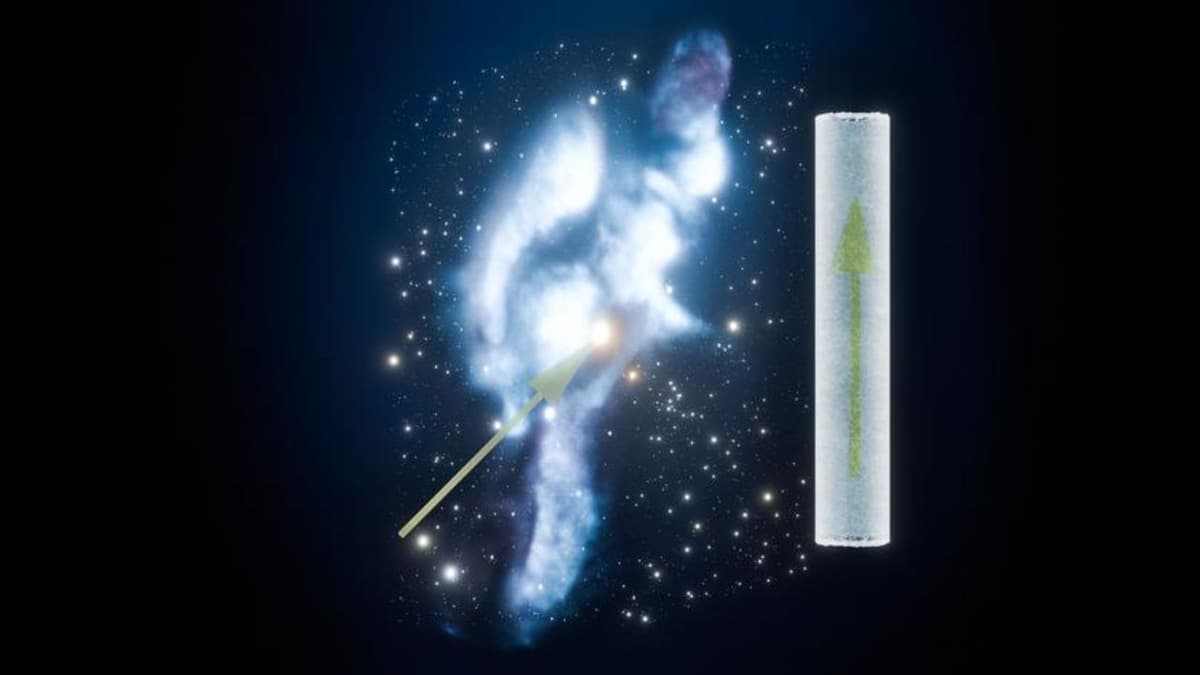
Scientists found stardust trapped in Antarctic ice. What could it tell us about our solar system?
Comments
Want to join the conversation?
Loading comments...