Scientists Found the Brain Doesn’t Start Blank, It Starts Full
Why It Matters
Understanding that the hippocampus begins fully connected and later prunes reshapes theories of memory formation and informs research on neurodevelopmental disorders where pruning may go awry.
Key Takeaways
- •CA3 hippocampal network is dense at birth, then pruned.
- •Early connectivity supports rapid memory integration.
- •Study used patch‑clamp, imaging, and laser activation in mice.
- •Findings challenge the tabula rasa view of brain development.
- •Pruning creates more efficient, organized circuitry in adulthood.
Pulse Analysis
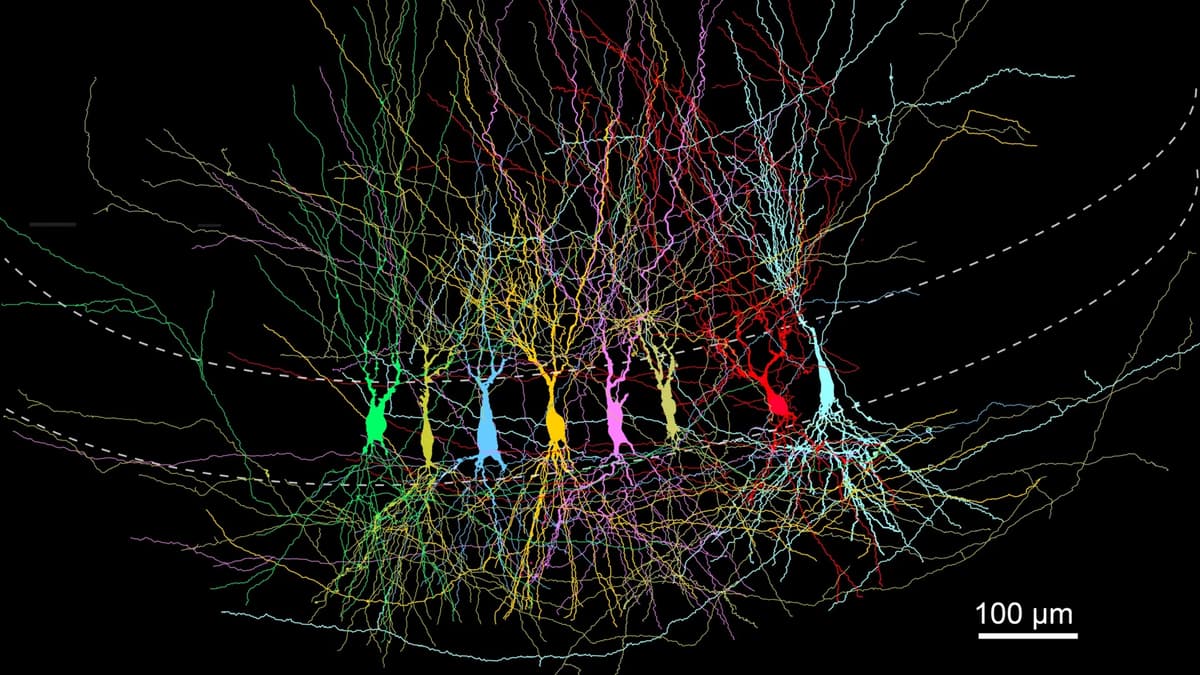
The debate over whether the brain begins as a blank slate or a pre‑wired system has long shaped theories of cognition. In the hippocampus, a region essential for episodic memory and spatial navigation, this question is especially salient because the area must fuse sensory inputs into coherent recollections. New research from the Institute of Science and Technology Austria (ISTA) revisits the issue by examining the CA3 pyramidal neuron network across early post‑natal stages. Their work suggests the brain adopts a ‘full‑slate’ strategy, launching life with an exuberant web of connections that later refines itself.
Using patch‑clamp electrophysiology, high‑resolution imaging, and laser‑guided optogenetics, the ISTA team mapped CA3 circuitry in mice at days 7‑8, 18‑25, and 45‑50. At the earliest stage, synaptic contacts were densely packed and appeared random, providing a flexible substrate for rapid information binding. By adolescence, the network shed many redundant links, and in adulthood it displayed a streamlined, highly organized topology. This pruning trajectory runs counter to the intuitive expectation that neural networks become denser over time, highlighting a developmental economy that balances connectivity with efficiency.
The discovery that hippocampal networks start full and become refined has broad implications. It offers a mechanistic explanation for the brain’s remarkable capacity to integrate multimodal stimuli during early life, and it may inform therapeutic strategies for conditions where pruning is disrupted, such as autism or schizophrenia. Moreover, the findings encourage a reassessment of computational models that assume a tabula rasa starting point. As neuroscientists continue to decode the timing and molecular cues of synaptic pruning, the ‘full‑slate’ perspective could reshape how we approach learning, memory enhancement, and neurodevelopmental interventions.
Scientists found the brain doesn’t start blank, it starts full
Comments
Want to join the conversation?
Loading comments...