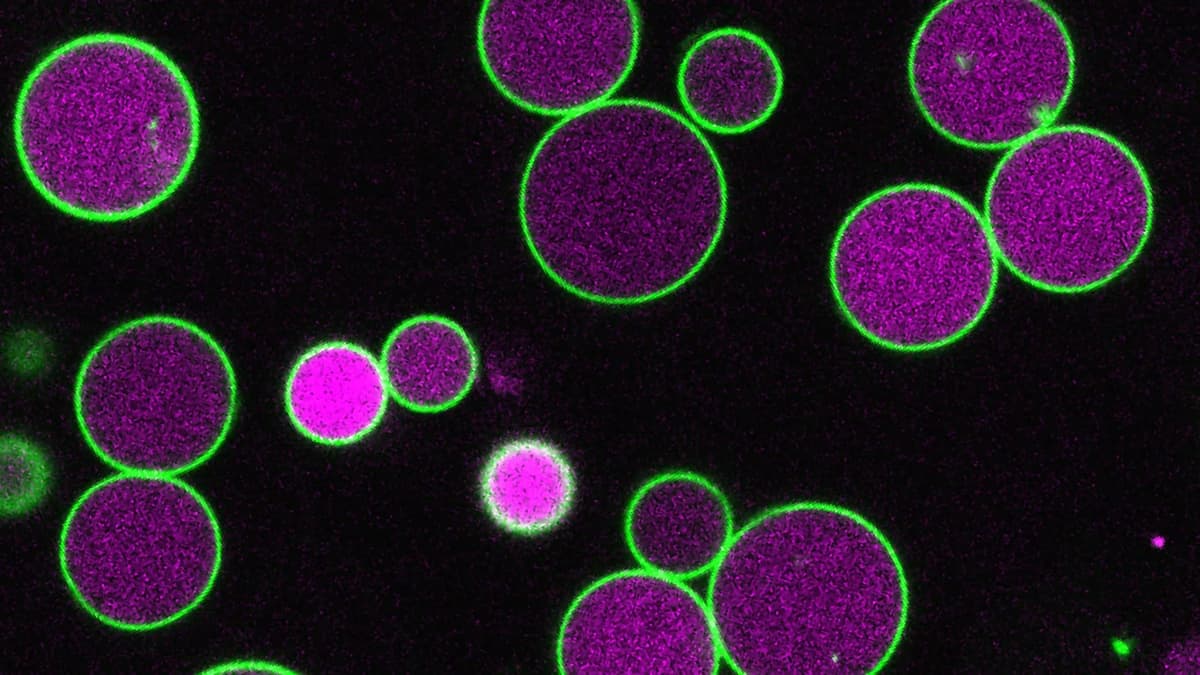
Scientists Just Found What Keeps Plant Cells From Growing Out of Control
Why It Matters
Regulating peroxisome growth is vital for metabolic efficiency in seedlings and offers a target for agricultural and therapeutic innovations.
Key Takeaways
- •PEX11 governs peroxisome expansion and shrinkage in early plant growth
- •CRISPR removal of all five PEX11 genes produces lethal, oversized peroxisomes
- •Missing vesicles prevent membrane trimming, causing uncontrolled organelle growth
- •Yeast Pex11 restores normal peroxisome size in Arabidopsis mutants
- •Conserved PEX11 function links plant findings to human disease research
Pulse Analysis
Peroxisomes are essential metabolic hubs that oxidize fatty acids, detoxify reactive oxygen species, and generate signaling molecules. In germinating seeds, before photosynthesis can supply energy, plants rely on stored lipids that are broken down within these organelles. Arabidopsis thaliana, with its unusually large cells and peroxisomes, offers a natural microscope for observing organelle dynamics. Understanding how peroxisome size is regulated during the critical seed‑to‑seedling transition not only sheds light on basic plant biology but also informs strategies to boost early vigor in crops.
The Bartel laboratory identified the membrane‑shaping protein PEX11 as a master regulator of peroxisome morphology. Using a sophisticated CRISPR toolkit, graduate student Nathan Tharp knocked out all five Arabidopsis PEX11 paralogs, a manipulation that would normally be lethal. The resulting mutants displayed peroxisomes that swelled dramatically and failed to contract after the lipid‑fuel phase, a defect traced to the loss of intraperoxisomal vesicles that normally trim excess membrane. Re‑introducing yeast Pex11 rescued the phenotype, confirming that vesicle‑mediated membrane removal is a conserved growth‑control mechanism.
The cross‑kingdom rescue experiment suggests that PEX11’s role in organelle size homeostasis is evolutionarily ancient, opening avenues for translational research. In humans, peroxisomal disorders such as Zellweger spectrum disease stem from dysfunctional biogenesis, and engineered modulation of PEX11 activity could become a therapeutic lever. For agriculture, fine‑tuning PEX11 expression may enhance seedling establishment under suboptimal light, improving yields. Moreover, the study showcases how CRISPR multiplexing can dissect redundant gene families, a technique increasingly valuable for synthetic biology and bioengineering of organelle functions.
Scientists just found what keeps plant cells from growing out of control
Comments
Want to join the conversation?
Loading comments...