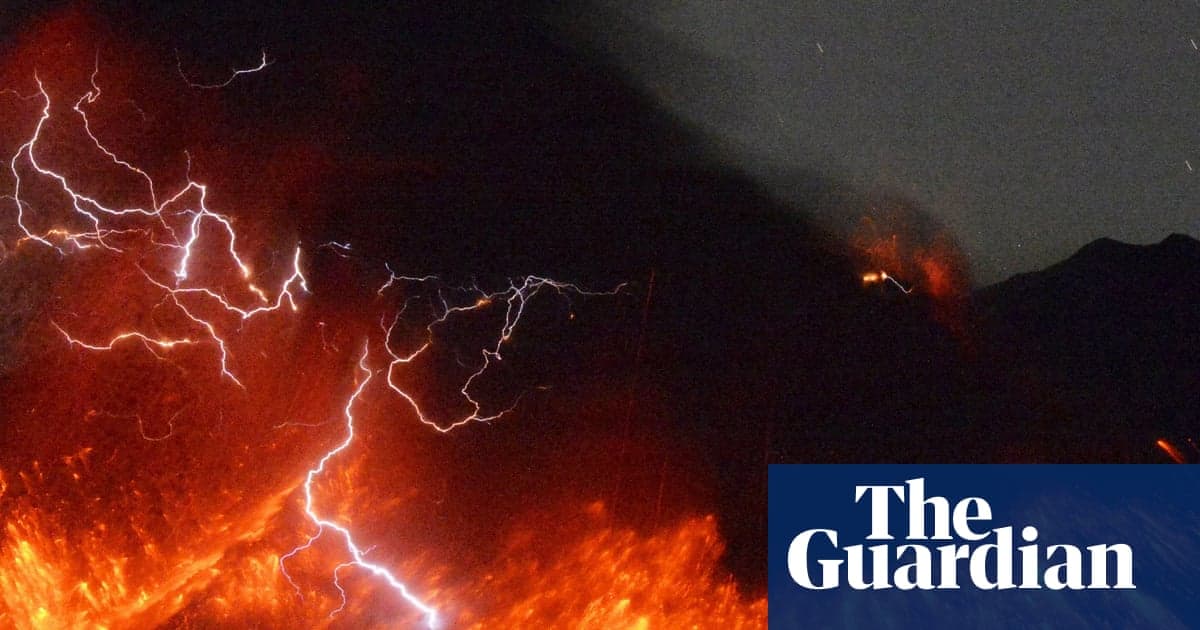
Scientists Make Breakthrough in Solving Mystery of Volcanic Lightning
Why It Matters
Understanding the charge mechanism improves eruption monitoring, aviation safety, and climate models that must account for volcanic aerosol impacts on atmospheric electricity.
Key Takeaways
- •Carbon‑coated silica particles generate charge in volcanic plumes
- •Hunga Tonga eruption produced >2,600 lightning flashes per minute
- •Nature study shows heating air creates carbon film on particles
- •Charge mechanism aids aviation safety around active volcanoes
Pulse Analysis
Volcanic lightning has long puzzled scientists because, unlike thunderstorm clouds, volcanic plumes are dry and composed of ash and rock fragments. Traditional models of atmospheric electrification rely on ice‑graupel collisions, leaving a gap in explaining how dry ash clouds can spark thousands of bolts. The new research bridges that gap by demonstrating that a nanometer‑scale carbon coating, formed when hot silica particles interact with ambient air, provides the necessary conductive pathway for charge separation during collisions.
The team at the Institute of Science and Technology Austria replicated plume conditions in the lab, heating pure silica particles and exposing them to normal atmospheric gases. The resulting carbon‑rich surface layer enabled rapid charge exchange, reproducing the intense lightning observed in real eruptions. This mechanism aligns volcanic lightning with the well‑understood physics of thunderstorm electrification, suggesting that the same fundamental processes operate across vastly different environments. By quantifying the role of carbon films, the study offers a predictive tool for estimating lightning intensity based on plume temperature and particle composition.
Beyond satisfying scientific curiosity, the breakthrough carries practical implications. Accurate lightning forecasts can inform aviation routing, protecting aircraft from hazardous electrical discharges near erupting volcanoes. Moreover, incorporating the carbon‑coating effect into climate models will refine estimates of how volcanic aerosols influence atmospheric conductivity and, ultimately, weather patterns. Future work will likely explore the variability of carbon deposition across different magma chemistries, paving the way for real‑time monitoring systems that combine satellite imagery with electrical signatures to improve eruption response strategies.
Scientists make breakthrough in solving mystery of volcanic lightning
Comments
Want to join the conversation?
Loading comments...