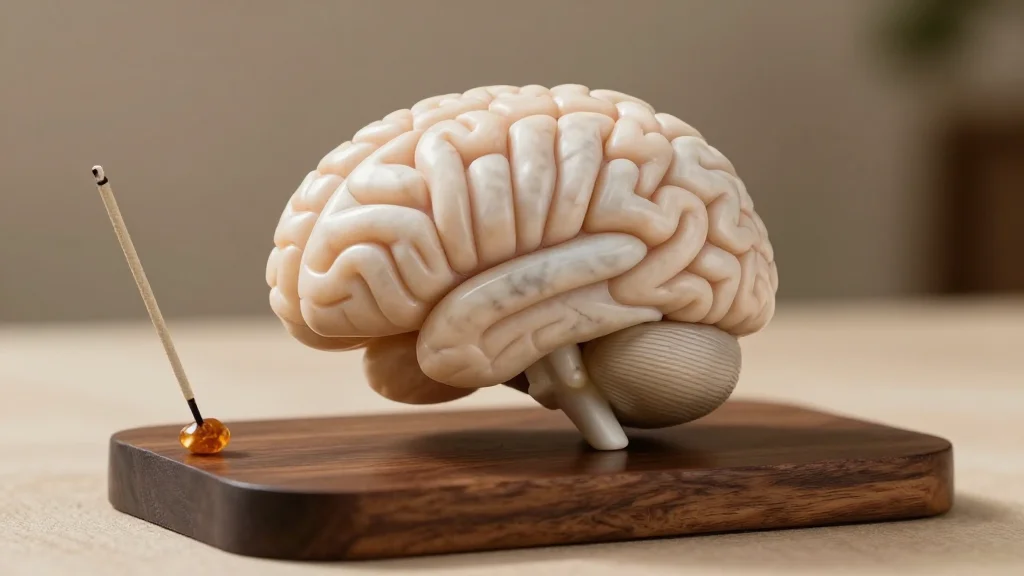
Scientists Map the Brain Network Behind Self-Transcendence
Why It Matters
The discovery provides a concrete biological substrate for mystical and contemplative experiences, opening pathways for targeted therapies in mental‑health and psychedelic‑assisted treatment. It also offers a shared framework for neuroscientists, clinicians, and spiritual practitioners studying the sacred mind.
Key Takeaways
- •Lesion mapping identified a two‑pole network governing self‑transcendence.
- •Disrupting posterior midline regions increased transcendent experiences in patients.
- •Brainstem and frontal midline lesions reduced self‑transcendence scores.
- •Circuit aligns with neuroimaging of compassion, ketamine, and stimulation studies.
- •Findings suggest depression therapies may work via self‑transcendence pathways.
Pulse Analysis
The Harvard study leverages lesion network mapping—a technique that translates surgical disruptions into functional brain maps—to isolate the circuitry behind self‑transcendence. By analyzing pre‑ and post‑surgery self‑transcendence scores in 88 patients and cross‑referencing with connectivity data from 1,000 healthy brains, the researchers revealed a bifurcated network. One pole, located in the posterior midline, appears to suppress transcendent states; when this area is lesioned, patients report heightened feelings of unity and ego dissolution. The opposite pole, spanning the brainstem and frontal midline, seems to facilitate the experience, with damage dampening the sense of moving beyond self.
These findings resonate with a growing body of work linking contemplative practices, psychedelics, and neurostimulation to altered self‑perception. Functional MRI studies of compassion meditation consistently activate regions within the identified circuit, mirroring the brain’s response to therapeutic ketamine doses that also blur self‑boundaries. Moreover, targeted transcranial magnetic stimulation of the posterior midline has already demonstrated measurable shifts in self‑identity, suggesting that existing depression treatments may inadvertently tap into self‑transcendence mechanisms. By providing a common neural reference point, the research bridges disparate fields—spirituality, psychiatry, and cognitive neuroscience—enabling more precise investigations into how transcendent states can be cultivated or modulated.
Beyond clinical implications, the work challenges the long‑standing dichotomy between science and spirituality. Demonstrating that the brain is wired to support experiences described across Buddhist, Christian, Sufi, and Indigenous traditions validates these phenomena as natural human capacities rather than cultural curiosities. Future studies can now explore how training in meditation, psychedelic‑assisted therapy, or novel neuromodulation techniques might deliberately engage this circuit to promote well‑being, resilience, and a deeper sense of purpose. The convergence of ancient wisdom and modern neurotechnology promises a richer understanding of the sacred dimension of the human mind.
Scientists map the brain network behind self-transcendence
Comments
Want to join the conversation?
Loading comments...