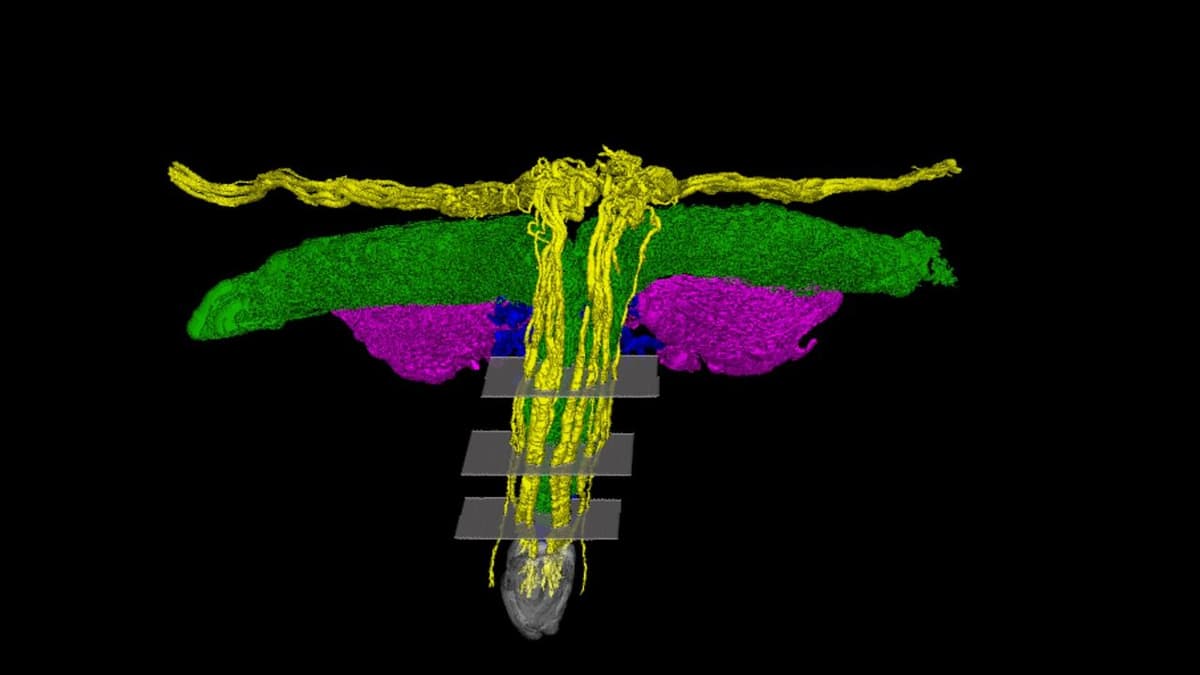
Scientists Mapped All the Nerves of the Clitoris for the First Time
Why It Matters
Accurate nerve mapping enables surgeons to restore sensation and avoid damage, directly impacting the health and sexual wellbeing of millions of women worldwide. The breakthrough also signals a broader shift toward rigorous study of female anatomy, which has historically been under‑researched.
Key Takeaways
- •First 3D micron‑scale map of clitoral nerves completed.
- •Dorsal nerve extends branches into glans, contrary to prior belief.
- •Findings aid reconstructive surgery for FGM survivors.
- •Surgeons can better avoid nerve damage during vulvar procedures.
- •Study based on two post‑mortem pelvises, preprint pending review.
Pulse Analysis
The first three‑dimensional, micron‑scale map of the clitoral nervous system marks a watershed moment in human anatomy. Using a synchrotron‑generated X‑ray, researchers at Amsterdam University Medical Centers captured the dorsal nerve of the clitoris (DNC) and its branching network in unprecedented detail. Earlier MRI studies could only outline the organ’s bulk, leaving the fine‑grained nerve pathways largely speculative. By tracing the DNC from its pelvic origin to the glans, the study overturns the long‑standing view that the nerve tapers off near the surface, revealing a dense arborization that directly supplies the external tip.
The anatomical clarity offered by this map has immediate clinical relevance. Surgeons repairing damage from female genital mutilation can now reference exact nerve trajectories to restore sensation, a critical step toward reversing the functional loss imposed on millions of girls worldwide. Likewise, routine vulvar surgeries—such as labiaplasty or hysterectomy—can benefit from nerve‑sparing techniques that reduce postoperative pain and preserve sexual function. The findings also echo advances in gender‑affirming procedures, where precise nerve reconstruction is becoming a benchmark for successful outcomes.
While the current dataset derives from only two post‑menopausal donors, the methodology sets a scalable template for broader studies across age groups and ethnicities. Expanding the sample will refine normative maps, support personalized surgical planning, and potentially guide novel neuromodulation therapies for sexual dysfunction. Moreover, the work underscores a shift in biomedical research toward previously neglected female anatomy, reinforcing the importance of inclusive science for public health. As the Human Organ Atlas continues to grow, the clitoris is poised to move from a ‘black box’ to a well‑charted organ.
Scientists mapped all the nerves of the clitoris for the first time
Comments
Want to join the conversation?
Loading comments...