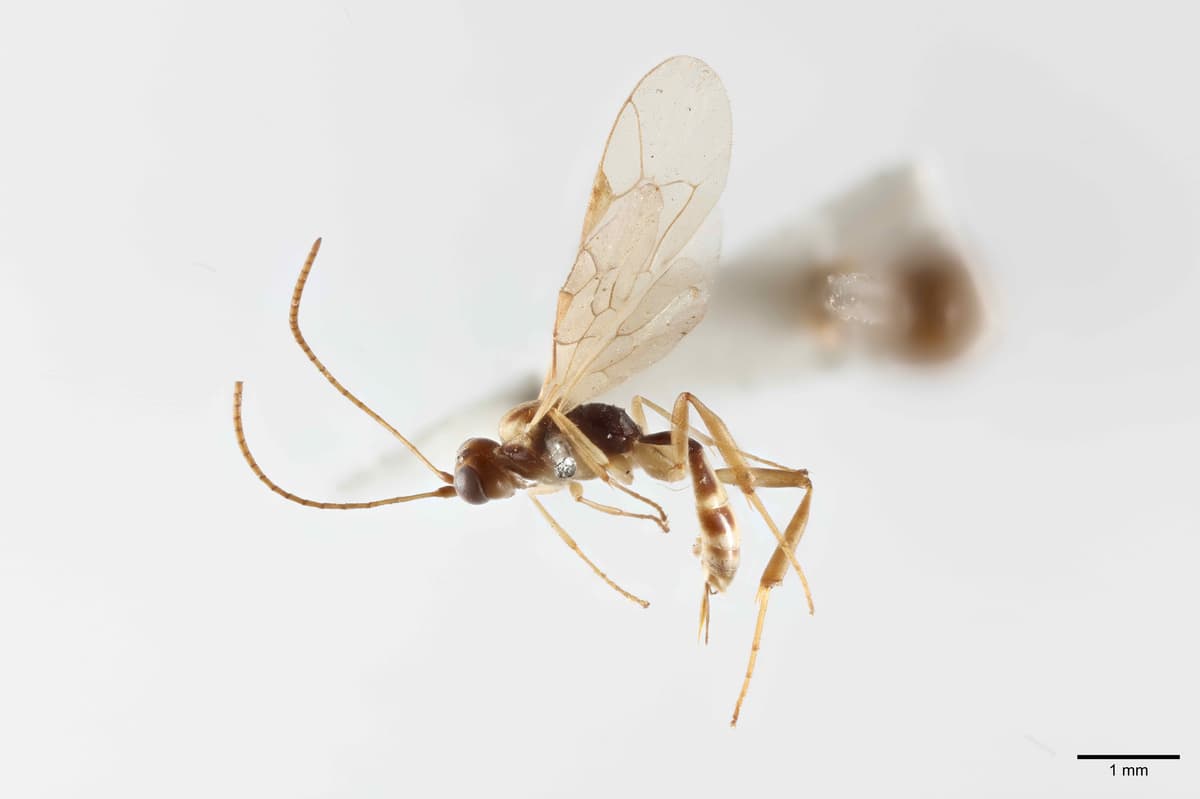
Scientists Mark Attenborough’s 100th Birthday with Newly Named Wasp
Why It Matters
The find underscores the untapped scientific value of legacy collections and raises awareness of a poorly understood group that could impact ecological research and biocontrol strategies. Naming the species after Attenborough links scientific discovery to public outreach, reinforcing support for biodiversity studies.
Key Takeaways
- •New genus *Attenboroughnculus* expands Pedunculinae to four genera
- •Specimen sat unexamined for over 40 years in London museum
- •Parasitoid wasps help control pest arthropod populations
- •Attenborough’s legacy inspires renewed taxonomic research
Pulse Analysis
Museum drawers can hide breakthroughs. The recent description of *Attenboroughnculus tau* illustrates how decades‑old specimens, when revisited with modern techniques, can reveal entirely new lineages. Taxonomists like Augustijn De Ketelaere and Gavin Broad demonstrate that even a single 3.5‑mm wasp can reshape our understanding of the Pedunculinae subfamily, a group that has escaped detailed study due to limited expertise and scarce visual documentation.
Naming the wasp after Sir David Attenborough ties scientific rigor to popular culture, leveraging his centennial celebration to draw public attention to taxonomy. Parasitoid ichneumonids play a crucial role in natural pest regulation, and expanding the known diversity of this family can inform agricultural biocontrol programs. By publishing high‑resolution images and detailed morphological data, the researchers provide a template for future identification work, encouraging scientists worldwide to re‑examine overlooked museum collections.
The broader implication is a call to action for funding agencies and institutions: invest in taxonomic capacity building and digitization of legacy specimens. As biodiversity faces accelerating loss, uncovering hidden species like *Attenboroughnculus tau* equips ecologists with essential baseline data. Moreover, the discovery showcases how celebrated figures can amplify scientific messages, fostering a culture where curiosity sparked by childhood books translates into lifelong contributions to natural history.
Scientists mark Attenborough’s 100th birthday with newly named wasp
Comments
Want to join the conversation?
Loading comments...