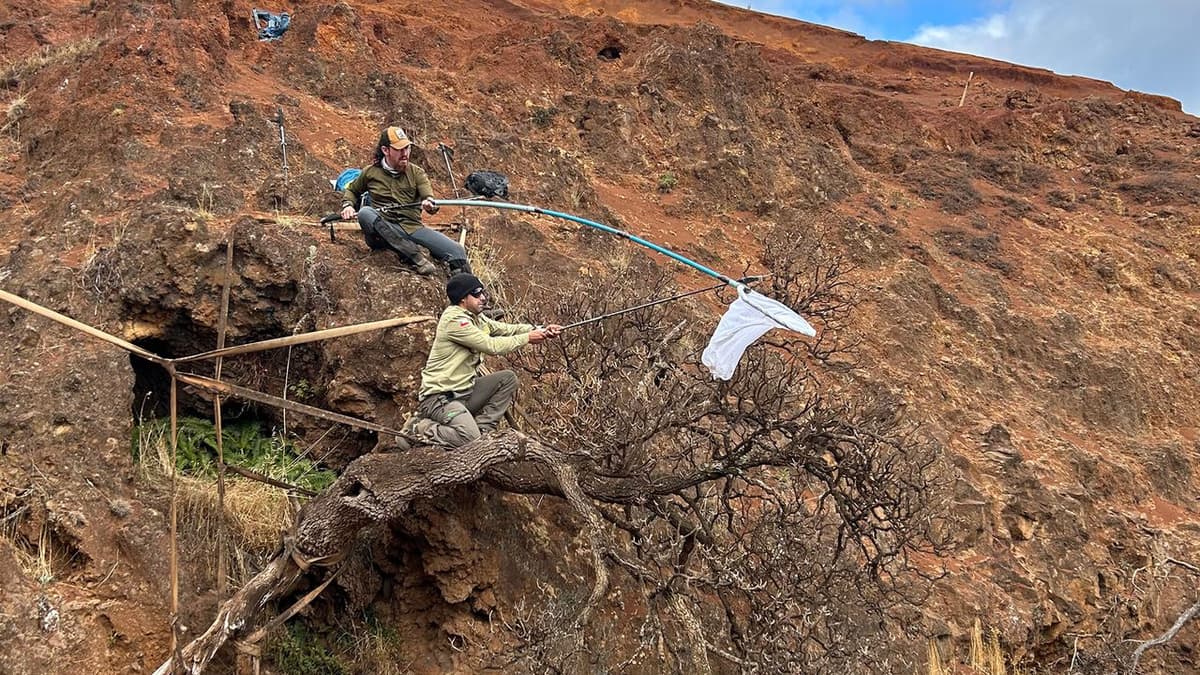
Scientists Race to Collect the Last Seeds From a Critically Endangered Tree Before It Goes Extinct
Why It Matters
Securing viable seeds safeguards the species against total extinction and provides material for future restoration, highlighting the vital role of ex‑situ conservation in preserving biodiversity hotspots.
Key Takeaways
- •Hundreds of seeds collected from the last wild Dendroseris neriifolia
- •25 of 29 seeds deemed viable after X‑ray analysis
- •Seven seedlings now growing at Kew's Wakehurst garden
- •First Dendroseris species ever stored in a seed bank
- •Cliff‑side collection required ropes and a two‑hour climb
Pulse Analysis
Island endemics like Dendroseris neriifolia illustrate how geographic isolation can produce species found nowhere else, yet also make them acutely vulnerable to habitat loss, invasive species, and climate pressures. Seed banks such as the Millennium Seed Bank at Kew serve as genetic arks, preserving diversity that might otherwise vanish. By storing viable material, these institutions buy time for in‑situ conservation measures, research into germination cues, and potential re‑introduction programs, reinforcing global biodiversity resilience.
The Robinson Crusoe Island expedition faced logistical hurdles: a four‑hour boat ride followed by a steep two‑hour climb to a cliff‑side tree supported by ropes. Despite the danger, park rangers captured mature seeds during the brief March window, enabling the first-ever ex‑situ preservation of a Dendroseris species. Kew’s rapid X‑ray screening identified a high viability rate, and seven seedlings have already taken root, demonstrating that even severely bottlenecked populations can be rescued with focused effort and advanced horticultural techniques.
Beyond this single species, the project underscores broader trends in conservation. Emerging tools like drones may soon reduce the need for hazardous climbs, while genetic analyses can monitor inbreeding risks in stored collections. Successful propagation at Kew could supply Chilean agencies with seed stock for future restoration, creating a feedback loop between ex‑situ and in‑situ strategies. As more rare flora receive similar attention, the cumulative impact could slow the tide of plant extinctions worldwide.
Scientists race to collect the last seeds from a critically endangered tree before it goes extinct
Comments
Want to join the conversation?
Loading comments...