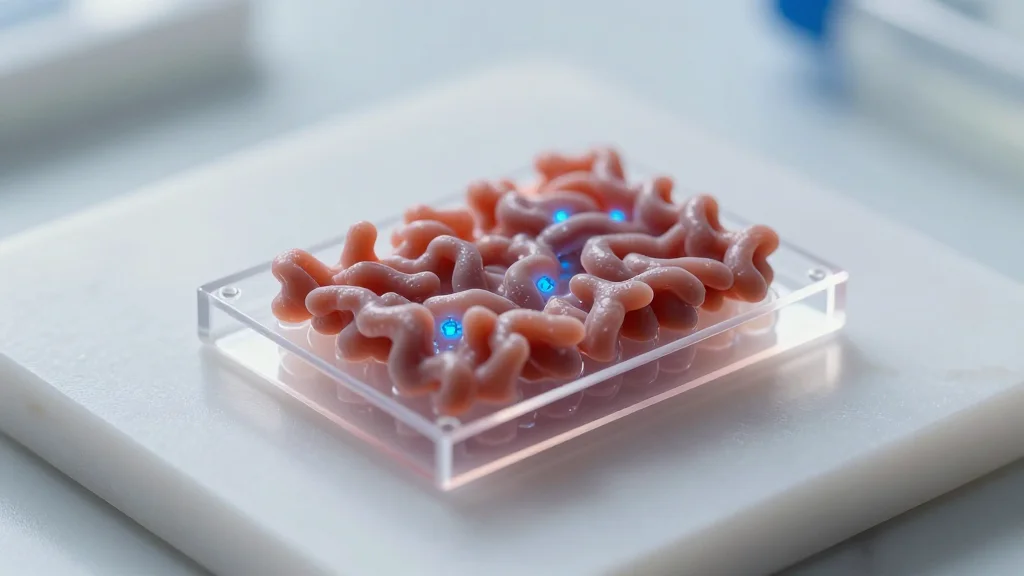
Scientists Recreate Enterovirus Infection in a New Model of the Human Intestine
Why It Matters
The model fills a critical gap in enterovirus research by providing a human‑relevant gut environment, accelerating drug discovery and enabling mechanistic studies of EV‑A71’s pathogenesis, which could reduce severe neurological outcomes in children.
Key Takeaways
- •Intestinal microphysiological system supports two‑week EV‑A71 replication
- •Virus induces minimal interferon response, enabling persistent gut infection
- •Recombinant interferon treatment sharply reduces viral RNA in the model
- •Platform mimics human gut architecture better than organoids or cancer cells
- •Model could link gut infection to brain organoids for CNS spread studies
Pulse Analysis
Enterovirus A71 remains a leading cause of hand‑foot‑and‑mouth disease in children, with a worrying minority progressing to encephalitis or meningitis. Traditional laboratory models—cancer cell lines or animal‑derived cultures—fail to capture the complex cellular diversity and architecture of the human gut, limiting insights into how the virus establishes a foothold without provoking strong immunity. By recreating the intestinal microenvironment using human embryonic stem cells in a microfluidic chip, scientists now have a scalable, physiologically relevant system that mirrors the true host‑pathogen interface.
The intestinal MPS incorporates goblet cells, enterocytes, and fibroblasts, allowing EV‑A71 to replicate for up to 14 days while the tissue remains intact. Crucially, the infection elicits only a modest interferon response, explaining the virus’s ability to persist silently in the gut. When researchers supplied recombinant interferons, antiviral pathways surged and viral RNA plummeted, demonstrating the platform’s utility for rapid therapeutic screening. Compared with organoids, the MPS offers continuous perfusion, real‑time monitoring, and a more faithful representation of barrier function, making it an attractive pre‑clinical test bed for antiviral candidates.
Beyond drug testing, the system opens avenues to map viral dissemination routes. By coupling the gut MPS with brain organoids through shared microfluidic channels, investigators could simulate the transit of EV‑A71 from the intestine to the central nervous system, shedding light on the triggers of neurological complications. This modular approach exemplifies how microphysiological technologies are reshaping infectious‑disease research, promising faster, more accurate models that bridge the gap between in‑vitro studies and human outcomes.
Scientists recreate enterovirus infection in a new model of the human intestine
Comments
Want to join the conversation?
Loading comments...