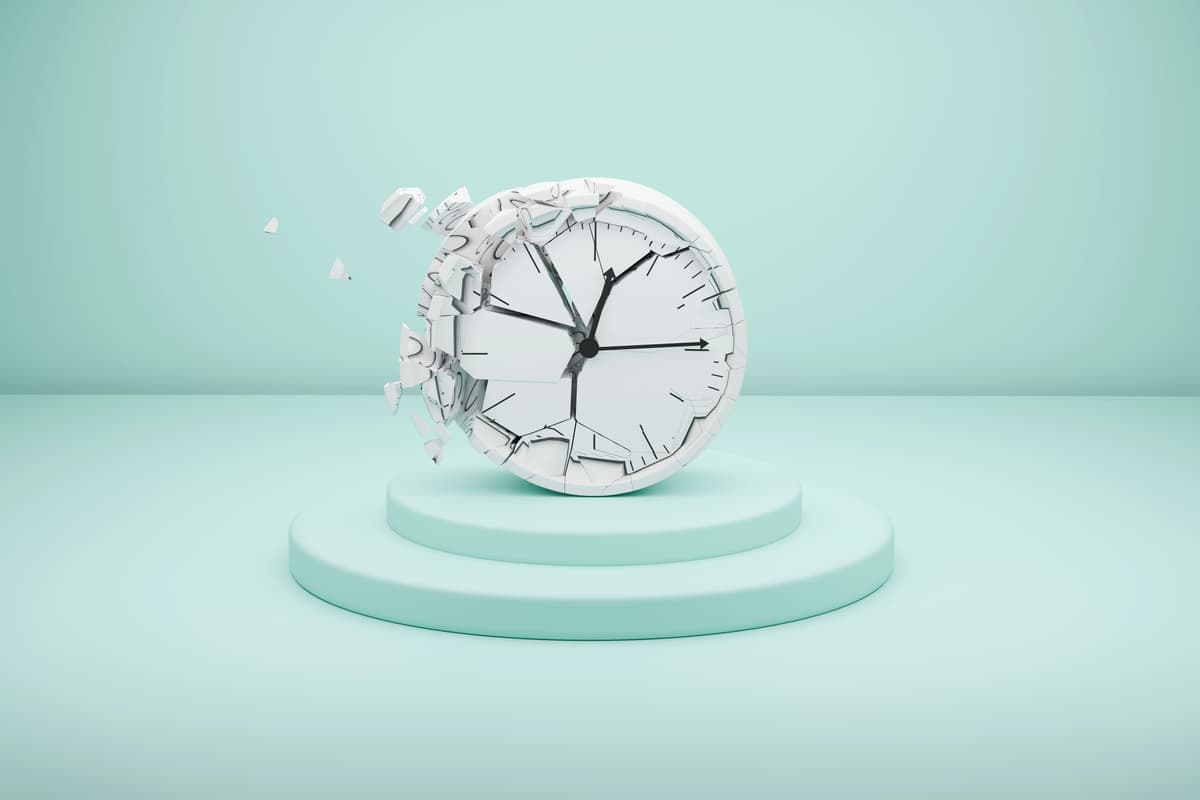
Scientists Say That Time Itself Can Be in Two States at Once
Why It Matters
If gravity‑driven collapse truly limits time precision, it defines a hard bound for future ultra‑accurate clocks, affecting sectors that rely on nanosecond timing such as finance and navigation. It also provides a concrete experimental pathway to probe the intersection of quantum mechanics and general relativity.
Key Takeaways
- •Collapse models link gravity to quantum wave function collapse
- •Intrinsic gravitational fluctuations set a theoretical limit on clock precision
- •Current atomic clocks remain far from the predicted time‑fuzziness
- •Future squeezed‑state clocks could test superposition of time itself
Pulse Analysis
Quantum mechanics has long challenged classical intuition, with superposition allowing particles to occupy multiple states simultaneously. Among the leading explanations for why a measurement forces a single outcome are objective collapse models—GRW, CSL, and the Penrose‑Diósi (DP) proposal. The DP model uniquely ties the collapse mechanism to gravity, suggesting that minute fluctuations in the gravitational field can cause the wave function to localize. This theoretical bridge offers a fresh lens to examine one of physics’ biggest puzzles: how quantum phenomena reconcile with the smooth spacetime of general relativity.
The recent study leverages this gravity‑collapse connection to ask a seemingly abstract question: does it affect time itself? By modeling how stochastic gravitational noise perturbs the phase evolution of quantum systems, the authors derive an intrinsic uncertainty in the flow of time. In practice, this translates to a ceiling on how precisely any clock can measure intervals, regardless of engineering advances. Even the world’s most accurate optical lattice clocks, capable of resolving time to 10⁻¹⁹ seconds, sit comfortably above the predicted fuzziness, meaning everyday technologies—from GPS to high‑frequency trading—remain unaffected for now. Nonetheless, the result delineates a fundamental limit that future generations of clocks will inevitably confront.
Looking ahead, experimentalists aim to push clocks into exotic quantum states, such as squeezed states, where quantum noise is redistributed to enhance measurement precision. Such setups could amplify the subtle time‑fluctuation signals predicted by collapse models, turning a theoretical curiosity into an observable effect. Demonstrating time superposition or gravitationally induced decoherence would not only validate—or refute—specific quantum‑gravity theories but also reshape our understanding of temporal stability, with ripple effects across metrology, navigation, and any industry that depends on ultra‑precise timing. The convergence of quantum foundations and practical timekeeping thus marks a fertile frontier for both fundamental physics and commercial innovation.
Scientists Say That Time Itself Can Be in Two States at Once
Comments
Want to join the conversation?
Loading comments...